
The majority of the population of the …
Years: 1739 - 1739
The majority of the population of the South Carolina colony since 1708 has been enslaved, as importation has increased in recent decades with the expansion of cotton and rice cultivation; this is what will be called the Plantation Generation by the historian Ira Berlin.
Most of the slaves are native Africans and many in South Carolina are from the Kingdom of Kongo; many had been enslaved in the West Indies before being brought to South Carolina.
Several factors may have persuaded the slaves that a rebellion at this time might lead to freedom.
Accounts of slaves' gaining freedom by escaping to Spanish-controlled Florida give the Carolina slaves hope; the Spanish have issued a proclamation and have had agents spread the word about giving freedom and land to slaves who got to Florida.
Tensions between England and Spain over territory in North America make slaves hopeful in gaining freedom by reaching Spanish territory, particularly the free black community of Fort Mose, founded in 1738.
In addition, a malaria epidemic has killed many in Charleston, weakening the power of slaveholders.
Lastly, historians have suggested the slaves organized their revolt to take place on Sunday, when planters would be occupied in church and might be unarmed.
The Security Act of 1739 (which requires all white males to carry arms even to church on Sundays) had been passed in August, and penalties are supposed to begin after September 29.
Jemmy, the leader of the revolt, is a literate slave described in an eyewitness account as "Angolan"; because of patterns of trade, he is more likely from the Kingdom of Kongo in west Central Africa, which had long had relations with Portuguese traders.
His cohort of twenty slaves are also called "Angolan", and likely also Kongolese.
The slaves are described as Catholic, and some speak Portuguese, learned from the traders operating in the Kongo Empire at this time.
The patterns of trade and the fact that Kongo is a Catholic nation point to their origin there.
The kingdom of Kongo had voluntarily converted to Catholicism in 1491; by the eighteenth century, the religion is a fundamental part of its citizens' identity.
The nation has independent relations with Rome.
Portuguese is the language of trade as well as the one of the languages of educated people in Kongo.
Speaking Portuguese allows the slaves in South Carolina to be more aware of offers of freedom by Spanish agents.
They would also have been attracted to the Catholicism of Florida.
Because Kongo has been undergoing civil wars, more people have been captured and sold into slavery in recent years, among them trained soldiers.
It is likely that Jemmy and his rebel cohort were such military men, as they fight hard against the militia when they are caught, and are able to kill twenty of them.
Locations
Groups
- Portuguese people
- Christians, Roman Catholic
- Kongo, Kingdom of
- Florida (Spanish Colony)
- Spain, Bourbon Kingdom of
- Britain, Kingdom of Great
- South Carolina, Province of (British Colony)
Topics
Commodoties
Subjects
Regions
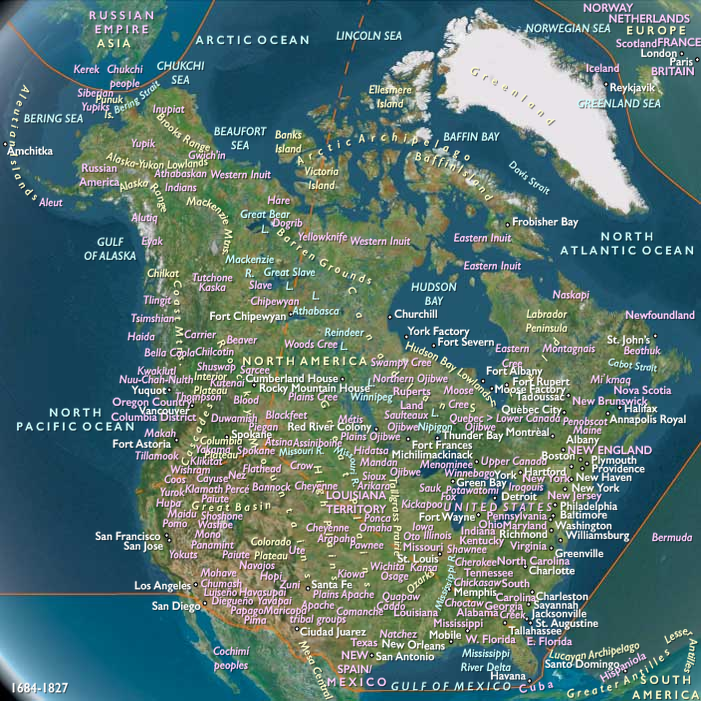
Subregions
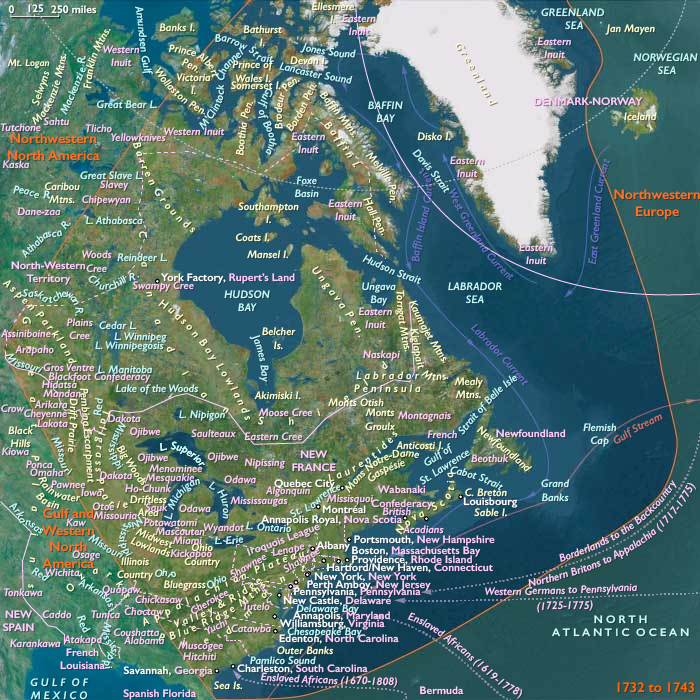
Related Events
Showing 10 events out of 27420 total
Years: 1739 - 1739
Locations
Groups
- Portuguese people
- Christians, Roman Catholic
- Kongo, Kingdom of
- Florida (Spanish Colony)
- Spain, Bourbon Kingdom of
- Britain, Kingdom of Great
- South Carolina, Province of (British Colony)
Topics
Commodoties
Subjects
Regions
Subregions