
Malwa opium grown in the princely states …
Years: 1805 - 1805
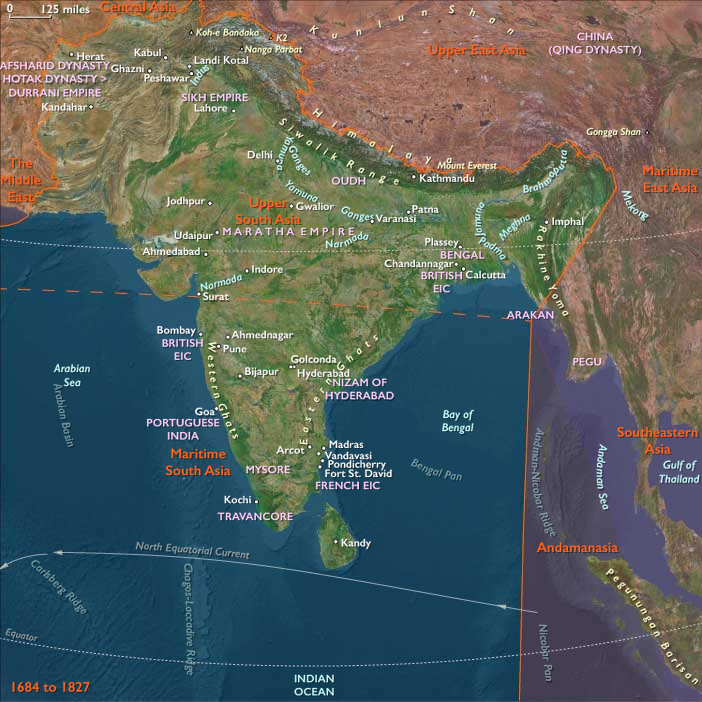
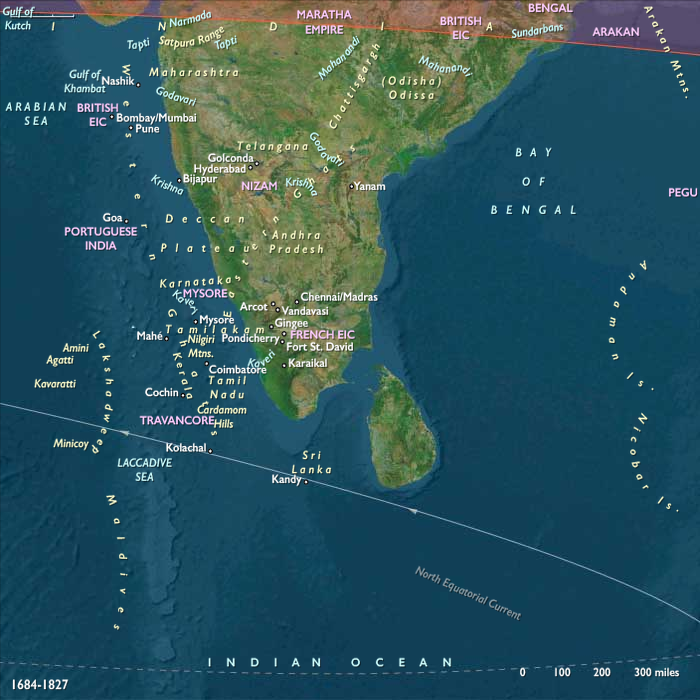
Malwa opium grown in the princely states of west India is the major threat to the British East India Company's opium monopoly.
The East India Company in 1805 prohibits transit of Malwa Opium or any other non-East India company opium through its territories, including the port of Bombay.
Locations
Groups
- East India Company, British (United Company of Merchants of England Trading to the East Indies)
- India, East India Company rule in
- Britain (United Kingdom of Great Britain and Ireland)
Topics
Commodoties
Subjects
Regions
Subregions
Related Events
Filter results
Showing 10 events out of 22216 total
James Squire, after three seasons of toil, becomes in 1805 the first brewer in Australia to successfully cultivate hops.
A First Fleet convict transported to Australia, first officially brewing beer in Australia in 1790, Squire later founded Australia's first commercial brewery making beer using barley and hops in 1798, although John Boston appears to have opened a brewery making a form of corn beer two years earlier.
The discovery of the British Army's trafficking of rum in 1802 had created an uproar in the fledgling colony.
Governor King was gravely concerned about the corruption spread by rum, so he began to officially endorse the brewing of beer.
English hops and brewing equipment are regularly transported on convict ships at the government's expense; in fact, part of HMS Porpoise's botanical cargo was hops.
There were three parties that were the most likely recipients of the shipment of hops, those being the Government Gardens; John Boston (a potential rival for Australia's first brewer); and James Squire.
It is unclear what became of the hops on the HMS Porpoise, as there is no evidence of them being propagated within the first two years of its arrival in Sydney on November 6, 1800.
Burmese armies had invaded Siam in both 1797 and 1802, and Inthavong had dispatched several Lao armies under Anouvong to assist in the defense.
Anouvong gained recognition for his bravery and won several major victories at Sipsong Chao Thai.
Inthavong died in 1804, and Anouvong had succeeded him in 1805 as the ruler of Vientiane.
The Introduction of Gaslighting in European Cities
During the early 19th century, European cities began adopting gaslighting, revolutionizing urban illumination and transforming public spaces, industry, and daily life.
Early Developments and Adoption
- William Murdoch, a Scottish engineer, was the first to use gas for lighting in the 1790s, demonstrating its potential for illuminating factories and streets.
- By 1807, London became the first city to install public gaslights, with gas lamps introduced on Pall Mall as a trial project.
- The success of London’s gaslighting led to its rapid adoption in other European cities, including:
- Paris (1817)
- Berlin (1826)
- Vienna (1818)
- St. Petersburg (1839)
Impact on Urban Life
- Public Safety: Well-lit streets reduced crime and accidents, making cities safer at night.
- Extended Social Life: Nighttime activities, such as theater, shopping, and social gatherings, became more common.
- Industrial and Economic Growth: Gas lighting allowed factories and businesses to operate beyond daylight hours, boosting productivity.
- Urban Expansion: Well-lit streets encouraged city growth and modernization, leading to improved infrastructure and transportation.
The Transition to Gas Companies and Infrastructure
- The demand for gaslighting led to the establishment of municipal gasworks and private gas companies.
- Cities constructed gas pipelines, creating the first urban energy networks.
- By the mid-19th century, gaslighting was standard in European capitals and major industrial cities, marking a major step toward modern urban development.
Legacy – A Precursor to Electric Lighting
While gaslighting dominated European cities for much of the 19th century, it was gradually replaced by electric lighting in the late 19th and early 20th centuries. However, its introduction represented a critical turning point in urban modernization, influencing city planning, public safety, and industrial progress.
The Formation of the Third Coalition and the Battle of Trafalgar (1804–1805)
By 1804, Napoleon had declared himself Emperor of the French and was preparing for a full-scale invasion of Britain. In response, Britain assembled a new coalition of major European powers to counter French expansion on the continent.
The Formation of the Third Coalition (1805)
Britain, determined to continue the war against Napoleon, enlisted:
- Austria
- Russia
- Sweden
This Third Coalition aimed to contain France’s growing dominance and prevent Napoleon from establishing total control over Europe.
Spain Joins Napoleon – A Costly Alliance
- On December 14, 1804, Spain formally declared war on Britain, aligning with Napoleon’s continental war effort.
- The Spanish government, led by Manuel de Godoy, hoped that an alliance with France would protect Spanish interests and reinforce Spain’s declining empire.
- Spain’s navy was merged with Napoleon’s, with a plan to unite with French fleets in the north for the planned invasion of Britain.
The Battle of Trafalgar (October 21, 1805) – The Shattering of Franco-Spanish Naval Power
- The British fleet, under Admiral Horatio Nelson, intercepted the combined Franco-Spanish fleet as it attempted to break out from Cádiz.
- In a decisive engagement off Cape Trafalgar, the British:
- Destroyed or captured 22 of the 33 enemy ships.
- Did not lose a single ship themselves.
- Inflicted heavy losses on the French and Spanish, effectively eliminating Napoleon’s naval capabilities.
- Nelson was killed in battle, but his victory ensured British naval supremacy for the remainder of the Napoleonic Wars.
Strategic Consequences – Britain Secures Control of the Seas
- Napoleon’s invasion of Britain was permanently abandoned, as he no longer had a navy capable of challenging the Royal Navy.
- Spain’s position in the war weakened, and Godoy’s government began doubting its alliance with Napoleon, recognizing that the Franco-Spanish fleet could not protect Spanish interests.
- Britain’s victory secured its dominance over world trade and maritime warfare, allowing it to expand its war effort globally while Napoleon focused on continental Europe.
Conclusion – The War Moves to the Continent
While Britain controlled the seas, Napoleon turned his focus to land warfare, leading to his greatest victory at Austerlitz in December 1805. However, the Battle of Trafalgar ensured that Napoleon could never directly threaten Britain, forcing him to seek new ways to weaken his greatest rival—primarily through the Continental System and economic warfare.
Difficulties with the undependable Janissaries lead Ottoman sultan Selim III to decree in 1805 the formation of a "New Order": regiments trained after the current French model.
The European Janissaries object with some violence, and the decree is withdrawn.
Karadjordje, a brilliant guerrilla fighter and a natural leader, launches a war of independence in 1805, when Selim refuses the Serbs’ demands for autonomy.
When the Porte (Ottoman government) rejects Karadjordje’s request for Serbian autonomy, the Serbs form an alliance with Russia.
The son of Thomas Salt, a physician and Alice née Butt, Henry was born in Lichfield on June 14, 1780, as the youngest of their eight children.
He attended school in Lichfield, Market Bosworth, and finally in Birmingham under the teachings of his brother John Butt Salt.
He took an interest in portrait painting during his early life, studying under a water color artist named John Glover while in Lichfield and traveling in 1799 to London, where he first studied under Joseph Farington and later under John Hoppner.
After a time, he gave up being a portrait painter because he was unable to gain any substantial acclaim with his works.
After his time as a portrait painter, Salt was permitted to travel with the English nobleman George Annesley, Viscount Valentia as his secretary and draftsman after being recommended by Thomas Simon Butt.
They started on an eastern tour in June of 1802, traveling on the British East India Company's extra (chartered) ship Minerva to India via the Cape Colony.
Through their friendship, Valentia comes to describe Salt as a "secretary-draftsman" as Salt not only provides company for the Lord, but also sketches and illustrations of the various sites and scenes they encounter on their voyage.
In 1805, Valentia sends Salt on a journey into the Abyssinia (now Ethiopia) to meet with the ras of Tigré to open up trade relations on behalf of English.
While visiting there, Salt gains the respect of the ras of Tigré.
Napoleon’s plans to invade Britain end with Nelson’s destruction of most of the Franco-Spanish fleet at Trafalgar on October 21, 1805.
Despite the British victory over the Franco-Spanish navies, Trafalgar has negligible impact on the remainder of the War of the Third Coalition. Less than two months later, Napoleon decisively defeats the Third Coalition at the Battle of Austerlitz, knocking Austria out of the war and forcing the dissolution of the Holy Roman Empire.
Although Trafalgar means France can no longer challenge Britain at sea, Napoleon proceeds to establish the Continental System in an attempt to deny Britain trade with the continent.
The Napoleonic Wars will continue for another ten years after Trafalgar.
Washington Irving strikes up a friendship with the American painter Washington Allston while visiting Rome in 1805, and nearly allows himself to be persuaded into following Allston into a career as a painter.
"My lot in life, however", Irving said later, "was differently cast".
Washington Allston had been born on a rice plantation on the Waccamaw River near Georgetown, South Carolina.
His mother Rachel Moore had married Captain William Allston in 1775, though her husband died in 1781, shortly after the Battle of Cowpens.
Moore had remarried to Dr. Henry C. Flagg, the son of a wealthy shipping merchant from Newport, Rhode Island.
Named, like Washington Irving, in honor of the leading American general of the Revolution, Allston had graduated from Harvard College in 1800 and moved to Charleston, South Carolina for a short time before sailing in May 1801 to England, where he had gained admittance to the Royal Academy in London in September; the painter Benjamin West was then the president.
From 1803, he has visited the great museums of Paris and then, those of Italy, where he meets Irving in Rome and Coleridge, who is to become his lifelong friend.
Colerige had traveled to Sicily and Malta in the previous year, working as Acting Public Secretary of Malta under the Commissioner, Alexander Ball, a task he has performed quite successfully, though his opium dependency has only increased.
He has given this up however, and is making his way back to England.
Napoleon’s new Grand Army sweeps through Germany towards Austria, defeating General Karl Mack’s Austrian army at Ulm on October 20.
Years: 1805 - 1805
Locations
Groups
- East India Company, British (United Company of Merchants of England Trading to the East Indies)
- India, East India Company rule in
- Britain (United Kingdom of Great Britain and Ireland)
