
Human sacrifice, particularly in context of the …
Years: 808 - 819
Human sacrifice, particularly in context of the Mesoamerican ballgame, is the major theme of Classic Veracruz art.
This art is rendered with extensive and convoluted banded scrolls that can be seen both on monumental architecture and on portable art, including ceramics and even carved bones.
At least one researcher has suggested that the heads and other features formed by the scrolls are a Classic Veracruz form of pictographic writing.
This scrollwork may have grown out of similar styles found in Chiapa de Corzo and Kaminaljuyu.
In addition to the scrollwork, the architecture is known for its ornate ornamentation, such as that seen on the Pyramid of Niches at El Tajin.
This ornamentation produces dramatic contrasts of light and shadow.
While Classic Veracruz culture shows influences from Teotihuacan and the Maya, neither of these cultures are its direct antecedents.
Instead, the seeds of this culture seems to have come at least in part from the Epi-Olmec culture centers, such as Cerro de las Mesas and La Mojarra.
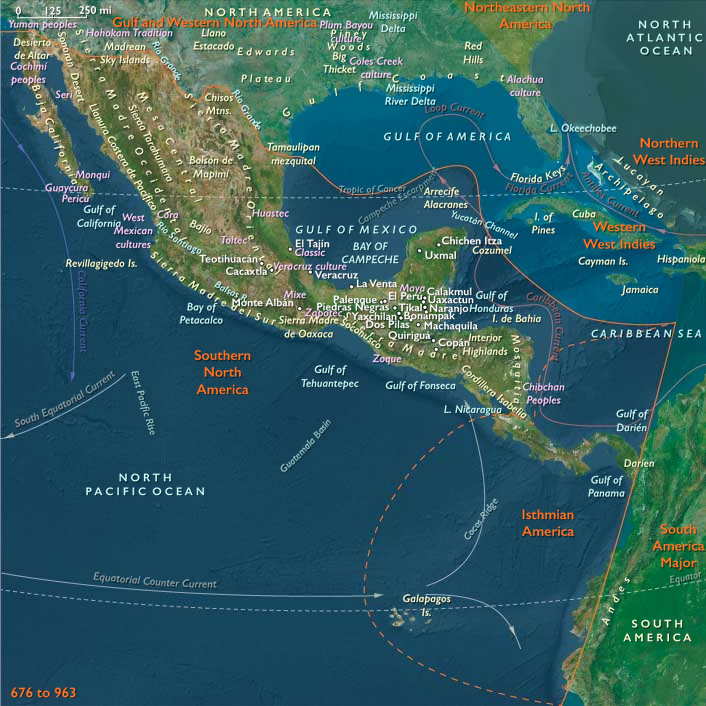
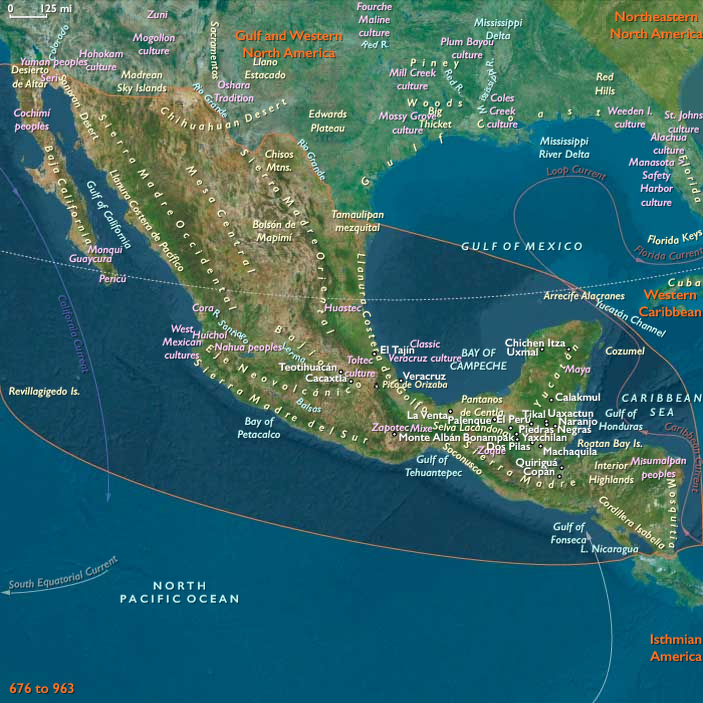
El Tajín is a prosperous city that eventually controls much of what is now modern Veracruz state.
The city-state is highly centralized, with the city itself having more than fifty ethnicities living here.
Most of the population lives in the hills surrounding the main city, and the city obtains most of its foodstuffs from the Tecolutla, Nautla and Cazones areas.
These fields not only produce staples such as corn and beans but luxury items such as cacao.
One of the panels at the Pyramid of the Niches shows a ceremony being held at a cacao tree.
The religion is based on the movements of the planets, the stars and the Sun and Moon, with the Mesoamerican ballgame and pulque having extremely important parts.
This has led to the building of many pyramids with temples and seventeen ballcourts, more than any other Mesoamerican site.
The city begins to have extensive influence starting around this time, which can be best seen at the neighboring site of Yohualichan, whose buildings show the kinds of niches that define El Tajin.
Evidence of the city’s influence can be seen along the Veracruz Gulf coast to the Maya region and into the high plateau of central Mexico.
At the end of the Classic period, El Tajín survives the widespread social collapse, migrations and destructions that force the abandonment of many population centers at the end of this period.
El Tajín reaches its peak after the fall of Teotihuacan, and conserves many cultural traits inherited from that civilization.
The inhabitants of El Tajín place a marked emphasis on the sacred Mesoamerican ball game, played in ritually significant, elaborately decorated masonry courts.
Locations
Groups
Topics
Commodoties
Subjects
- Symbols
- Architecture
- Sculpture
- Environment
- Decorative arts
- Games and Sports
- Faith
- Government
- Custom and Law
- Astronomy
Regions
Subregions
Related Events
Showing 10 events out of 148 total
Years: 808 - 819
Locations
Groups
Topics
Commodoties
Subjects
- Symbols
- Architecture
- Sculpture
- Environment
- Decorative arts
- Games and Sports
- Faith
- Government
- Custom and Law
- Astronomy
Regions
Subregions