
Filters:
To the south of the Ethiopian kingdom, …
Years: 1828 - 1839
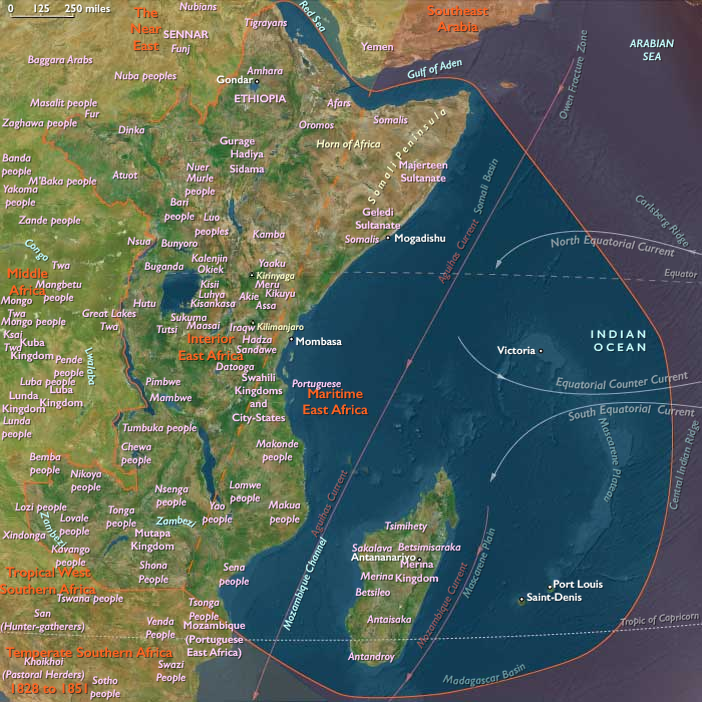
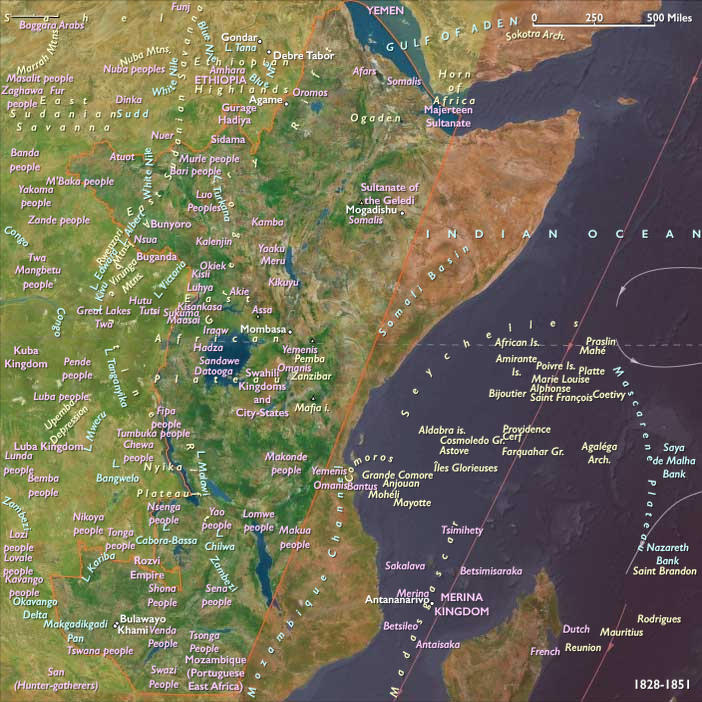
To the south of the Ethiopian kingdom, segments of the Oromo population—cultivators and suppliers of goods exportable to the Red Sea coast and beyond—have meanwhile developed kingdoms of their own, no doubt stimulated in part by the examples of the Amhara to the north and the Sidama kingdoms to the south.
The seventeenth through nineteenth century is a period not only of migration but also of integration, as groups borrow usable techniques and institutions from each other.
In the south, too, Islam has made substantial inroads.
Many Oromo chieftains find Islam a useful tool in the process of centralization as well as in the building of trade networks.
The seventeenth through nineteenth century is a period not only of migration but also of integration, as groups borrow usable techniques and institutions from each other.
In the south, too, Islam has made substantial inroads.
Many Oromo chieftains find Islam a useful tool in the process of centralization as well as in the building of trade networks.
Locations
Groups
- Tigray-Tigrinya people
- Sidama people
- Agaw people
- Christians, Miaphysite (Oriental Orthodox)
- Oromo people
- Islam
- Amhara people
- Abyssinia (also called "Mecca and Medina"), Ottoman eyalet of
- Ethiopia, Solomonid Dynasty of
Topics
- Interaction with Subsaharan Africa, Early European
- Sub-Saharan Africa, Modern
- Zemene Mesafint (Ethiopia's "Age of Princes")
Subjects
Regions
Subregions
Years: 1828 - 1839
Locations
Groups
- Tigray-Tigrinya people
- Sidama people
- Agaw people
- Christians, Miaphysite (Oriental Orthodox)
- Oromo people
- Islam
- Amhara people
- Abyssinia (also called "Mecca and Medina"), Ottoman eyalet of
- Ethiopia, Solomonid Dynasty of
Topics
- Interaction with Subsaharan Africa, Early European
- Sub-Saharan Africa, Modern
- Zemene Mesafint (Ethiopia's "Age of Princes")
Subjects
Regions
Subregions