
The Sixth Ecumenical Council, the major event …
Years: 687 - 687
The Sixth Ecumenical Council, the major event of Agathos’ pontificate, ends the Monothelite heresy that had been tolerated by previous popes, Honorius among them.
The council had begun when Emperor Constantine IV, desiring to heal the schism, had written to Pope Donus suggesting a conference on the matter, but Donus was dead by the time the letter arrived.
However, Agatho had been quick to seize the opportunity for reconciliation, ordering councils held throughout the West so that legates can present the universal tradition of the Western Church, then sends a large delegation to meet the Easterners at Constantinople.
Leo II, a Sicilian by birth, who had been elected to succeed Pope Agatho a few days after his death on January 10, 681, had not been consecrated as Pope until after the lapse of a year and seven months.
Known as an eloquent preacher who was interested in music, Leo had been noted for his charity to the poor.
Benedict II, a member of the Roman Savelli family, had been chosen in 683 to succeed Leo II but had not been ordained until 684, because the permission of Emperor Constantine IV had not been obtained until some months after the election.
According to Liber Diurnus Romanorum Pontificum, he had obtained from the Emperor a decree which had either abolished imperial confirmations altogether or made them obtainable from the Exarch of Ravenna.
This has given the power of confirmations of papal nominations directly to the Church and the people of Rome.
His successor, Pope John V, a Syrian by birth, had in 680 been named papal legate to the Sixth Ecumenical Council at Constantinople because of his knowledge of Greek; he had passes his pontificate of little more than a year chiefly in bed.
Conon, his successor in 686, dies in 687.
Sergius succeeds him, but Theodore II opposes him as anitipope.
The reign of antipope Paschal follows Theodore’s brief tenure as self-consecrated Bishop of Rome.
Locations
People
Groups
- Christianity, Chalcedonian
- Greeks, Medieval (Byzantines)
- Rome, Duchy of
- Ravenna, Exarchate of
- Roman Empire, Eastern: Heraclian dynasty
- Christians, Monotheletist
Topics
Subjects
Regions
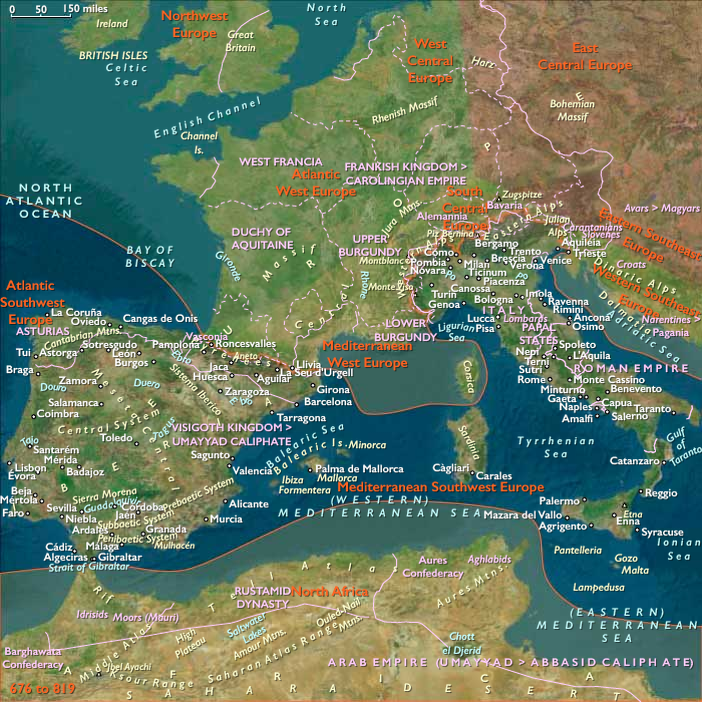
Subregions
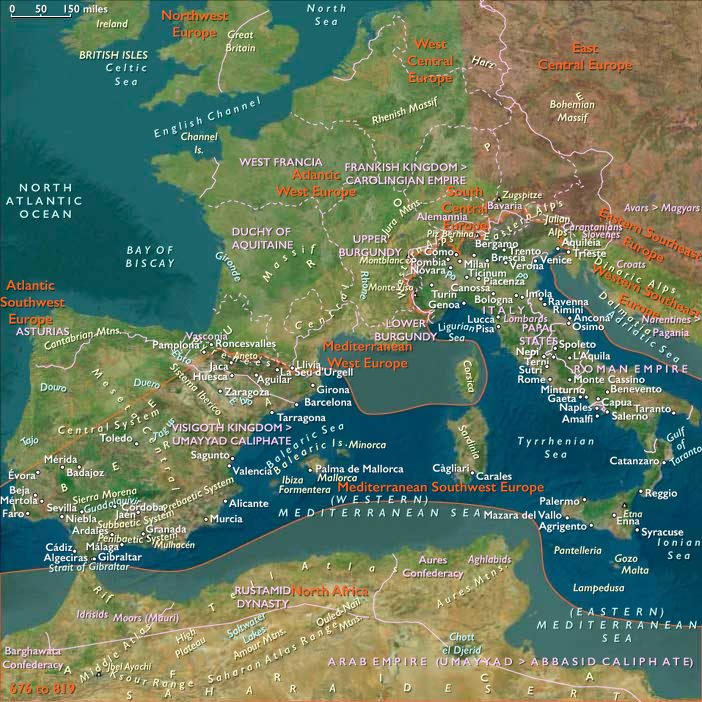
Related Events
Showing 10 events out of 55985 total
Years: 687 - 687
Locations
People
Groups
- Christianity, Chalcedonian
- Greeks, Medieval (Byzantines)
- Rome, Duchy of
- Ravenna, Exarchate of
- Roman Empire, Eastern: Heraclian dynasty
- Christians, Monotheletist
Topics
Subjects
Regions
Subregions