
Chieftain Géza (972-97), Arpad's great-grandson, fearing a …
Years: 964 - 1107
Otto complies, and in 975 Géza and a few of his kinsmen are baptized into the Roman Catholic Church.
Géza consents to baptism more out of political necessity than conviction.
He continues to offer sacrifices to the pagan gods and reportedly brags that he is "rich enough for two gods."
From this time, however, missionaries begin the gradual process of converting and simultaneously westernizing the Magyar tribes.
Géza uses German knights and his position as chief of the Magyars' largest clan to restore strong central authority over the other clans.
Hungary's ties with the West are strengthened in 996 when Géza's son, Stephen, who had been baptized as a child and educated by Saint Adalbert of Prague, marries Gisela, a Bavarian princess and sister of Emperor Henry II.
Locations
People
- Adalbert of Prague
- Gisela of Swabia
- Géza
- Henry II, Holy Roman Emperor
- Otto II
- Stephen I of Hungary
- Árpád
Groups
- Polytheism (“paganism”)
- Transylvania, region of
- Germans
- Hungarian people
- Slavs, West
- Hungarians, Realm of the (Etelköz)
- Hungary, Principality of
- Bavaria, Ottonian Duchy of
- German, or Ottonian (Roman) Empire
- Germany, Kingdom of (within the Holy Roman Empire)
- Christians, Roman Catholic
Topics
Commodoties
Subjects
Regions
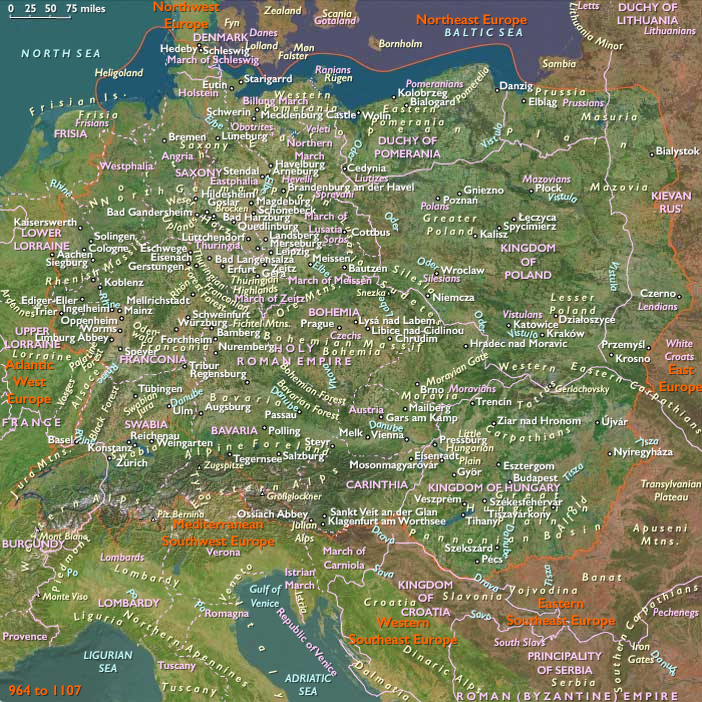
Subregions
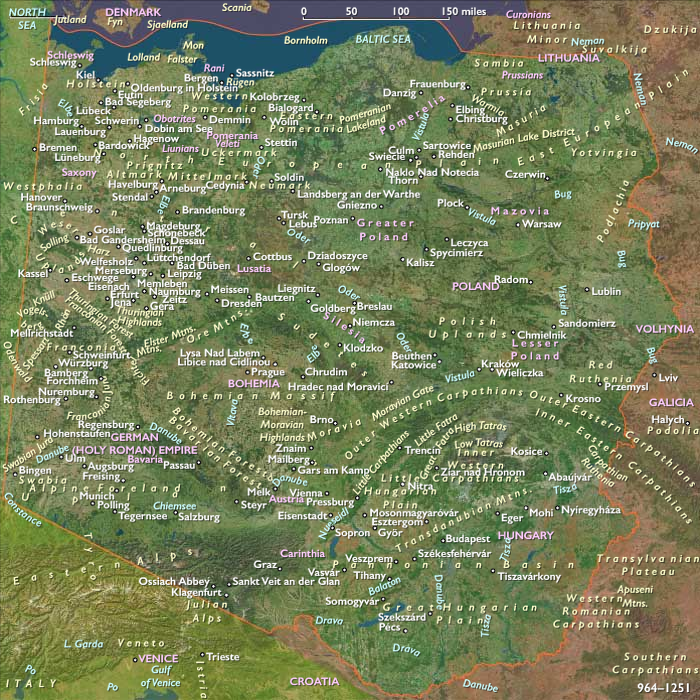
Years: 964 - 1107
Locations
People
- Adalbert of Prague
- Gisela of Swabia
- Géza
- Henry II, Holy Roman Emperor
- Otto II
- Stephen I of Hungary
- Árpád
Groups
- Polytheism (“paganism”)
- Transylvania, region of
- Germans
- Hungarian people
- Slavs, West
- Hungarians, Realm of the (Etelköz)
- Hungary, Principality of
- Bavaria, Ottonian Duchy of
- German, or Ottonian (Roman) Empire
- Germany, Kingdom of (within the Holy Roman Empire)
- Christians, Roman Catholic
Topics
Commodoties
Subjects
Regions
Subregions