
The Livonian Confederation has by the late …
Years: 1558 - 1558
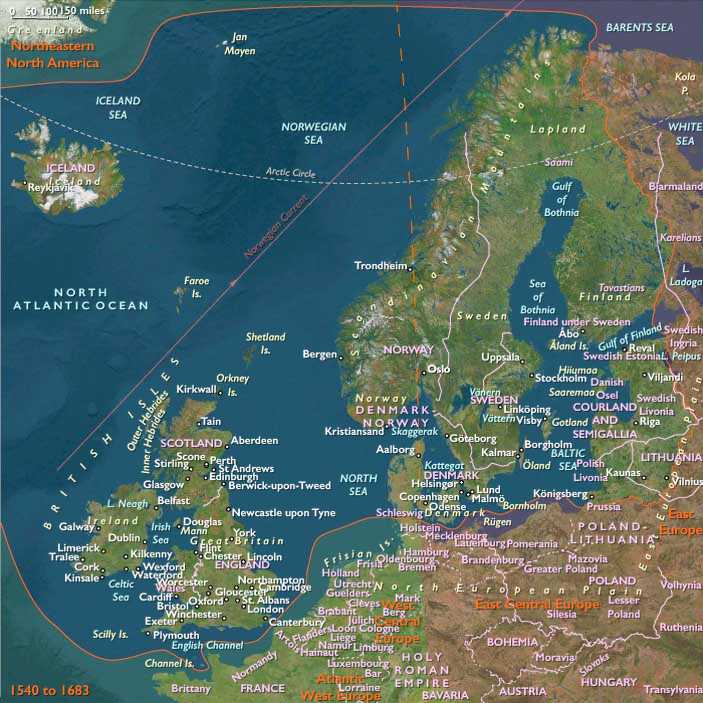
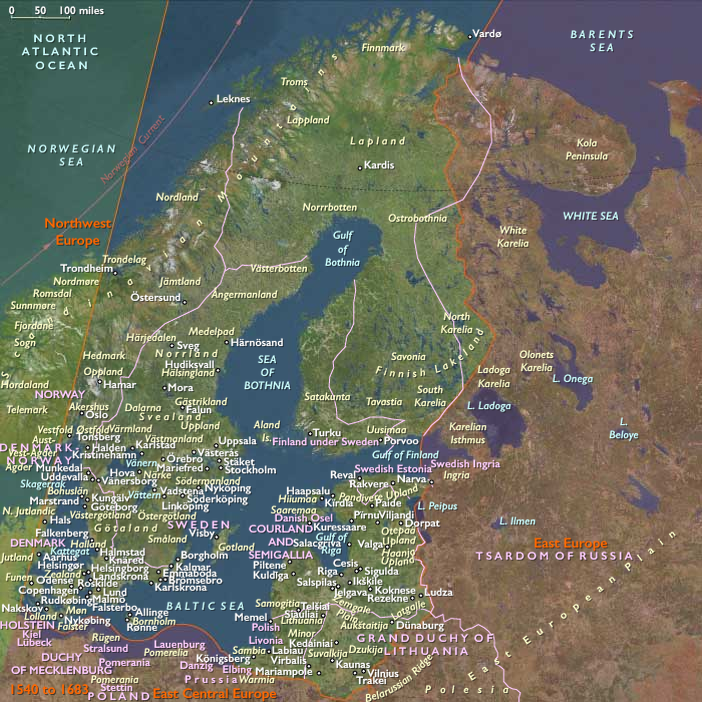
The Livonian Confederation has by the late 1550s disintegrated over a series of internal disputes, while its Eastern neighbor Russia has grown stronger after annexing the khanates of Kazan and Astrakhan in 1552 and 1556, respectively.
The conflict between Russia and the Western powers is exacerbated by Russia's isolation from sea trade.
Nor can the tsar hire qualified labor in Europe: Hans Schlitte, the agent of Tsar Ivan IV, had in 1547 employed craftsmen in Germany for work in Russia, but all these craftsmen had been arrested in Lübeck at the request of Livonia.
The German Hanseatic League has ignored the new Ivangorod port built in 1550 by Tsar Ivan on the eastern shore of the Narva River and continues to trade with the ports owned by Livonia.
Competition for the Baltic coast with Sweden had escalated into open war in 1554, interrupted only by a fragile truce in March 1557.
Ivan now demands that the Livonian Confederation pay forty thousand thalers for the Bishopric of Dorpat, based on a claim that the territory had once been owned by the Russian Novgorod Republic.
The federation turns to the Polish-Lithuanian union in the Treaty of Pozvol; Ivan regards this as casus belli.
The dispute ends with a Russian invasion in 1558.
Russian troops occupy Dorpat (Tartu) and ...
Locations
People
Groups
- Terra Mariana (Livonian Confederation)
- Livonian Order
- Poland of the Jagiellonians, Kingdom of
- Lithuania, Grand Duchy of
- Sweden, (second) Kingdom of
- Russia, Tsardom of
- Courland and Semigallia, Duchy of
Topics
Commodoties
Subjects
Regions
Subregions
Years: 1558 - 1558
Locations
People
Groups
- Terra Mariana (Livonian Confederation)
- Livonian Order
- Poland of the Jagiellonians, Kingdom of
- Lithuania, Grand Duchy of
- Sweden, (second) Kingdom of
- Russia, Tsardom of
- Courland and Semigallia, Duchy of
Topics
Commodoties
Subjects
Regions
Subregions