
A competition to decide whether stationary steam …
Years: 1829 - 1829
October
A competition to decide whether stationary steam engines or locomotives will be used to pull the trains has been arranged by the directors of the Liverpool and Manchester Railway as it approaches completion.
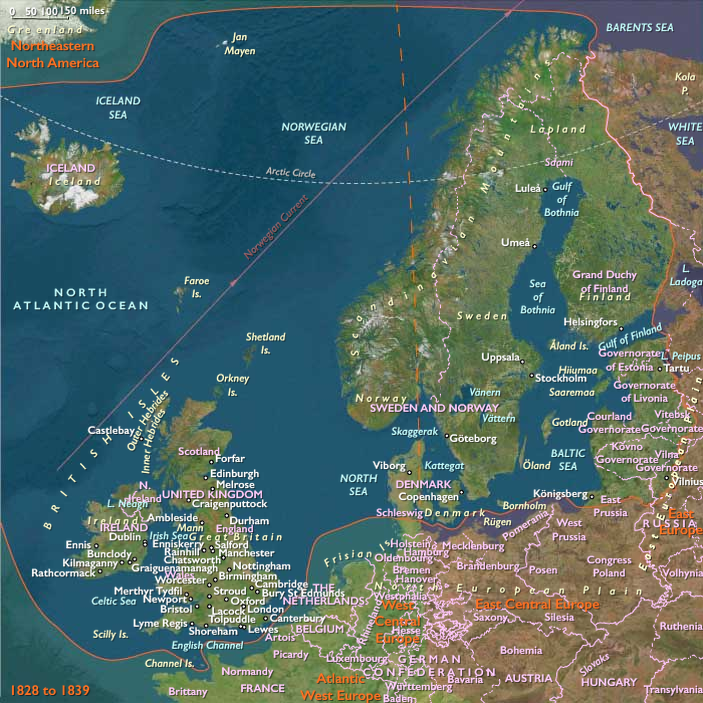
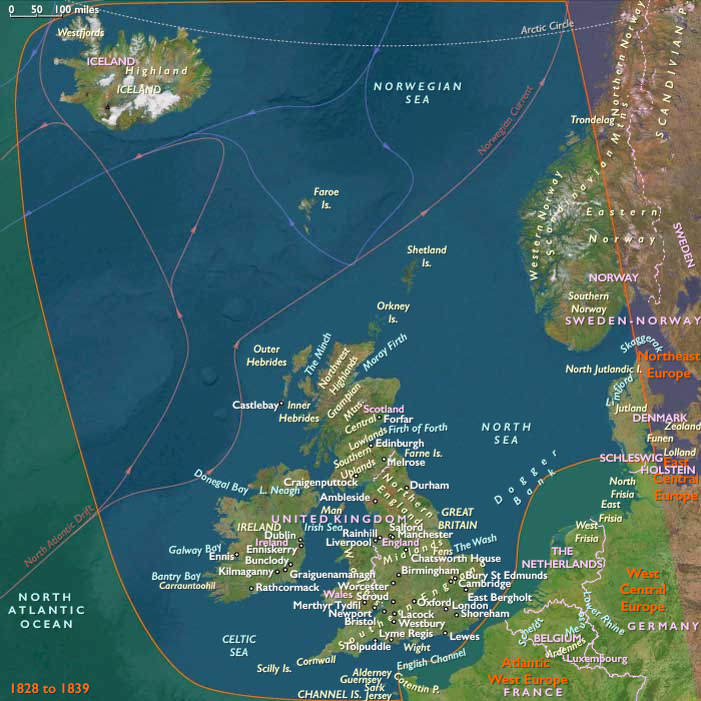
The Rainhill Trials, held in October of 1829 in Rainhill, Merseyside (between Liverpool and Manchester) are arranged as an open contest that will let them see all the locomotive candidates in action, with the choice to follow.
Regardless of whether or not locomotives were settled upon, a prize of five hundred pounds is offered to the winner of the trials.
Swedish inventor and mechanical engineer John Ericsson, while surveying in northern Sweden as an army lieutenant, had in his spare time constructed a heat engine that used the fumes from the fire instead of steam as a propellant.
His skill and interest in mechanics made him resign from the army and move to England in 1826.
However, his heat engine was no success, as his prototype was designed to use birch wood as fuel and would not work well with coal, which was the main fuel used in England.
Notwithstanding the disappointment, he invented several other mechanisms instead based on steam, improving the heating process by adding fans to increase oxygen supply to the fire bed.
In 1829, his steam engine "Novelty" joins the Rainhill Trials, in which ten locomotives are entered, but on the day the competition begins—October 6, 1829—only five locomotives actually begin the tests.
Although "Novelty" is the fastest in the competition, it suffers recurring boiler problems and cannot continue to compete—the competition being won by the English engineer George Stephenson and his son Robert, who, having built the “Rocket” after three years of work, receive the five hundred pound prize.
U. S. railways will soon begin importing English locomotives.
Locations
People
Groups
Topics
Subjects
Regions
Subregions
Related Events
Showing 10 events out of 19238 total
Years: 1829 - 1829
October
Locations
People
Groups
Topics
Subjects
Regions
Subregions