
The Liao Khitan Mongols seize control of …
Years: 907 - 907
The Liao Khitan Mongols seize control of Chinese border areas in 907 and establish rulership there.
(Cathay, the ancient name for China, coined by the early travelers from the Middle East, is derived from Khitan or Khitai.)
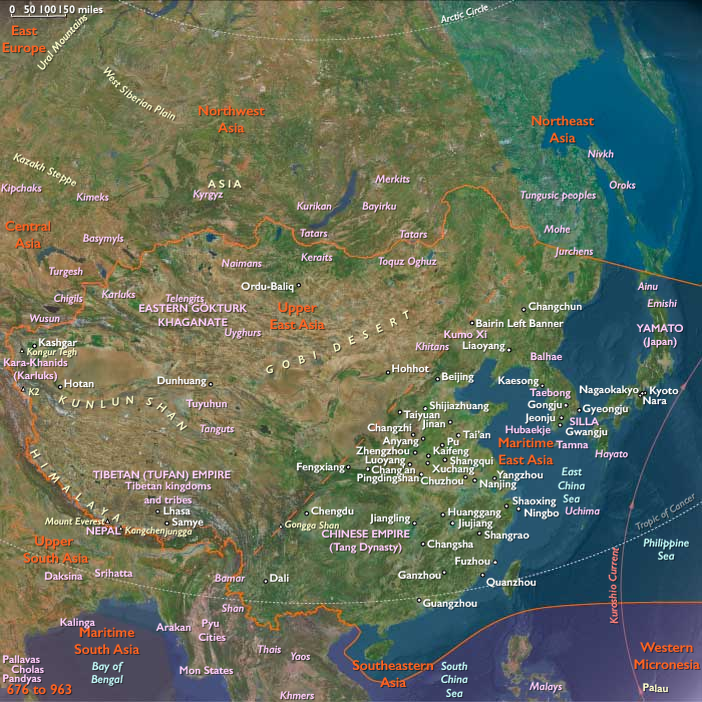
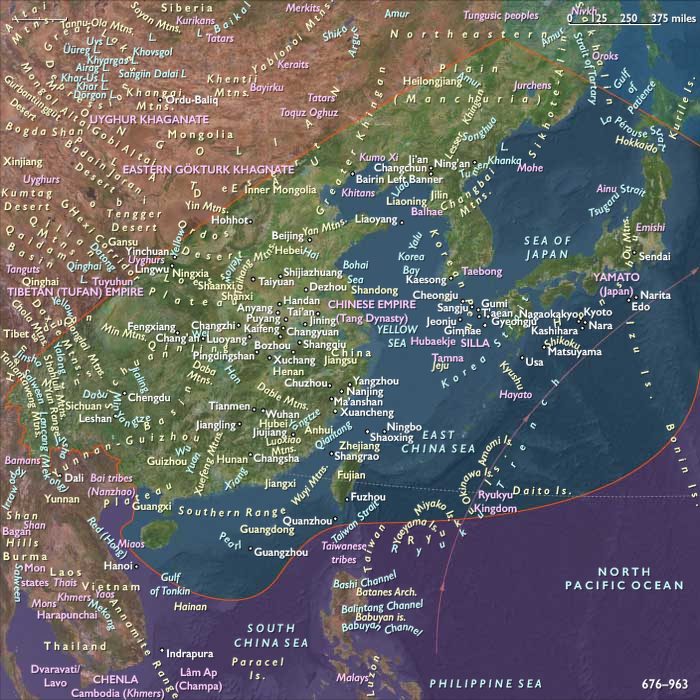
The Khitan reside on the east slope of the Greater Khingan Mountains (Xing'an).
West of the mountains are other nomadic pastoral tribes such as the Shiwei, and the Xi, along with the Turkic Uyghur tribe, which have intermarried with the Khitan.
East and northeast, all the way to the Amur river, live the Jurchen tribe, residing in small villages and subsisting by hunting and fishing.
Across the Liao River to the east and southeast to the Yalu River are the Bohai people, the majority of which are a settled agricultural society.
The Bohai rule over a population of Koreans and Chinese that they had subjugated.
The Yaolian clan had dominated the leadership of the Khitan tribes since the 750s, maintaining good relations with the Tang Dynasty of China to the south.
However, by the end of the ninth century, leaders of the powerful Yila Tribe were expressing dissatisfaction with the Yaolian khans.
Abaoji's father had been the elected chieftain of the Yila Tribe.
As surnames are considered a marker of Chinese culture, they are not used by the Khitan people outside of the Yaolian imperial clan.
Abaoji had become chieftain of the Yila tribe in 901 and in 903, was named the Yuyue, Commander of all Khitan military forces.
This had the effect of making him second only to the great khan in the hierarchy of the Khitan nation.
He had started making a name for himself in 905, when he led seventy thousand cavalry into Shanxi to in support of Li Keyong against Zhu Wen, demonstrating his willingness to be to be more aggressive than the Great Khan.
He appears at the triennial council in 907 and demands to be named the khaghan, the Khan of Khans.
His successes against the Chinese in the north, who he has been raiding since 901, lead to receiving the support of seven tribal chiefs and even the acquiescence of the last Yaolian Great Khan himself.
Locations
People
Groups
- Korean people
- Khitan people
- Chinese (Han) people
- Balhae (Bohai, or Pohai), Kingdom of
- Uyghur people
- Jurchens
- Later Liang Dynasty
- Liao Dynasty, or Khitan Empire
Topics
Commodoties
Subjects
Regions
Subregions
Related Events
Showing 10 events out of 53468 total
Years: 907 - 907
Locations
People
Groups
- Korean people
- Khitan people
- Chinese (Han) people
- Balhae (Bohai, or Pohai), Kingdom of
- Uyghur people
- Jurchens
- Later Liang Dynasty
- Liao Dynasty, or Khitan Empire
Topics
Commodoties
Subjects
Regions
Subregions