
The lavish brick-walled royal mausoleum of the …
Years: 940 - 951
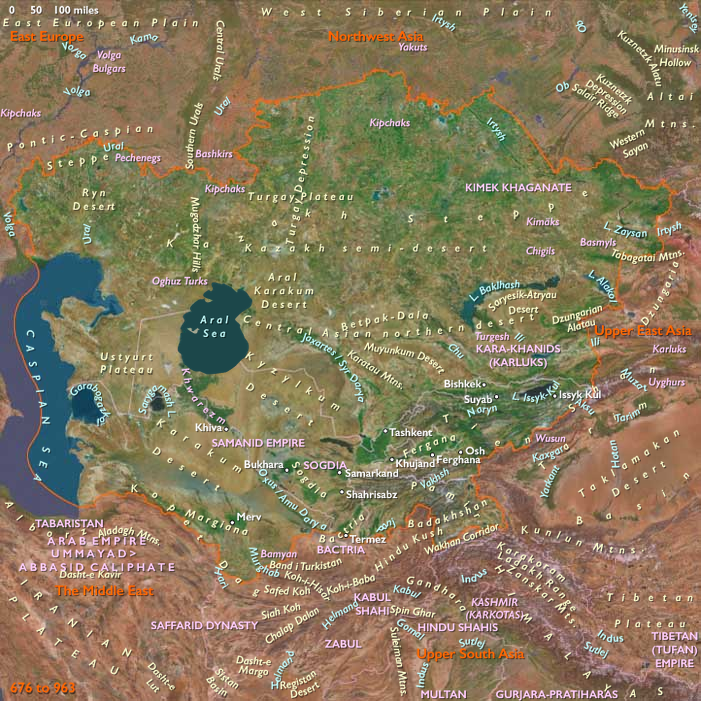
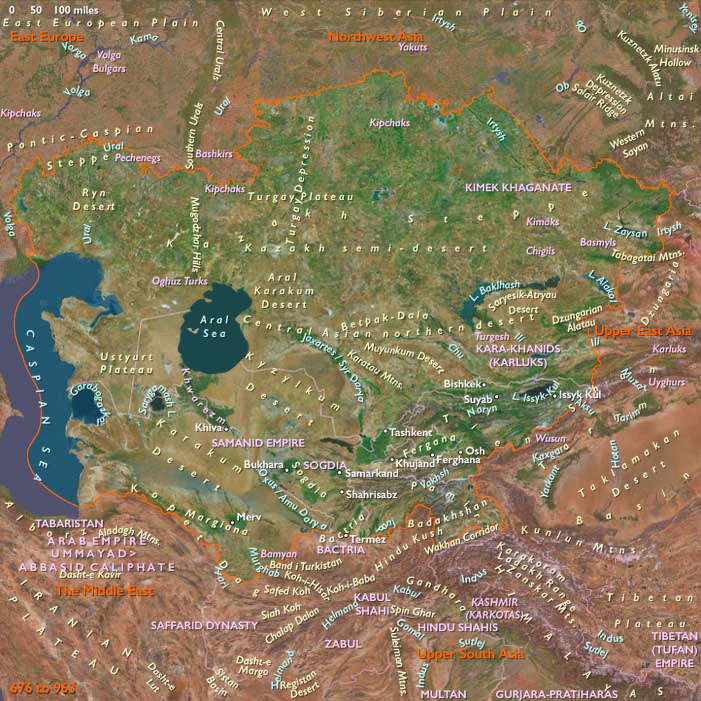
The lavish brick-walled royal mausoleum of the Samanid dynasty, built at Bukhara (in present-day Uzbekistan) is a masterpiece of tomb constructions.
The Samanid mausoleum, located in the historical urban nucleus of the city, in a park laid out on the site of an ancient cemetery, has been built between 892 and 943 as the resting-place of Ismail Samani—a powerful and influential amir of the Samanid dynasty, one of the Persian dynasty to rule in Central Asia, which holds the city in the ninth and tenth centuries.
Although in the first instance the Samanids had been Governors of Khorasan and Transoxiana under the suzerainty of the Abbasid Caliphate, the dynasty had soon established virtual independence from Baghdad.
This mausoleum marks a new era in the development of Central Asian architecture, which had been revived after the Arab conquest of the region.
The architects had continued the ancient tradition of baked brick construction, but to a much higher standard than had been seen before.
The construction and artistic details of the brickwork are still enormously impressive, and display traditional features dating back to pre-Islamic culture.
Locations
Groups
Topics
Subjects
Regions
Subregions
Related Events
Showing 1 events out of 1 total
Years: 940 - 951
Locations
Groups
Topics
Subjects
Regions
Subregions