
The Later Zhou Dynasty had been the …
Years: 974 - 974
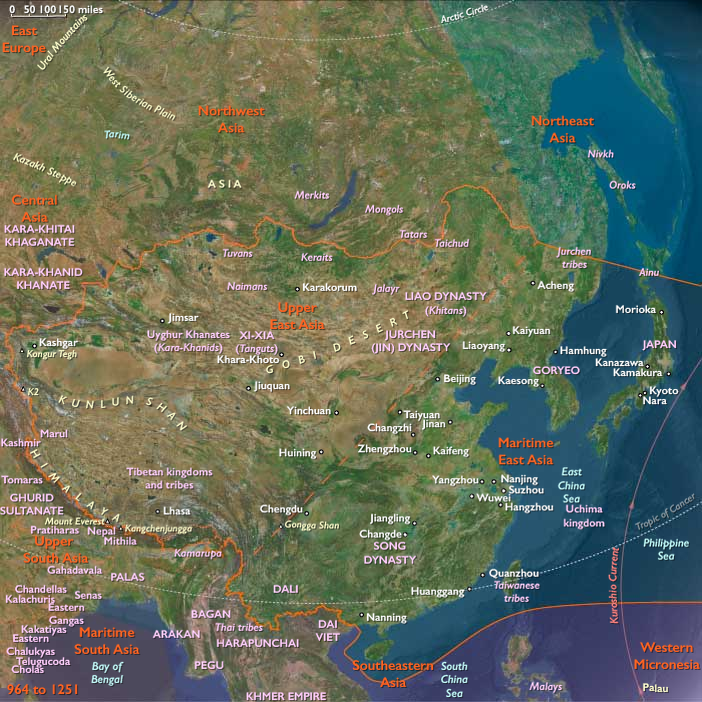
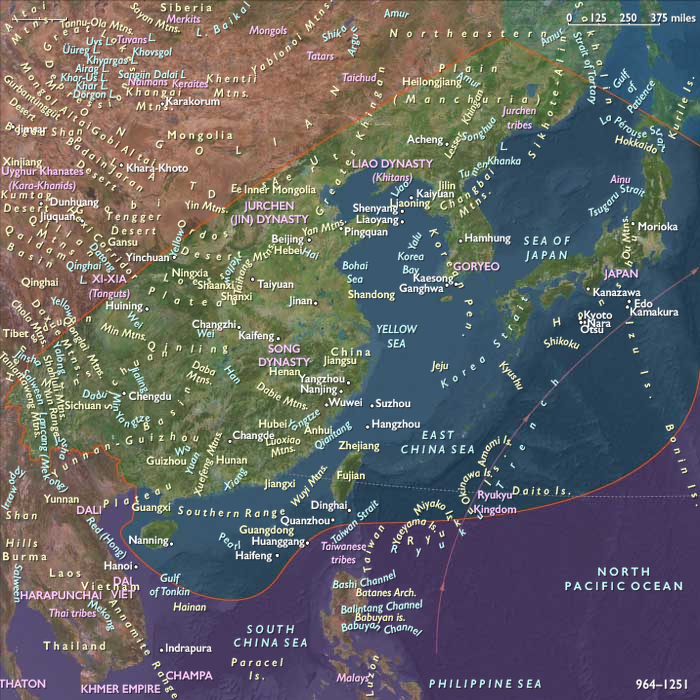
The Later Zhou Dynasty had been the last of the Five Dynasties that had controlled northern China after the fall of the Tang Dynasty in 907.
Zhao Kuangyin, later known as Emperor Taizu, had usurped the throne with the support of military commanders, initiating the Song Dynasty.
Upon taking the throne in 960, his first goal had been the reunification of China after half a century of political division.
This included the conquests of Nanping, Wu-Yue, Southern Han, Later Shu, and Southern Tang in the south as well as the Northern Han and the Sixteen Prefectures in the north.
During the first couple decades of rule, relations between the Song and the Liao dynasty, a Khitan empire in northern China that rules over the regions of Manchuria, Mongolia, and parts of northern China proper, have been relatively peaceful, the two outstanding issues of the Northern Han—the remnant of the Later Han Dynasty that had been toppled in 950—and Sixteen Prefectures—a disputed region in northern China stretching from present-day Beijing westward to Datong—notwithstanding.
The two begin exchanging embassies on New Years Day, 974.
However, this peace is an illusion as the Song state is more concerned with consolidating the south.
With capable military officers, the Song military has become the dominant force in China.
Techniques of warfare such as defending supply lines across floating pontoon bridges have led to success in battle; such is the case in the Song assault against the Southern Tang state while crossing the Yangtze River in 974.
Locations
People
Groups
- Khitan people
- Chinese (Han) people
- Liao Dynasty, or Khitan Empire
- Tang, Southern
- Northern Han
- Chinese Empire, Pei (Northern) Song Dynasty
Commodoties
Subjects
Regions
Subregions
Related Events
Showing 10 events out of 52444 total
Years: 974 - 974
Locations
People
Groups
- Khitan people
- Chinese (Han) people
- Liao Dynasty, or Khitan Empire
- Tang, Southern
- Northern Han
- Chinese Empire, Pei (Northern) Song Dynasty
Commodoties
Subjects
Regions
Subregions