
The late Saladin, although having provided for …
Years: 1196 - 1196
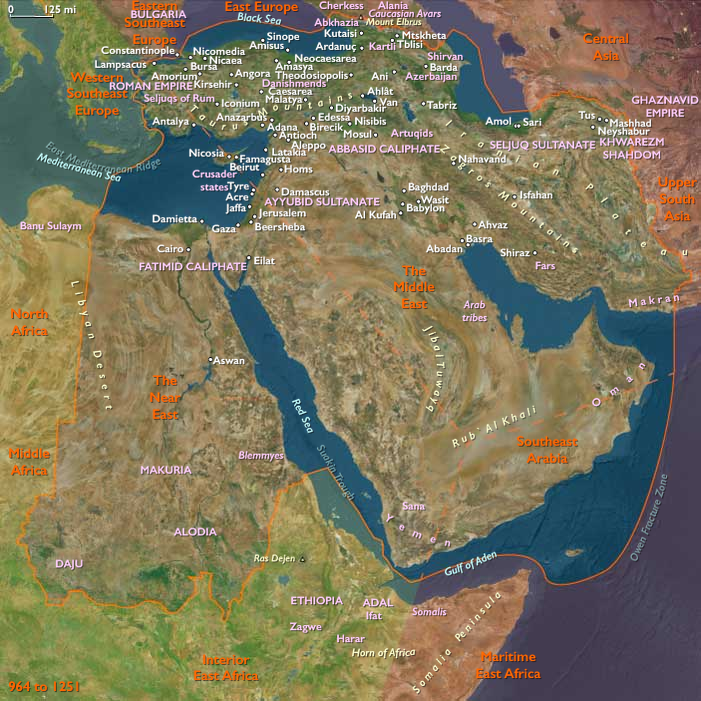
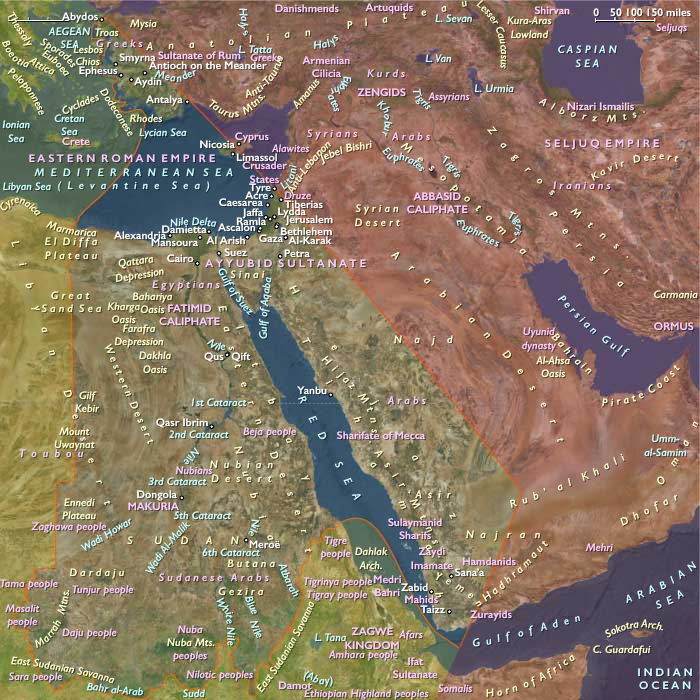
The late Saladin, although having provided for the division of his Muslim empire among his male Ayyubid relatives, had failed before his death to designate a successor to the sultanate of Cairo.
A dynastic war begins in 1196 between his sons, one the ruler of Egypt, the other of Syria.
Locations
People
- Al-Adil I
- Amalric II of Jerusalem
- Henry II, Count of Champagne
- Henry VI, Holy Roman Emperor
- Humphrey IV of Toron
- Isabella I of Jerusalem
- Pope Celestine III
- Pope Innocent III
- Richard I of England
Groups
- Arab people
- Kurdish people
- Muslims, Sunni
- Syrian people
- Flemish people
- Turkmen people
- French people (Latins)
- Christians, Roman Catholic
- Assassins
- Jerusalem, Latin Kingdom of
- Italians (Latins)
- Anglo-Normans
- Hospitallers of St. John of Jerusalem
- Templar, Knights (Poor Knights of Christ and of the Temple of Solomon)
- England, (Plantagenet, Angevin) Kingdom of
- Damascus, Ayyubid Dynasty of
- Egypt, Ayyubid Sultanate of
- Teutonic Knights of Acre (House of the Hospitalers of Saint Mary of the Teutons in Jerusalem)
- Cyprus, Kingdom of
Topics
Commodoties
Subjects
Regions
Subregions
Related Events
Showing 10 events out of 47746 total
Years: 1196 - 1196
Locations
People
- Al-Adil I
- Amalric II of Jerusalem
- Henry II, Count of Champagne
- Henry VI, Holy Roman Emperor
- Humphrey IV of Toron
- Isabella I of Jerusalem
- Pope Celestine III
- Pope Innocent III
- Richard I of England
Groups
- Arab people
- Kurdish people
- Muslims, Sunni
- Syrian people
- Flemish people
- Turkmen people
- French people (Latins)
- Christians, Roman Catholic
- Assassins
- Jerusalem, Latin Kingdom of
- Italians (Latins)
- Anglo-Normans
- Hospitallers of St. John of Jerusalem
- Templar, Knights (Poor Knights of Christ and of the Temple of Solomon)
- England, (Plantagenet, Angevin) Kingdom of
- Damascus, Ayyubid Dynasty of
- Egypt, Ayyubid Sultanate of
- Teutonic Knights of Acre (House of the Hospitalers of Saint Mary of the Teutons in Jerusalem)
- Cyprus, Kingdom of
Topics
Commodoties
Subjects
Regions
Subregions