
Southern Switzerland’s five-member Christian Union, convinced that …
Years: 1531 - 1531
Southern Switzerland’s five-member Christian Union, convinced that the Thurgau is being forcibly Protestantized by Zürich, suddenly declares war on the Protestant canton.
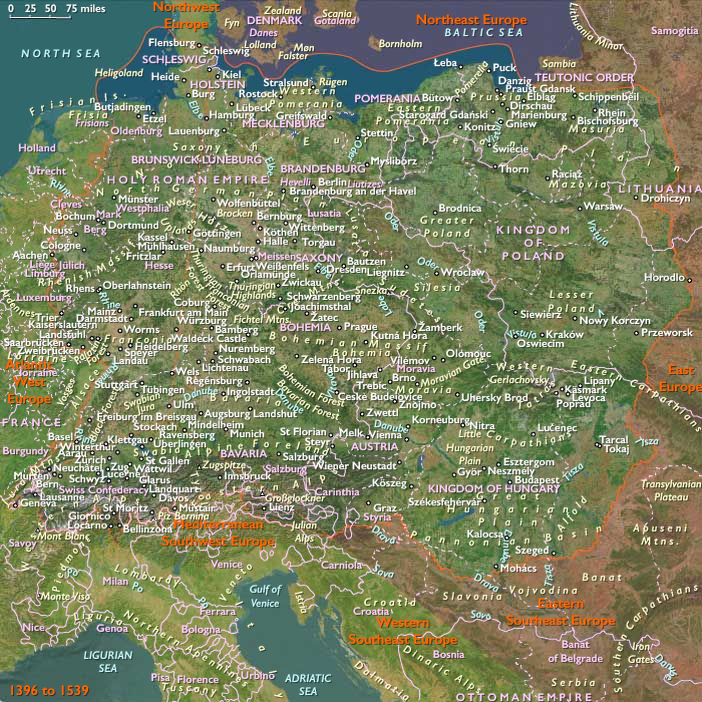
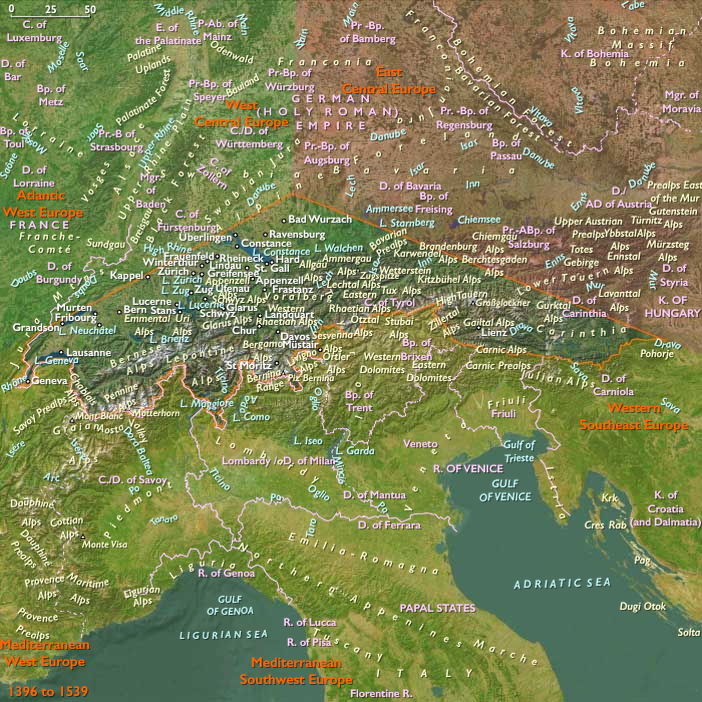
Zürich hastily assembles an army to meet the Christian Union’s forces on October 11, 1531, at Kappel, where Swiss reformer Huldrych Zwingli, now fifty, is killed.
Most of the Thurgau's population between 1526 and 1531 has adopted the new Reformed faith spreading from Zurich; Zurich's defeat in the War of Kappel (1531) ends Reformed predominance.
Instead, the second peace of Kappel, concluded in 1531 between Zürich and the Catholic Christian Union of southern Switzerland, recognizes the rights and freedoms of Catholics within the union’s five cantons.
People of the Pfyn culture had inhabited the area of the present canton of Tyrgau along Lake Constance in the early fourth millennium.
The canton during Roman times was part of the province Raetia until the Alamanni settled the area in 450.
Thurgovia in the sixth century became a Gau of the Frankish Empire as part of Alemannia, passing in the early tenth century to the Duchy of Swabia.
Thurgovia at this time included not just what is now the canton of Thurgau, but also much of the territory of the modern canton of St. Gallen, the Appenzell and the eastern parts of the canton of Zurich.
The most important cities of Thurgovia in the early medieval period were Constance as the seat of the bishop, and St. Gallen for its abbey.
The dukes of Zähringen and the counts of Kyburg took over much of the land in the High Middle Ages.
When the Kyburg dynasty became extinct in 1264, the Habsburgs took over that land.
The Old Swiss Confederacy allied with ten freed bailiwicks of the former Toggenburg, seized the lands of the Thurgau from the Habsburgs in 1460, and it became a subject territory of seven Swiss cantons (Zurich, Lucerne, Uri, Schwyz, Unterwalden, Zug and Glarus).
Both the Catholic and emerging Reformed parties during the Protestant Reformation in Switzerland have sought to swing the subject territories, such as the Thurgau, to their side.
Local peasants in 1524, in an incident that resonated across Switzerland, had occupied the cloister of Ittingen in the Thurgau, driving out the monks, destroying documents, and devastating the wine-cellar.
Locations
People
Groups
- Christians, Roman Catholic
- Austria, Archduchy of
- Uri, Swiss Canton of
- Schwyz, Swiss Canton of
- Unterwalden, Swiss Canton of
- Lucerne, Swiss Canton of
- Zürich, Swiss Canton of
- Zug, Swiss Canton of
- Protestantism
Topics
Subjects
Regions
Subregions
Related Events
Showing 10 events out of 37959 total
Years: 1531 - 1531
Locations
People
Groups
- Christians, Roman Catholic
- Austria, Archduchy of
- Uri, Swiss Canton of
- Schwyz, Swiss Canton of
- Unterwalden, Swiss Canton of
- Lucerne, Swiss Canton of
- Zürich, Swiss Canton of
- Zug, Swiss Canton of
- Protestantism
Topics
Subjects
Regions
Subregions