
Robert II’s Expansionist Ambitions and the Failed …
Years: 1003 - 1003
Robert II’s Expansionist Ambitions and the Failed Invasion of the County of Burgundy (1003)
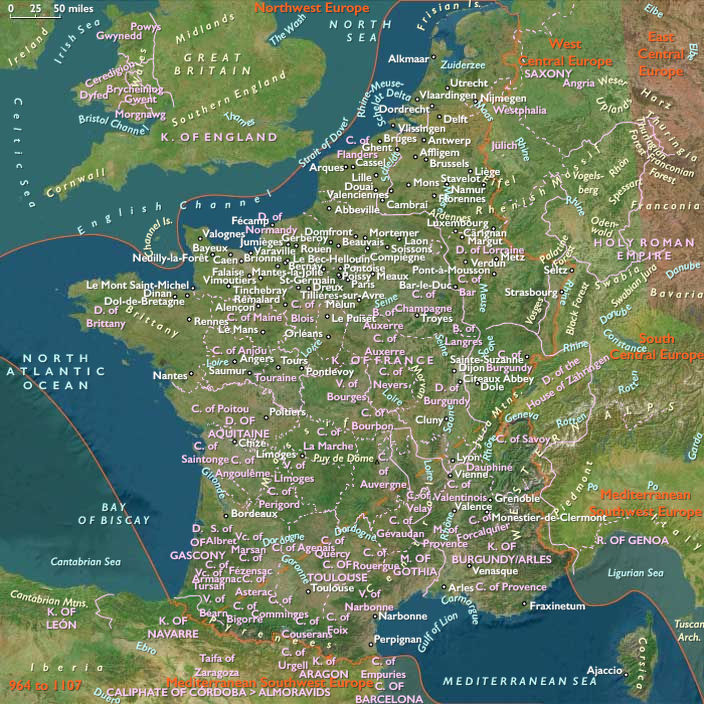
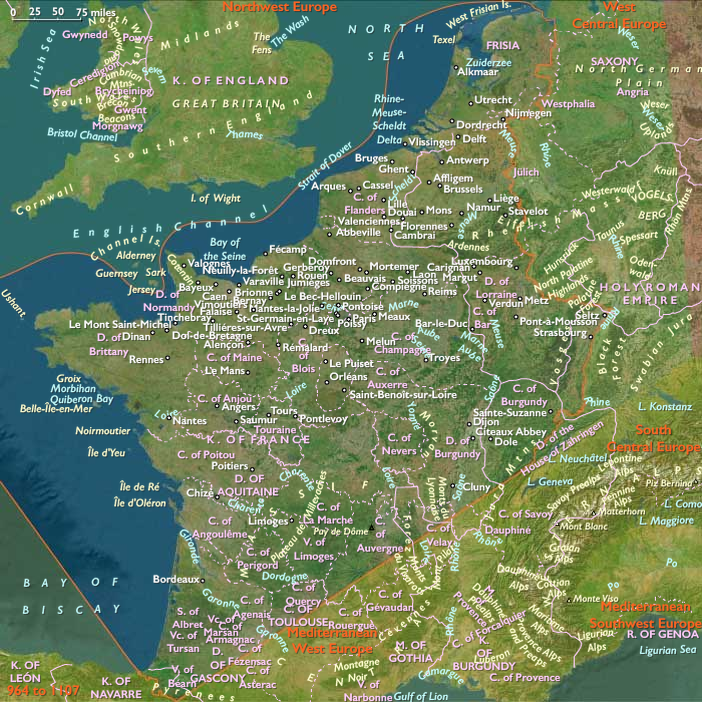
Upon inheriting the Capetian throne in 996, Robert II ("the Pious") ruled over a relatively small and fragmented kingdom, with his direct authority largely confined to Île-de-France. To expand his power, Robert aggressively pursued vacant feudal lands, asserting royal claims wherever possible. This often led to conflict with regional lords, as seen in his failed invasion of the County of Burgundy in 1003.
Robert’s Territorial Aspirations
- The Capetian kings of the early 11th century had little control over the powerful feudal duchies and countiesthat made up much of what is now France.
- Unlike later French kings, Robert did not inherit a strong centralized monarchy but instead relied on dynastic claims and feudal conflicts to expand his direct influence.
- His strategy was to assert Capetian rights over any feudal land that became vacant, leading to military campaigns against rival claimants.
The Invasion of the County of Burgundy (1003)
- In 1002, the death of Otto-William, Count of Burgundy, left a succession dispute over the Free County of Burgundy (Franche-Comté).
- Seeing an opportunity to extend Capetian control eastward, Robert II launched an invasion in 1003.
- However, local resistance, likely led by Otto-William's allies and supported by Holy Roman Empire-backed forces, thwarted the Capetian advance.
Consequences of the Failed Campaign
- Robert II’s inability to seize Burgundy highlighted the limitations of Capetian power in this era.
- The failure of the invasion reinforced the autonomy of the region, which remained outside Capetian control.
- This setback demonstrated that Capetian authority was not yet strong enough to impose direct rule over the great feudal lords, a challenge that would persist for centuries.
Legacy
Though unsuccessful, Robert II’s aggressive feudal claims laid the groundwork for future Capetian expansion. Later kings, particularly Philip II Augustus, would adopt similar strategies but with greater success, gradually consolidating royal authority over France’s fragmented feudal territories.
Locations
People
Groups
- Christianity, Chalcedonian
- Papal States (Republic of St. Peter)
- Arles, Kingdom of, or Second Kingdom of Burgundy
- Burgundy, County of
- France, (Capetian) Kingdom of
Subjects
Regions
Subregions
Related Events
Showing 10 events out of 51945 total
Years: 1003 - 1003
Locations
People
Groups
- Christianity, Chalcedonian
- Papal States (Republic of St. Peter)
- Arles, Kingdom of, or Second Kingdom of Burgundy
- Burgundy, County of
- France, (Capetian) Kingdom of
Subjects
Regions
Subregions