The Khazar Correspondence reveals that the Rus'-Byzantine …
Years: 940 - 951
The Khazar Correspondence reveals that the Rus'-Byzantine War of 941, which takes place during the reign of Igor of Kiev, had been instigated by the Khazars, who wished revenge on the Empire after the persecutions of the Jews undertaken by Emperor Romanos I Lekapenos.
People
Groups
- Polytheism (“paganism”)
- Jews
- Christianity, Chalcedonian
- Khazar Khaganate
- Rus' people
- Roman Empire, Eastern: Macedonian dynasty
- Kievan Rus', or Kiev, Great Principality of
Topics
Commodoties
Subjects
Regions
Subregions
Related Events
Filter results
Showing 10 events out of 53052 total
There is brisk trade between the overseas world and the Fujian kingdom of Min and the rich Guangdong kingdom of Nan Han in the first half of the tenth century, between the fall of Tang and the rise of Song.
Srivijaya undoubtedly benefits from this, in anticipation of the prosperity it will enjoy under the early Song.
The lavish brick-walled royal mausoleum of the Samanid dynasty, built at Bukhara (in present-day Uzbekistan) is a masterpiece of tomb constructions.
The Samanid mausoleum, located in the historical urban nucleus of the city, in a park laid out on the site of an ancient cemetery, has been built between 892 and 943 as the resting-place of Ismail Samani—a powerful and influential amir of the Samanid dynasty, one of the Persian dynasty to rule in Central Asia, which holds the city in the ninth and tenth centuries.
Although in the first instance the Samanids had been Governors of Khorasan and Transoxiana under the suzerainty of the Abbasid Caliphate, the dynasty had soon established virtual independence from Baghdad.
This mausoleum marks a new era in the development of Central Asian architecture, which had been revived after the Arab conquest of the region.
The architects had continued the ancient tradition of baked brick construction, but to a much higher standard than had been seen before.
The construction and artistic details of the brickwork are still enormously impressive, and display traditional features dating back to pre-Islamic culture.
East Central Europe (940–951 CE): Ottonian Ascendancy, Magyar Stabilization in Hungary, and Bohemian Expansion under Boleslaus I
Between 940 and 951 CE, East Central Europe—encompassing modern-day Poland, Czechia, Slovakia, Hungary, and eastern portions of Germany and Austria east of 10°E and north of a line from approximately 48.2°N at 10°E to the Austro-Slovenian border near 46.7°N, 15.4°E—experienced profound developments characterized by the rise of the Saxon Ottonian dynasty under Otto I the Great, the political stabilization of the Magyar principality, and the aggressive territorial expansion of Bohemia under Duke Boleslaus I. These developments significantly reshaped political boundaries, cultural identities, and power dynamics, influencing medieval East Central Europe's trajectory.
Political and Military Developments
Ottonian Rise and Saxon Dominance
-
In 936 CE, Otto I the Great (r. 936–973) ascended as King of East Francia, initiating the Ottonian dynasty’s dominance. By the early 940s, Otto had firmly established Saxon military and political supremacy, extending authority across Bavaria, Thuringia, and deeper into Slavic territories.
Magyar Political Consolidation
-
During the early 940s, Magyar leaders successfully stabilized internal power structures within the Carpathian Basin, transitioning from raiding incursions to a more sedentary, organized state with developing administrative and territorial frameworks.
Bohemian Expansion under Boleslaus I
-
Boleslaus I (r. 935–972) consolidated Přemyslid control and aggressively expanded Bohemia’s territories. His rule marked a critical expansion period, integrating neighboring Slavic tribes and asserting independence from external powers, notably from Saxon and Magyar influences.
Economic and Technological Developments
Revitalized Trade and Regional Prosperity
-
Political stabilization across Saxony, Bohemia, and Hungary fostered renewed trade networks, increasing economic prosperity. Goods such as textiles, precious metals, agricultural products, and luxury items flowed along revived trade routes.
Fortification and Urban Expansion
-
Under Ottonian direction, fortified towns proliferated along Saxony’s eastern frontier and Bavarian territories. Simultaneously, Bohemia under Boleslaus and Magyar principalities reinforced their own urban defenses, supporting economic growth and political control.
Cultural and Artistic Developments
Ottonian Cultural Renaissance
-
Otto I’s reign saw significant cultural flourishing, notably in ecclesiastical art, manuscript illumination, and architectural innovation. Saxon monasteries and bishoprics became key cultural and religious centers of medieval East Central Europe.
Bohemian Cultural Identity under Přemyslid Rule
-
Boleslaus I actively promoted Bohemia’s distinct cultural identity, significantly expanding ecclesiastical patronage, Slavic liturgical traditions, and artisanal production, strengthening Bohemia’s cultural legacy.
Magyar Cultural and Administrative Development
-
Magyar rulers increasingly embraced elements of neighboring Slavic and European cultures, developing distinct Magyar administrative systems, settlement patterns, and artistic styles, laying foundations for the Hungarian medieval kingdom.
Settlement and Urban Development
Ottonian Fortified Towns
-
Otto I furthered the development of strategically important fortified settlements across eastern Saxony and Bavaria, enhancing regional security, administrative cohesion, and economic vitality.
Bohemian Urban Consolidation
-
Prague and other Bohemian towns experienced sustained growth and consolidation under Boleslaus, becoming major political, cultural, and ecclesiastical hubs central to Přemyslid territorial expansion.
Magyar Settlement Patterns
-
Magyar settlements became increasingly permanent and organized, notably around Esztergom, Székesfehérvár, and emerging trade and administrative centers, reflecting their evolving political stability and social organization.
Social and Religious Developments
Expansion and Influence of Christianity
-
Under Otto I, Christianity expanded vigorously into eastern Saxon and Slavic territories. Ecclesiastical institutions became pivotal to regional governance, social cohesion, and cultural identity throughout East Central Europe.
Dynastic and Aristocratic Strengthening
-
Saxony, Bohemia, and Hungary witnessed strengthened aristocratic and dynastic structures. Ottonian, Přemyslid, and Magyar ruling elites solidified their hierarchical positions, profoundly influencing governance and societal organization.
Long-Term Consequences and Historical Significance
The era 940–951 CE decisively shaped medieval East Central Europe through the ascendant Ottonian dynasty, Magyar political consolidation, and Bohemian territorial expansion. These transformative developments realigned regional politics, fortified distinct cultural identities, and set essential governance structures, significantly impacting East Central Europe’s historical trajectory and influencing political and cultural landscapes for generations.
Eastern Southeast Europe (940–951 CE): Rus'-Byzantine Conflict and Regional Tensions
Settlement and Migration Patterns
Continued Demographic Stability
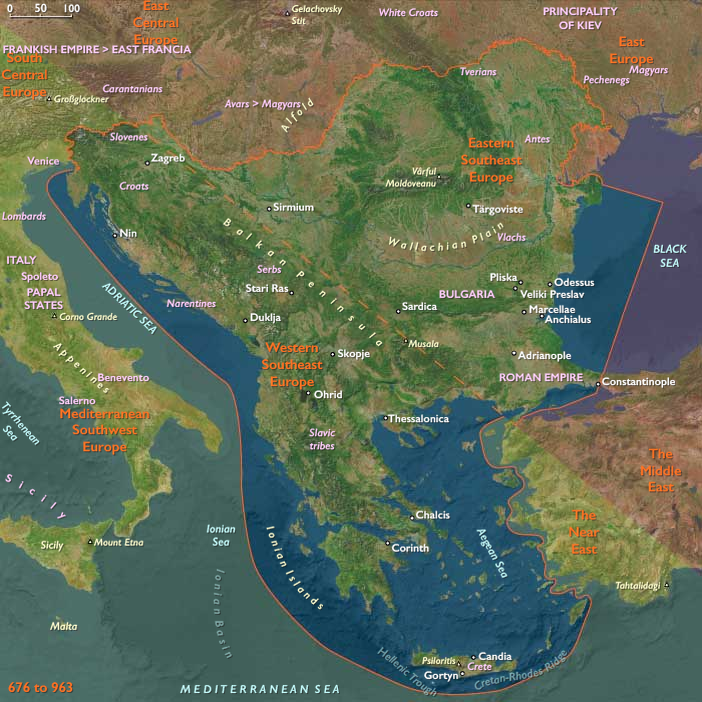
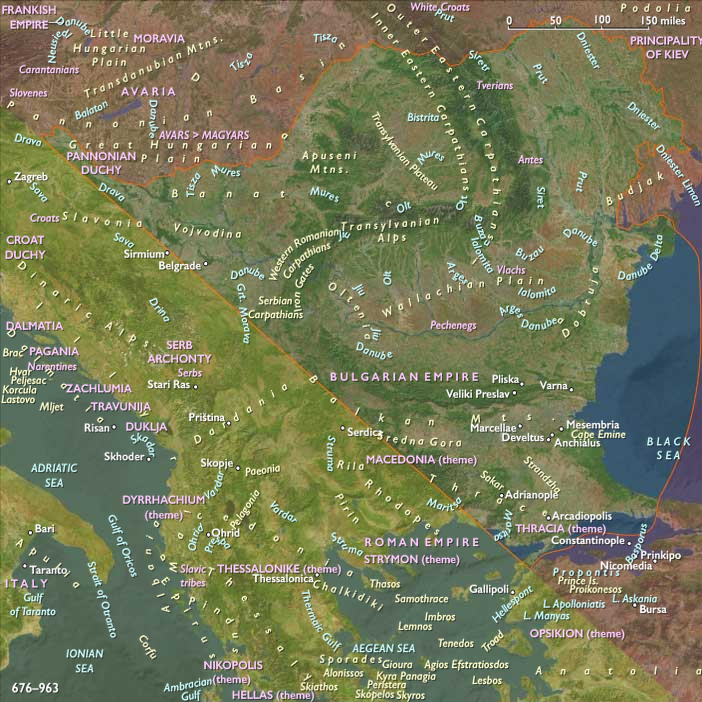
Between 940 and 951 CE, Eastern Southeast Europe maintained demographic continuity, with stable settlements and ongoing cultural interactions among Bulgarians, Slavs, Greeks, and other regional populations.
Political and Military Developments
Rus'-Byzantine War of 941
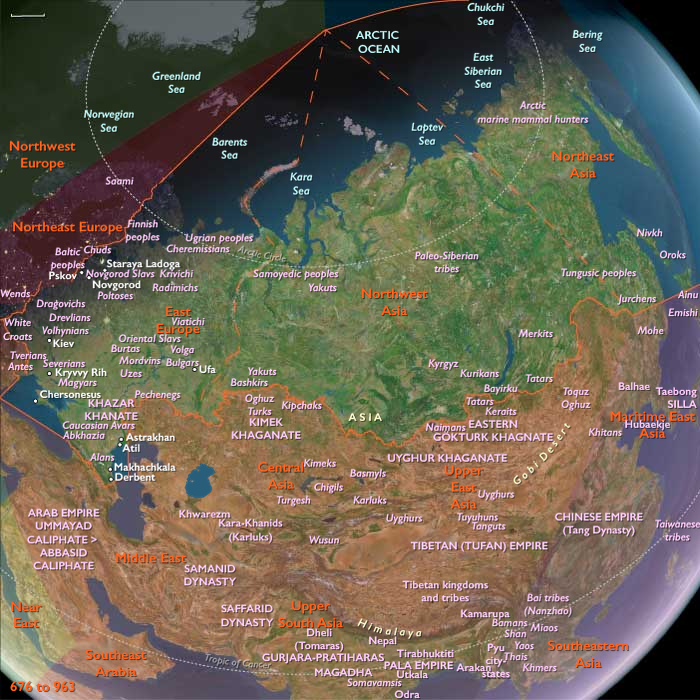
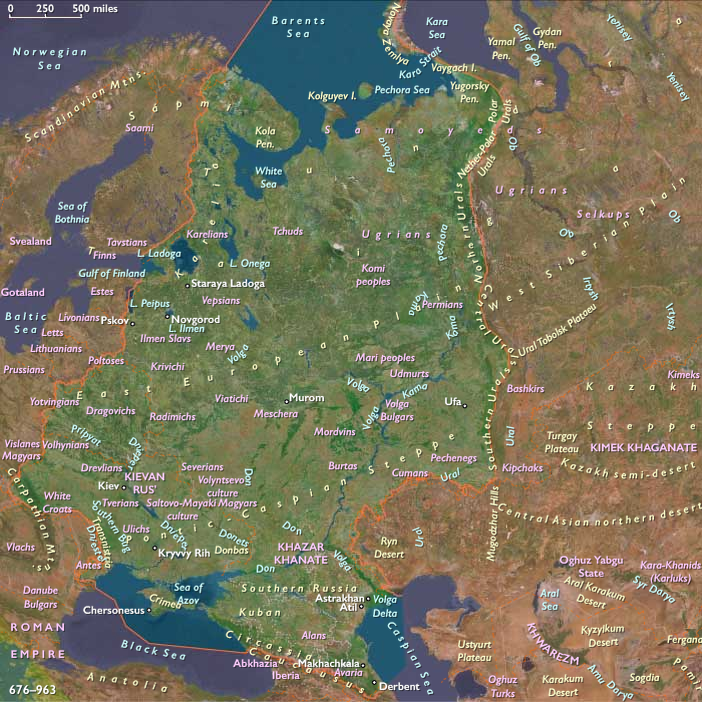
The period was notably marked by the Rus'-Byzantine War of 941, occurring during the reign of Igor of Kiev. According to the Khazar Correspondence, this conflict was instigated by the Khazars in response to Emperor Romanus I Lecapanus's persecutions of Jewish populations. The Khazars sought revenge by prompting the Rus' to launch an assault on the Byzantine Empire, reflecting complex regional alliances and tensions.
Continued Bulgarian and Byzantine Rivalries
The political landscape continued to be shaped by ongoing rivalry and occasional tensions between the Bulgarian and Byzantine states. Although Bulgaria maintained its regional prominence, its power dynamics were continually influenced by external pressures and internal challenges.
Economic and Technological Developments
Sustained Economic Stability
Economic activities remained robust during this period, supported by stable agricultural productivity, trade networks, and ongoing regional craftsmanship, especially in centers such as Preslav. Trade connections, particularly involving Constantinople and Kievan Rus, continued to underpin economic resilience.
Military Fortifications and Defenses
Investments in military fortifications and defensive structures remained crucial for safeguarding regional security, particularly in response to threats such as the Rus' invasion. These efforts protected economic interests and maintained territorial integrity.
Cultural and Artistic Developments
Continued Cultural Flourishing
The region sustained its vibrant artistic and cultural expression, notably in ceramics, glass, metalwork, and tile artistry. These crafts continued to define Bulgaria's cultural identity and were widely exported, reinforcing regional influence.
Scholarly Continuity and Literary Production
Educational institutions and scriptoria persisted in their vital roles, ensuring continued manuscript production and the preservation of classical and theological knowledge. This scholarly continuity significantly supported cultural resilience and intellectual development.
Social and Religious Developments
Influence of Religious Movements
The spread of Paulician and Bogomil doctrines continued, significantly influencing rural populations and contributing to broader religious and social dynamics. These movements further shaped regional religious thought and practice, fostering ongoing discussions about reform and spirituality.
Dominance and Stability of Orthodox Christianity
Despite emerging religious movements, Eastern Orthodox Christianity remained the dominant and stabilizing religious institution, significantly impacting societal structures, cultural cohesion, and regional identity.
Long-Term Consequences and Historical Significance
The period from 940 to 951 CE was defined by significant geopolitical conflicts, notably the Rus'-Byzantine War instigated by Khazar intrigues, and continued regional tensions between Bulgaria and Byzantium. These developments had enduring impacts, shaping the region’s military strategies, diplomatic relationships, and cultural landscape, thereby influencing Eastern Southeast Europe's historical trajectory.

The Middle East: 940–951 CE
Linguistic Transformations and Cultural Shifts
Between 940 and 951 CE, the Middle East experiences a significant linguistic transformation as the flexible word order typical of Middle Iranian languages gradually evolves into the more structured and rigid syntax characteristic of Modern Iranian languages. This linguistic shift underscores broader cultural changes across the Iranian-speaking regions.
Such a linguistic transition reflects deeper cultural realignments and adaptations, influenced by ongoing interactions with neighboring Arab, Turkic, and Kurdish communities. As languages stabilize and diversify, they simultaneously reinforce ethnic identities and facilitate clearer administrative, literary, and scholarly communications.
The crystallization of these modern linguistic structures during this era sets the stage for subsequent literary and intellectual flowering, profoundly influencing regional identity and cultural development for generations to come.
The flexible word order of Middle Iranian language group gives way to the more rigid word orders of Modern Iranian.
The Peak of Raiding in Central and Western Europe (9th–10th Century): The Triple Threat
During the late 9th and early 10th centuries, Europe is battered by relentless raiding forces, disrupting social, economic, and political stability across the continent. The three main groups of raiders—the Vikings, Magyars, and Arab Corsairs—attack from three different fronts, weakening centralized monarchies and accelerating the rise of feudalism as local rulers take defensive measures into their own hands.
1. The Viking Raids (North and West Europe)
- Origins: Norse seafarers from Scandinavia (Denmark, Norway, and Sweden).
- Targets:
- France – Raiding Paris, Rouen, and the Loire Valley; Normandy is created as a Viking settlement.
- British Isles – Raiding and settling in Northumbria, Wessex, and Ireland.
- Low Countries – Dorestad, Frisia, and other riverine towns sacked repeatedly.
- Iberian Peninsula – Viking fleets raid Al-Andalus and the Christian kingdoms of Spain and Portugal.
- Impact:
- Coastal and riverine trade routes devastated.
- Fortified towns and bridges built to block Viking longships.
- Rise of local warlords who organize defenses independently from central rulers.
2. The Magyar Raids (East and Central Europe)
- Origins: Nomadic horsemen from the Eurasian steppes, settling in Pannonia (modern Hungary).
- Targets:
- Germany – Raiding Bavaria, Saxony, and Lotharingia (e.g., the attack on Alsace in 917).
- Italy – Pillaging Lombardy, Tuscany, and Rome’s hinterlands.
- France – Magyar horsemen penetrate Burgundy and the Rhône Valley, reaching as far as Reims in 926.
- Impact:
- Royal armies unable to counter Magyar mobility.
- Local rulers build stone fortresses and rely on cavalry forces for defense.
- Hungarians are finally defeated at the Battle of Lechfeld (955) by Otto I of Germany.
3. The Arab Corsair Raids (Mediterranean Europe)
- Origins: Muslim pirates and raiders from North Africa and Al-Andalus.
- Targets:
- Italy – Raiding Sicily, Corsica, and the mainland, even attacking Rome in 846.
- France – Establishing pirate bases in Provence and the Rhône Valley.
- Spain – Raiding Christian kingdoms in the north and defending Muslim strongholds in Al-Andalus.
- Impact:
- Mediterranean trade severely disrupted, forcing European merchants to move inland.
- Venice and other coastal cities fortify their harbors.
- Frankish rulers struggle to maintain control over the southern frontier.
The Consequences: Feudalism and the Decline of Centralized Rule
- Weakened Monarchies: Kings are unable to mount effective nationwide defenses, leading to localized military responses.
- Rise of Feudal Lords: Nobles take defensive matters into their own hands, building fortresses and raising private armies.
- Shift in Trade and Economy:
- River and coastal trade declines, as travel becomes dangerous.
- Local economies become more self-sufficient, reinforcing feudalism.
Conclusion: The Age of Raiding Reshapes Europe
The triple wave of invasions—Viking, Magyar, and Arab—reshapes medieval Europe, leading to:
- The military rise of local lords (e.g., Robertians in France, Ottonians in Germany).
- The decline of centralized monarchies and the strengthening of feudal territories.
- The fortification of Europe, with castles, walled towns, and cavalry forces becoming the primary form of defense.
This period marks the transformation of Europe into a feudal society, where protection and power shift from royal dynasties to regional warlords, shaping the political landscape for centuries to come.
The first hospice or monastery at the Great St. Bernard Pass in the Pennine Alps was the ninth-century edifice at Bourg-Saint-Pierre, mentioned for the first time around 812-820.
This is destroyed by Saracen incursions in the mid-tenth century, probably in 940, the date at which they also occupy Saint-Maurice.
The frontier with Italy is only a few hundred meters to the south.
Mediterranean Southwest Europe (940–951 CE): Consolidation of the Caliphate of Córdoba and Continued Papal Turmoil
The era 940–951 CE in Mediterranean Southwest Europe is characterized by the strengthening and consolidation of the Caliphate of Córdoba under Abd al-Rahman III, continuing papal corruption and instability in Rome, and persistent cultural vibrancy across the region.
Abd al-Rahman III’s Caliphal Consolidation
In Al-Andalus, Caliph Abd al-Rahman III (r. 912–961 CE) significantly consolidates his power, reinforcing central authority after years of fragmentation. His effective administration restores political stability and facilitates remarkable cultural and economic prosperity. Córdoba flourishes as a prominent intellectual and commercial hub, rivaling leading cities of the contemporary medieval world.
Ongoing Papal Instability and the Saeculum Obscurum
In Rome, the papacy remains mired in the prolonged Saeculum obscurum, deeply influenced by powerful and corrupt Roman aristocratic families such as the Theophylacti. Papal authority remains compromised by ongoing internal scandals, political maneuvering, and nepotism, undermining Rome's religious and political standing across Europe.
Regional Autonomy in Italy
Italy continues its path of political fragmentation as local nobles and regional rulers maintain increasing autonomy, capitalizing on the weakened state of both Carolingian imperial authority and papal influence. Despite this decentralization, regional political and economic stability persist, supported by robust local governance and cultural institutions.
Cultural and Scholarly Persistence
The intellectual and cultural vitality of the region endures, notably in Iberia, where Mozarab and Jewish communities continue their influential roles. Lucena remains a prominent Jewish intellectual center, fostering significant scholarly and cultural achievements, while Mozarab communities maintain their role as intermediaries between Latin-Christian and Islamic traditions.
Technological Innovation and Economic Prosperity
The continuing use of the Catalan forge bolsters regional economic stability, enhancing iron production to support agricultural growth, military strength, and urban development. These technological advancements underpin the ongoing economic prosperity of Mediterranean Southwest Europe despite broader political uncertainties.
Legacy of the Era
The era 940–951 CE highlights the marked contrast between the thriving Caliphate of Córdoba and persistent papal turmoil in Italy. These developments continue shaping the region's complex medieval trajectory, laying the groundwork for further cultural and political transformations.
North Africa (940–951 CE)
Fatimid Stability, Western Fragmentation, and Berber Autonomy
Between 940 and 951 CE, North Africa is characterized by the continued consolidation of the Fatimid Caliphate in Ifriqiya, ongoing decentralization and political fragmentation in Morocco, and persistent autonomy among independent Berber states and tribal confederations across the western Maghreb.
In Ifriqiya, the Fatimid Dynasty, notably under Caliph al-Qa'im bi-Amr Allah (934–946 CE) and his successor, al-Mansur Billah (946–953 CE), achieves considerable administrative efficiency and political stability. Their capital, al-Mahdiyya (modern Mahdia, Tunisia), flourishes as an economic and cultural powerhouse, benefiting greatly from enhanced maritime trade and agricultural productivity. The Fatimid state, supported militarily by loyal Kutama Berbers, cements its political authority and economic vitality throughout the region.
In Morocco, the Idrisid Dynasty continues its steady decline amidst persistent internal factionalism, allowing increasing regional autonomy for prominent Berber groups such as the Miknasa and Maghrawa tribes. Despite this political fragmentation, Fez (Fès) maintains its significance as a cultural, commercial, and scholarly center, although its political prominence diminishes as smaller Berber entities gain greater independence.
The Emirate of Nekor in Morocco's Rif region sustains its economic prosperity and political autonomy, maintaining vital trade links across the Mediterranean, especially with the Umayyad territories in al-Andalus. Along the Atlantic coast, the Barghawata confederation continues to assert its distinct religious and cultural identity, preserving its autonomy and regional influence.
In the Sahara, the strategically positioned city-state of Sijilmasa, controlled by influential Tuareg tribes, remains central to trans-Saharan commerce. Its economic strength continues to derive from trade in gold, salt, and other valuable commodities linking the Mediterranean world to sub-Saharan Africa.
By the conclusion of 951 CE, North Africa stands as a region marked by distinct contrasts: robust Fatimid governance and prosperity in the east juxtaposed against decentralized and autonomous Berber polities in the west. This political mosaic continues to shape the diverse economic, cultural, and political landscape of the Maghreb.
Years: 940 - 951
People
Groups
- Polytheism (“paganism”)
- Jews
- Christianity, Chalcedonian
- Khazar Khaganate
- Rus' people
- Roman Empire, Eastern: Macedonian dynasty
- Kievan Rus', or Kiev, Great Principality of