
The Kenmu Restoration is ostensibly a revival …
Years: 1336 - 1336
The Kenmu Restoration is ostensibly a revival of the older ways, but, in fact, the emperor has his eye set on an imperial dictatorship like that of the emperor of China.
He wants to imitate the Chinese in all their ways and become the most powerful ruler in the East.
Impatient reforms, litigation over land rights, rewards, and the exclusion of the samurai from the political order has caused much complaining, and his political order has begun to fall apart.
Many powerful military families such as the Ashikaga had flocked to emperor Go-Daigo II’s standard to assist him in destroying the Hojo-dominated Kamakura shogunate, but he has failed to reward them properly.
In response to the restored emperor’s rewards to the nobles and not the bushi, the leader of the vassal Ashikaga clan, Ashikaga Takauji, sides with a rebellious movement in Kwanto and assumes leadership of its army.
Ashikaga, who had traveled to eastern Japan without obtaining an imperial edict in order to suppress the Nakasendai Rebellion in 1335, had become disaffected with the Restoration.
Emperor Go-Daigo had ordered Nitta Yoshisada to track down and destroy Ashikaga.
Ashikaga had defeated Nitta Yoshisada at the Battle of Takenoshita in Hakone.
Kusunoki Masashige and Kitabatake Akiie, in communication with Kyoto, had smashed the Ashikaga army.
Takauji had fled to Kyūshū, but the following year, after restructuring his army in Kyūshū, he again approaches Kyōto.
Kusunoki Masashige proposes a reconciliation with Ashikaga Takauji to the emperor, but Go-Daigo rejects this.
He orders Masashige and Yoshisada to destroy Takauji.
Kusunoki's army is defeated at the Battle of Minatogawa.
When Ashikaga's army enters Kyōto, Emperor Go-Daigo resists, fleeing to Mount Hiei, but seeking reconciliation, he sends the Sacred Treasures to the Ashikaga side.
Takauji enthrones the Jimyōin-tō emperor, Kōmyō, and officially begins his shogunate with the enactment of the Kenmu Law Code.
Locations
People
Groups
Topics
Commodoties
Subjects
Regions
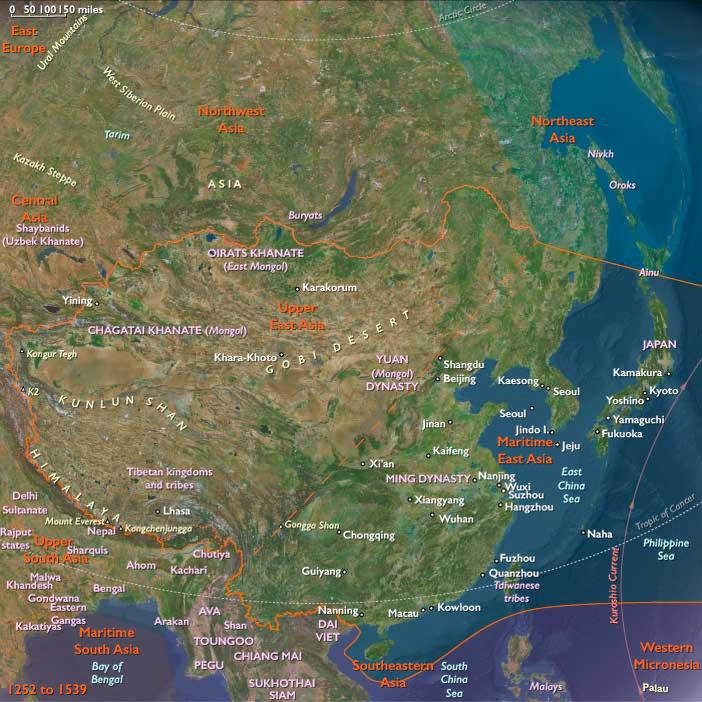
Subregions
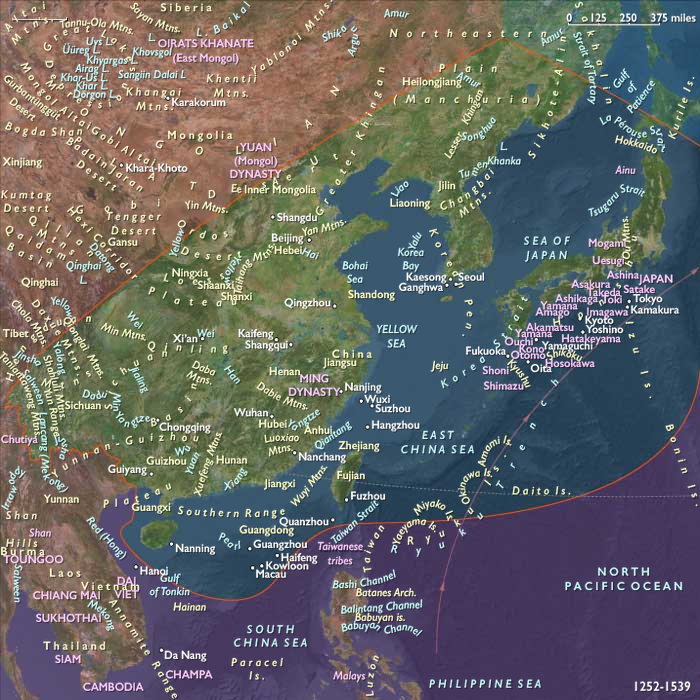
Years: 1336 - 1336
Locations
People
Groups
Topics
Commodoties
Subjects
Regions
Subregions