
The Karakhanid ruler Mahmud II has appealed …
Years: 1141 - 1141
September
The Karakhanid ruler Mahmud II has appealed to his Seljuq overlord Ahmed Sanjar for protection.
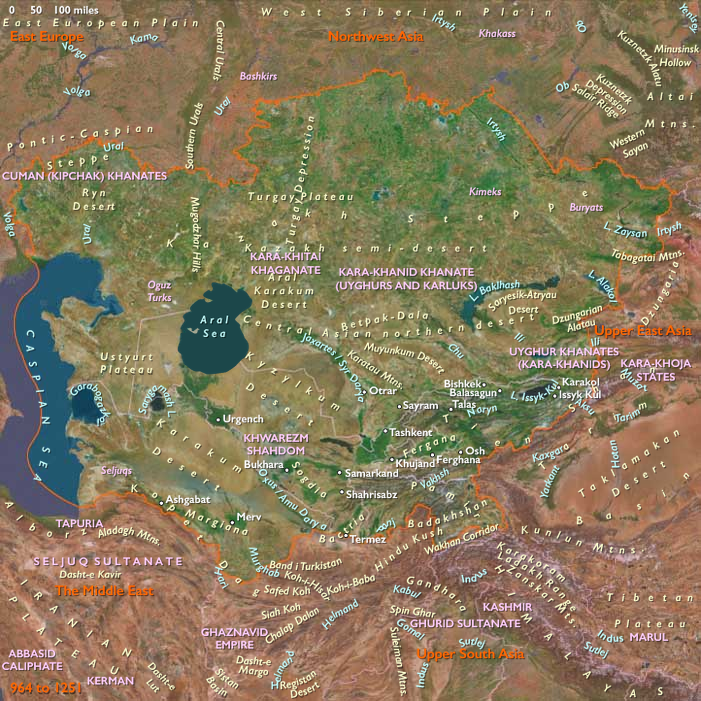
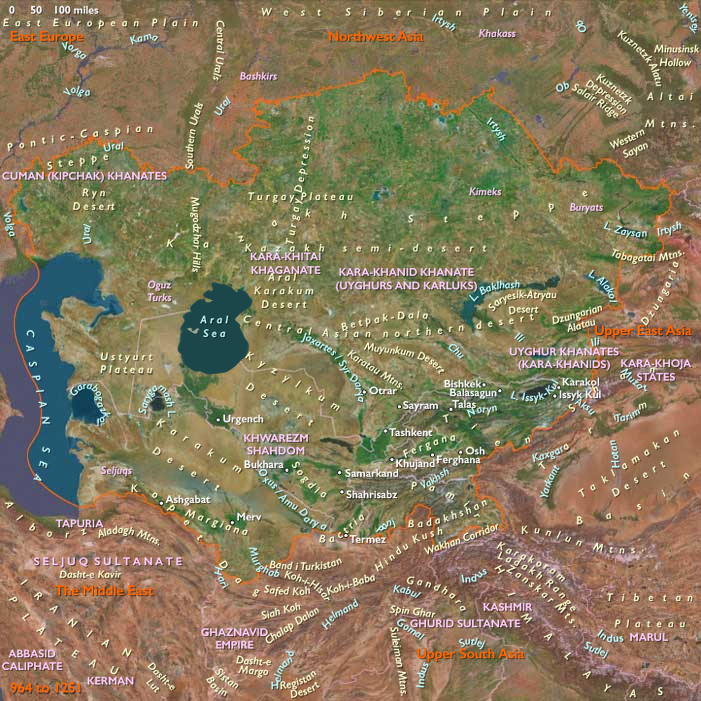
Sanjar marches in 1141 from Nishapur to Samarkand.
The Kara-Khitans, who have been invited by the Khwarazmians (at this time also a vassal of the Seljuqs) to conquer the lands of the Seljuqs, and also responding to an appeal to intervene by the Karluks, who are involved in a conflict with the Kara-Khanids and Seljuqs, also arrive.
Widely varying figures from different sources are given for the Kara-Khitan forces, ranging from twenty-five thousand to seven hundred thousand, while the Seljuq forces range from seventy thousand to one hundred thousand.
The Kara-Khitans are also said to have been given a reinforcement of thirty thousand to fifty thousand Karluk horsemen.
The battle is joined on the Qatwan steppe, north of Samarkand.
The Khitan divide their armies into three contingents, with the smaller left and right flanks each holding twenty-five hundred men.
The Kara-Khitans attack the Seljuq forces simultaneously, encircle them, and force the Seljuq center into a wadi called Dargham, about twelve kilometers from Samarkand.
Faced with no way out, the Seljuq army is destroyed and Sanjar barely escapes.
Figures of the dead range from eleven thousand to one hundred thousand.
Among those captured at the battle are Seljuq military commanders and Sanjar's wife.
Sanjar, escaping with only fifteen of his elite horsemen, loses all Seljuq territory east of the Syr Darya (Jaxartes).
Stories of this battle, told during the Second Crusade, will filter back to the Holy Land, inspiring stories of Prester John.
Locations
People
Groups
- Transoxiana
- Khitan people
- Karluks
- Muslims, Sunni
- Kara-Khanid Khanate
- Turkmen people
- Khwarezm dynasty
- Seljuq Empire, Eastern capital
- Seljuq Empire, Western capital
- Kara-Khitan Khanate
Topics
Commodoties
Subjects
Regions
Subregions
Related Events
Showing 10 events out of 48945 total
Years: 1141 - 1141
September
Locations
People
Groups
- Transoxiana
- Khitan people
- Karluks
- Muslims, Sunni
- Kara-Khanid Khanate
- Turkmen people
- Khwarezm dynasty
- Seljuq Empire, Eastern capital
- Seljuq Empire, Western capital
- Kara-Khitan Khanate
Topics
Commodoties
Subjects
Regions
Subregions