
The Kangi famine of 1231-1232, possibly the …
Years: 1228 - 1239
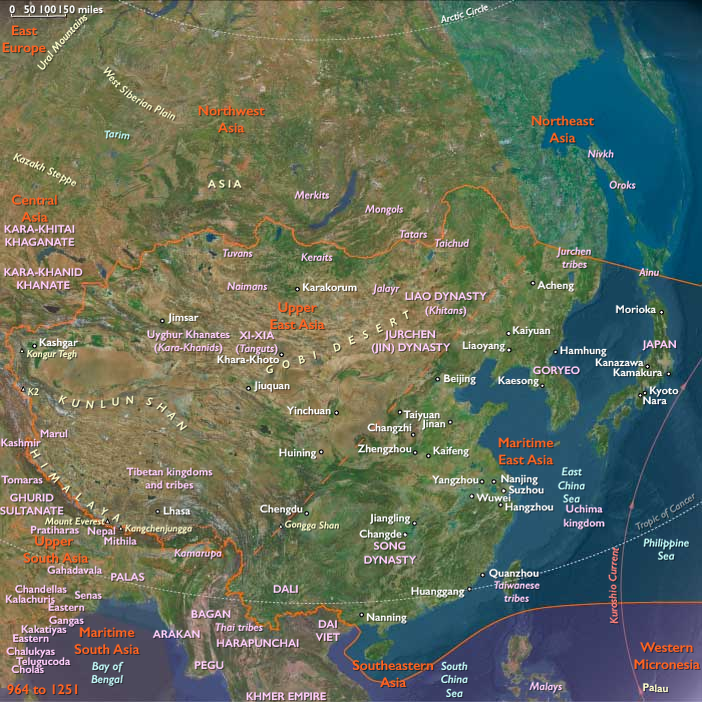
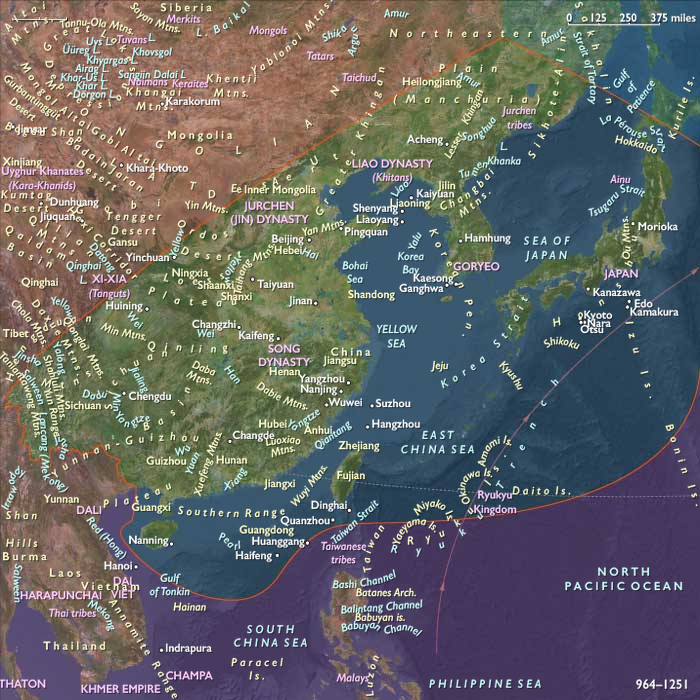
The Kangi famine of 1231-1232, possibly the worst famine in Japan's history, is caused by unusually cold, damp weather related to world wide volcanic activity.
Snow falls in central Japan in the summer of 1230.
In 1231, in one estate in central Japan about twenty percent of cultivators die in less than a month.
Law and order breaks down; the widespread banditry even affects relations with Goryeo when hungry residents of Kyushu raided the neighboring Korean peninsula for food.
The famine also leads to numerous quarrels between warrior landlords and urban proprietors, with many estates unable to pay taxes or organize labor gangs.
When harvests are inadequate, warriors had pressured and abused the hapless cultivators, driving them from their fields.
Both the Kyoto and Kamakura governments take steps to make more grain available to commoners, but with only modest results.
A family faced with starvation might choose to sell children or other relatives in return for grain, at the same time ensuring sufficient food for the sellers and the person to be sold.
This behavior has been going on illegally for centuries, but its official authorization from 1231 to 1239 demonstrates the severity of the Kangi famine.
The policy helps to distribute famine victims to people who can feed them, but also tears apart more families.
Moreover, all those sold become members of a servile class, dwelling in small lean-tos or perhaps a room in their new master’s house.
The new policy save lives but creates many dependent, broken, and poor families.
The result is a lower fertility rate, making recovery from the famine even more difficult.
One consequence of the famine is the considerable expansion of the servile class, which is to remain a significant proportion of Japanese society for the next four centuries. (Farris, William Wayne. Japan To 1600: A Social and Economic History. University of Hawai'i Press, 2009)
Locations
Groups
Topics
Commodoties
Subjects
Regions
Subregions
Related Events
Showing 10 events out of 47082 total
Years: 1228 - 1239
Locations
Groups
Topics
Commodoties
Subjects
Regions
Subregions