
The Jurchens of North China had rebelled …
Years: 1120 - 1131
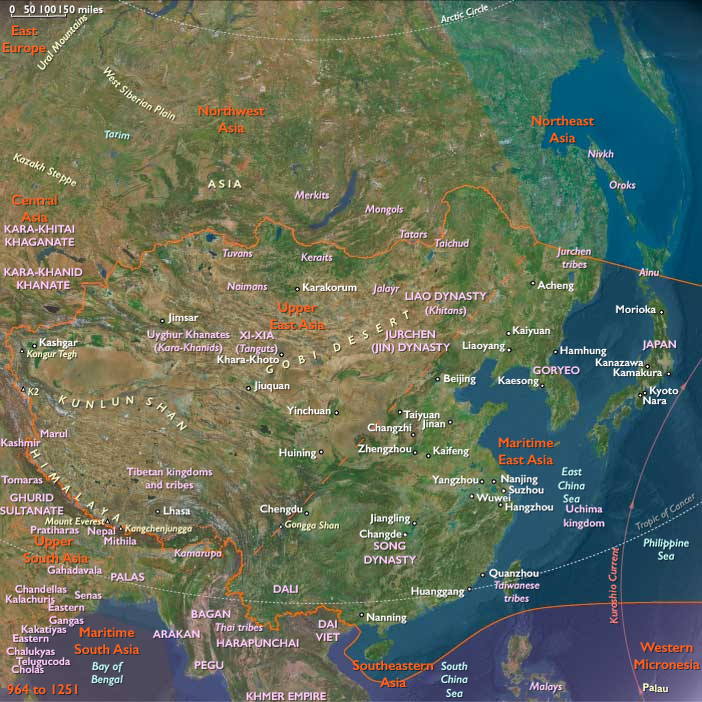
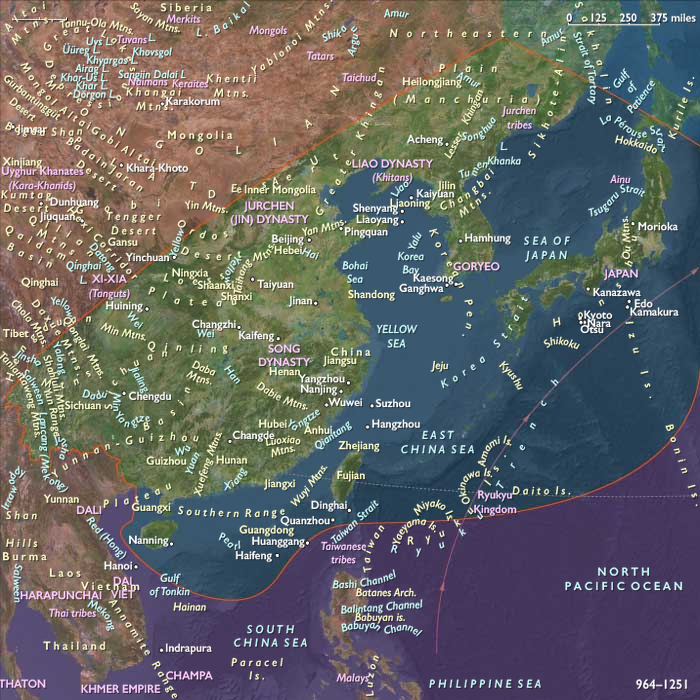
The Jurchens of North China had rebelled in 1115 against their overlords, the Khitan Liao dynasty (907–1125), and declared the formation of the Jin Dynasty.
Allying with the Song dynasty against their common enemy the Liao, the Jin promise to return to the Song the territories in northern China that had fallen under Liao control since 938.
The Jurchens' quick defeat of the Liao combined with Song military failures make the Jin reluctant to cede these territories.
After a series of failed negotiations that embitter both sides, the Jurchens attack the Song in November 1125, dispatching one army towards Taiyuan and the other towards Kaifeng, the Song capital.
The Song general stationed in Taiyuan, surprised by the news of an invasion, retreats from the city, which is besieged and later captured.
As the second Jin army approaches the capital, Emperor Huizong of Song abdicates and flees south.
A new emperor, Qinzong, is enthroned.
The Jurchens begin a siege against Kaifeng in 1126, but Qinzong negotiates for their retreat from the capital after he agrees to pay a large annual indemnity.
Qinzong reneges on the deal and orders Song forces to defend the prefectures instead of fortifying the capital.
The Jin resume their war against the Song and again besiege Kaifeng in 1127.
The Chinese emperor is captured in an event known as the Jingkang Incident, the capital is looted, and the Song dynasty loses northern China to the Jin.
Remnants of the Song retreat to southern China and, after brief stays in several temporary capitals, eventually relocate to Hangzhou.
The retreat of the Song court marks the end of the Northern Song era and the beginning of the Southern Song.
People
Groups
- Khitan people
- Chinese (Han) people
- Jurchens
- Liao Dynasty, or Khitan Empire
- Chinese Empire, Pei (Northern) Song Dynasty
- Jin Dynasty (Chin Empire), Jurchen
- Chinese Empire, Nan (Southern) Song Dynasty
Topics
Commodoties
Subjects
Regions
Subregions
Related Events
Showing 10 events out of 49346 total
Years: 1120 - 1131
People
Groups
- Khitan people
- Chinese (Han) people
- Jurchens
- Liao Dynasty, or Khitan Empire
- Chinese Empire, Pei (Northern) Song Dynasty
- Jin Dynasty (Chin Empire), Jurchen
- Chinese Empire, Nan (Southern) Song Dynasty
Topics
Commodoties
Subjects
Regions
Subregions