
The Jurchen had followed their conquest of …
Years: 1128 - 1128
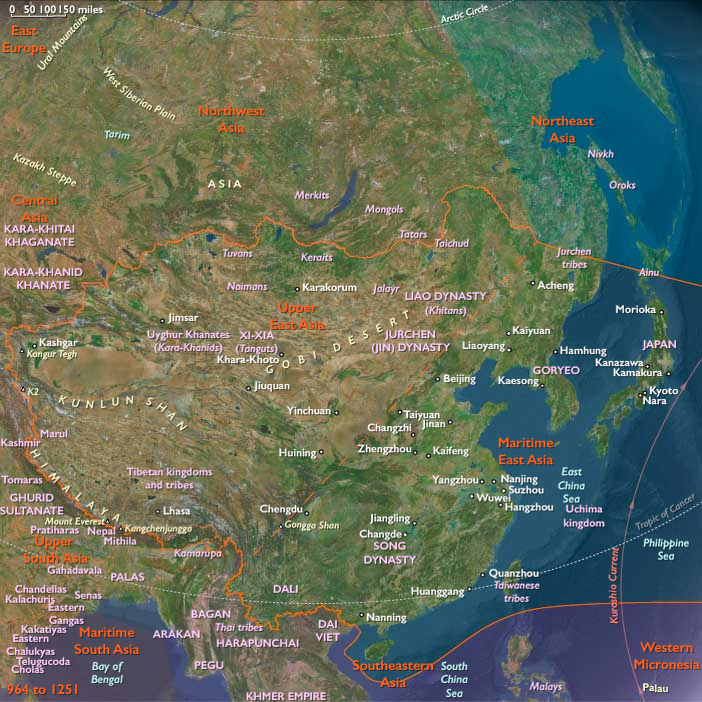
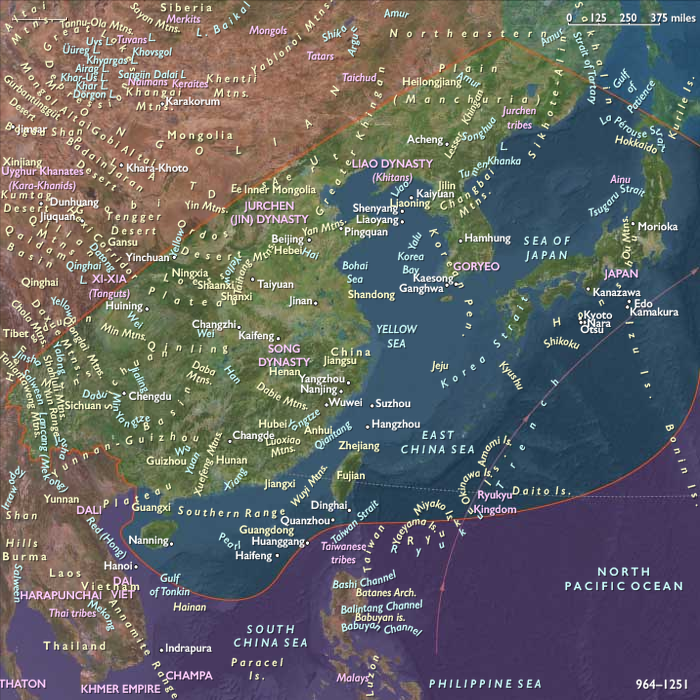
The Jurchen had followed their conquest of southern Manchuria by seizing Liao territory in northern Shanxi (Shansi) and Zhili (Chihli) in China, then erected a capital at Huining Fu and established the Jin (“golden”) dynasty.
During the early years of building up their empire, Jurchen rulers have often moved people from elsewhere in China to their capital, Shangjing.
The first Jin emperor, Wanyan Aguda (r. 1115-1123) resettled captives to the Shangjing area during his war against the Liao Empire.
Aguda's successor, Wanyan Wuqimai (r. 1123-1134) has continued the policy, resulting in numerous wealthy people, skilled craftsmen from Yanjing (Beijing) and the former Northern Song capital Bianjing (Kaifeng) being relocated to Shangjing.
Historical accounts report that, after the fall of Bianjing in 1127, the Jurchen generals brought to Shangjing (and elsewhere in North China) several thousand people, including: "about 470 imperial clansmen; erudites and students of the imperial academy; eunuchs; medical doctors; artisans; prostitutes; imperial gardeners; artisans of Imperial Constructions; actors and actresses; astronomers; musicians".
A variety of valuable goods captured in Bianjing is brought to the Jin capital as well.
Palaces were not much more than tents in Aguda's days, but in 1123 Jurchen had built their first ancestral temples and tombs (where the captured Song emperors Huizong and Qizong venerate the Jin ancestors in 1128), and in 1124 the new emperor Wuqimai had ordered a Chinese architect, Lu Yanlun, to build a new city on uniform plan.
The city plan of Shangjing emulates major Chinese cities, in particular Bianjing (Kaifeng), although the Jin capital is much smaller than its Northern Song prototype.
Locations
People
Groups
- Chinese (Han) people
- Jurchens
- Jin Dynasty (Chin Empire), Jurchen
- Chinese Empire, Nan (Southern) Song Dynasty
Topics
Commodoties
Subjects
Regions
Subregions
Years: 1128 - 1128
Locations
People
Groups
- Chinese (Han) people
- Jurchens
- Jin Dynasty (Chin Empire), Jurchen
- Chinese Empire, Nan (Southern) Song Dynasty
Topics
Commodoties
Subjects
Regions
Subregions