
The Joseon Dynasty is in 1401 officially …
Years: 1401 - 1401
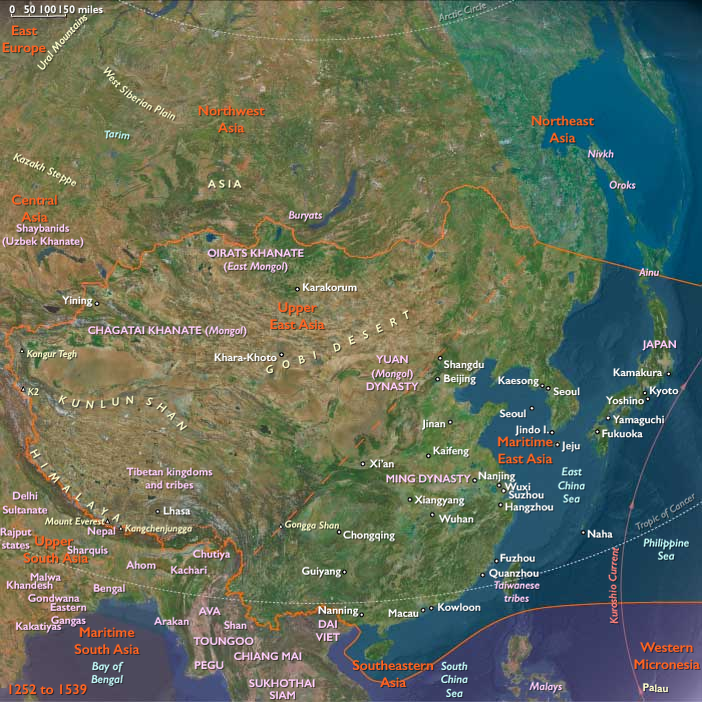
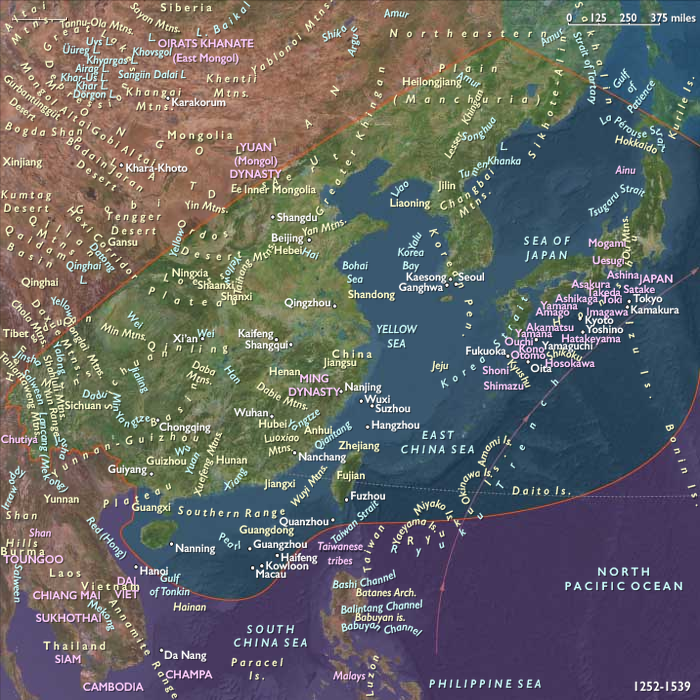
The Joseon Dynasty is in 1401 officially admitted to enter into a tributary relationship with the Ming Dynasty.
Meanwhile, the Grand King Former, Taejo, has refused to relinquish the royal seal that signifies the legitimacy of any king's rule.
Uncomfortable at the fact that his father does not recognize him as a de jure ruler because of the family deaths he has caused, Taejong has sent several messengers, among them his childhood friend Bak Sun, to recover the royal seal.
However, Taejo has ordered the assassination of every messenger that comes into the sight of his guards as a sign of his fury at Taejong, who continues to remain unaware of their fates. (This episode is to become known as the Case of the Hamhung Envoys, and the term "Hamhung envoy" is still used to refer to a person who has gone on an assignment from whom there is no reply concerning their whereabouts.)
Locations
People
Groups
Subjects
Regions
Subregions
Related Events
Showing 10 events out of 42724 total
Years: 1401 - 1401
Locations
People
Groups
Subjects
Regions
Subregions