
The Jokyu War, also known as the …
Years: 1216 - 1227
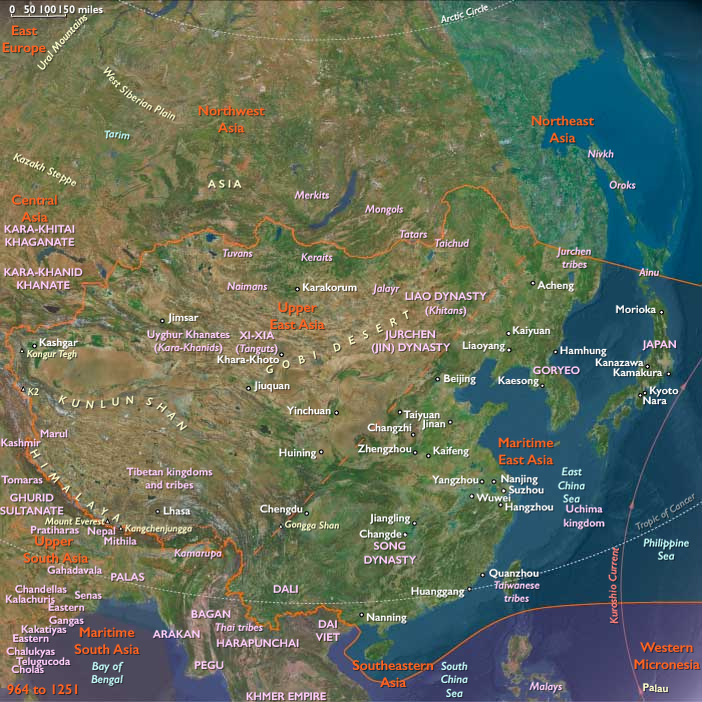
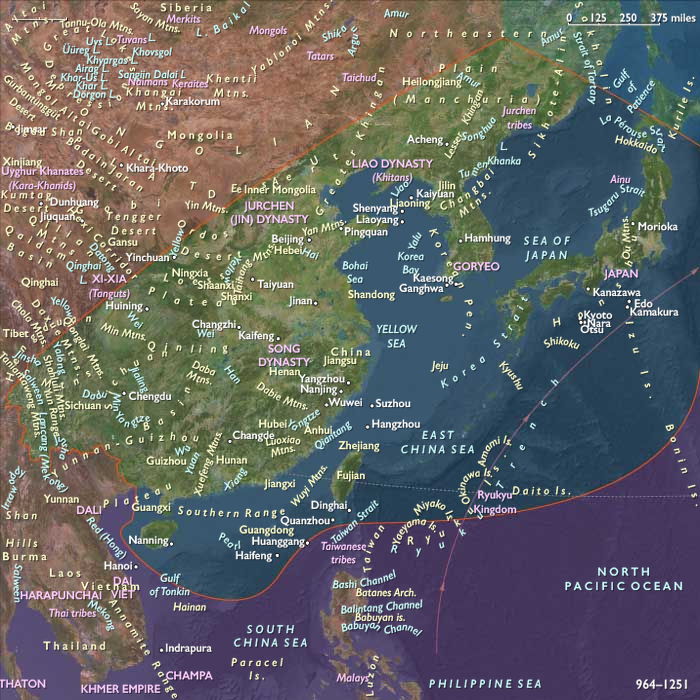
The Jokyu War, also known as the Jokyu Disturbance or the Jokyu Rebellion, is fought in Japan between the forces of Retired Emperor Go-Toba and those of the Hojo clan, regents of the Kamakura shogunate, whom the retired emperor is trying to overthrow.
The main battle occurs at Uji, just outside Kyoto; this is the third battle to be fought there in less than half a century.
It takes place in 1221, that is, the third year of the Jokyu era.
People
Groups
Topics
Commodoties
Subjects
Regions
Subregions
Related Events
Filter results
Showing 10 events out of 47296 total
Genghis Khan's invasion of Khwarezmia from 1219 to 1221 marks the beginning of the Mongol conquest of the Islamic states.
The Mongol expansion will ultimately culminate in the conquest of virtually all of Eurasia, save for Western Europe, Fennoscandia, the Byzantine Empire, Arabia, most of the Indian subcontinent, Japan and parts of Southeast Asia.
Harboring a pathological dislike for cultivators, Genghis Khan destroys several irrigation systems, transforming turned fertile soils into permanent deserts.
By the time of his death in 1227, the Mongols, centered in their capital at Karakoram, possess an empire stretching from Korea to Russian Turkistan and from Siberia to northern India.
The Mongol Empire’s original intention was not to invade the Khwarezmid Empire.
According to the Persian historian Juzjani, Genghis Khan had originally sent a message to the Khwarezm Shah Empire, Ala ad-Din Muhammad, seeking trade, greeted him as his neighbor.
The Mongols' original unification of the nomadic tribes in Mongolia, followed by Turkmens and other nomadic peoples, had come with relatively little bloodshed, and almost no material loss.
Even his invasions of China, to that point, had involved no more bloodshed than previous nomadic invasions had caused.
Shah Muhammad had reluctantly agreed to this peace treaty, but it was not to last.
The war starts less than a year later, when a Mongol caravan and its envoys are massacred in the Khwarezmian city of Otrar.
In this brief war, lasting less than two years, not only is a huge empire destroyed utterly, but Genghis Khan introduces the world to tactics that will not be seen again until the Germans use them so well in the Second World War—indirect attack, and the complete and utter terrorization and wholesale slaughter of entire populations.
Northeast Europe (1216–1227 CE): Danish and German Dominance, Baltic Resistance, and the Formation of Danish Estonia
Introduction
Between 1216 and 1227 CE, Northeast Europe saw decisive military successes of the Northern Crusades, the formation of organized crusader states, and continued resilience among the Baltic peoples. The era notably witnessed the territorial division following the Livonian Crusade, with the establishment of Danish Estonia and the Livonian Confederation under German control, fundamentally reshaping the political and cultural landscape of the eastern Baltic.
Danish Estonia and the Founding of Reval (Tallinn)
Following significant territorial conquests during the Livonian Crusade, the German- and Danish-occupied Baltic territories were formally divided. The northern territories fell under direct Danish control, forming Danish Estonia. In 1219, Danish King Valdemar II "the Victorious" led a crucial invasion at Lyndanisse, resulting in the founding of Reval (modern-day Tallinn). Here, the Danes constructed the prominent fortress known as Castrum Danorum ("Danish Castle") atop Toompea Hill, symbolizing Danish authority and dominance.
The city's Estonian name, "Tallinn," is often linked through urban legend to Taani linna, meaning "Danish town" or "castle," reflecting Denmark's lasting imprint on local historical memory.
Livonian Confederation under German Influence
Concurrently, the southern territories conquered by German crusading orders were organized into the Livonian Confederation by the Papal legate William of Modena. This confederation encompassed significant parts of modern-day Latvia and Estonia, where German crusaders and clergy firmly established political and ecclesiastical dominance. The Confederation became a crucial stronghold, serving as a military, economic, and ecclesiastical center integral to the wider crusading effort.
Continued Swedish Expansion in Finland
Swedish colonization and missionary work persisted vigorously in southern Finland, consolidating earlier gains. The accelerated settlement and cultural integration deepened Finland’s ties to Sweden, setting it apart politically and culturally from its Finnic relatives to the south, especially the Estonians under Danish and German rule.
Persistent Baltic Resistance and Rebellions
Despite substantial territorial losses and crusader occupation, Baltic tribes—particularly Estonians, Latvians, Curonians, and Semigallians—remained defiant. Numerous rebellions erupted, challenging foreign rule, and forcing Danish and German forces to maintain strong military presences and extensive fortifications throughout occupied lands. This ongoing resistance emphasized local determination to preserve autonomy and traditional cultural identities.
Economic Prosperity and Urbanization
The establishment of Reval (Tallinn) under Danish rule, along with the already thriving German-founded city of Riga, significantly expanded regional trade and urban development. Both cities became key economic hubs, fostering trade between the Scandinavian, Baltic, and broader European markets. Commerce in established centers such as Visby on Gotland continued to flourish, underscoring the expanding influence of merchant guilds and urban life.
Ecclesiastical Dominance and Cultural Integration
Ecclesiastical institutions significantly expanded their influence during this era, consolidating their power through bishoprics and monastic establishments across newly conquered territories. The establishment of the Livonian Confederation reinforced the ecclesiastical structure, as German clergy and monastic orders actively managed the religious, educational, and cultural integration of local populations into Latin Christendom.
Legacy of the Era
The era from 1216 to 1227 CE profoundly influenced Northeast Europe's historical trajectory. The territorial division of Baltic lands into Danish Estonia and the German-dominated Livonian Confederation reshaped regional political boundaries, fortified urban growth, and entrenched ecclesiastical authority. Persistent Baltic resistance highlighted the ongoing struggle between conquest and autonomy, setting enduring cultural and political patterns that would significantly impact future centuries.
The German- and Danish-occupied territory is divided after the success of the Livonian Crusade into the Livonian Confederation, which is organized by William of Modena, and Danish Estonia.
The capital of Danish Estonia is Reval (Tallinn), founded at the place of Lyndanisse after the invasion of 1219.
The Danes build the fortress of Castrum Danorum at Toompea Hill.
Estonians still call their capital "Tallinn", which according to an urban legend derives from Taani linna (Danish town or castle).
East Central Europe (1216–1227 CE): Golden Bull of Hungary, Bohemian Consolidation, Polish Regional Rivalries, and Babenberg Influence in Austria
Between 1216 and 1227 CE, East Central Europe—encompassing modern-day Poland, Czechia, Slovakia, Hungary, and the eastern regions of Germany and Austria east of 10°E and north of the defined southeastern boundary—witnessed pivotal political and institutional developments. Hungary under Andrew II saw profound social and political change through the Golden Bull of 1222, Bohemia further solidified royal authority under Ottokar I Přemysl, Polish territories experienced intensified regional rivalry, and Austria flourished culturally and politically under Duke Leopold VI of the Babenberg dynasty. Collectively, these events significantly shaped regional governance, social structures, and cultural dynamics.
Political and Military Developments
Hungary’s Golden Bull and Aristocratic Power under Andrew II
-
In 1222, King Andrew II (r. 1205–1235) issued the Golden Bull of Hungary, a landmark charter limiting royal power, guaranteeing noble privileges, and establishing foundational political rights. This document significantly reshaped Hungarian governance by solidifying aristocratic authority and curbing royal absolutism, echoing England’s Magna Carta (1215).
-
Andrew’s rule, though marked by occasional internal conflict, significantly expanded Hungarian regional influence, notably in frontier regions such as Transylvania and along the Adriatic coast.
Consolidation of Bohemian Royal Authority under Ottokar I
-
Under Ottokar I Přemysl (r. 1197–1230), Bohemia saw significant political stability and institutional development. The Golden Bull of Sicily (1212) continued to define his reign, confirming hereditary royal authority and enhancing Přemyslid autonomy within the Holy Roman Empire.
-
Ottokar’s effective governance and diplomatic skill solidified Bohemian territorial integrity and political stability, elevating Prague as a crucial regional political and cultural hub.
Intensified Polish Regional Rivalries and Silesian Strength
-
Poland remained deeply fragmented, with autonomous Piast duchies increasingly competing for dominance. Henry I the Bearded of Silesia (r. 1201–1238) emerged prominently, expanding influence over neighboring territories and elevating Silesia as a major power center within fragmented Poland.
-
Despite Henry’s successes, regional rivalry and persistent dynastic disputes among Polish duchies continued to limit centralized royal authority.
Austria’s Continued Prosperity under Leopold VI
-
Duke Leopold VI of Austria (r. 1198–1230) maintained stability, prosperity, and cultural vibrancy within Austria. His reign was characterized by effective administration, territorial security, economic flourishing, and active participation in European crusading politics.
-
Leopold significantly strengthened Austria’s territorial integrity, enhancing Vienna’s political prominence within East Central Europe.
Imperial Influence of Frederick II
-
Emperor Frederick II (r. 1212–1250) expanded his political influence across East Central Europe, notably affecting Bohemia, Hungary, and Austria. Regional rulers navigated shifting alliances, with imperial relations significantly impacting regional stability and governance.
Economic and Technological Developments
Regional Economic Expansion and Commercial Vitality
-
East Central Europe experienced robust economic expansion driven by thriving trade networks connecting Baltic, Mediterranean, Byzantine, and Western European markets. Major urban centers, including Prague, Vienna, Esztergom, Kraków, and Wrocław, flourished as prosperous trade hubs.
Agricultural Productivity and Technological Advancements
-
Continued adoption of advanced agricultural techniques—improved plowing methods, systematic crop rotation, and enhanced livestock management—significantly increased productivity, supporting urbanization, population growth, and economic prosperity.
Cultural and Artistic Developments
Cultural Flourishing in Hungary under Andrew II
-
Andrew II strongly supported ecclesiastical and cultural institutions, fostering extensive manuscript production, architectural projects, and scholarly activities. The artistic and intellectual vibrancy of Hungary notably increased, influenced by Western European and Byzantine traditions.
Bohemian Cultural and Ecclesiastical Vitality under Ottokar I
-
Bohemia, particularly Prague, experienced a cultural revival through royal patronage of monasteries, manuscript illumination, architectural development, and scholarly activities, establishing it as a significant intellectual and cultural center.
Silesian Cultural and Artistic Prominence under Henry the Bearded
-
Silesia under Henry I the Bearded emerged as a leading cultural center within fragmented Poland, marked by substantial monastic foundations, artistic patronage, manuscript production, and urban development, significantly influencing broader Polish culture.
Settlement and Urban Development
Hungarian Urban Growth under Andrew II
-
Hungarian towns such as Esztergom, Székesfehérvár, and Buda continued to expand significantly, supported by stable governance, fortified infrastructure, thriving commerce, and active royal patronage.
Bohemian Urban Consolidation and Expansion
-
Under Ottokar I, Prague and other Bohemian cities saw significant infrastructure improvements, commercial expansion, and strengthened administrative structures, reinforcing their roles as vital regional economic and political hubs.
Austrian Urban Prosperity under Leopold VI
-
Austria’s urban centers, notably Vienna, flourished economically and politically under Leopold VI’s effective governance, enhanced fortifications, administrative efficiency, and expanded trade networks, significantly influencing regional economic stability.
Social and Religious Developments
Ecclesiastical Institutional Expansion and Influence
-
The region experienced extensive ecclesiastical institutional growth, shaping social organization, governance, and education. Monasteries, bishoprics, and religious orders played central roles in regional cultural continuity, intellectual development, and societal cohesion.
Aristocratic Dominance and Dynastic Governance
-
Aristocratic power continued to influence governance significantly. The Golden Bull in Hungary explicitly strengthened noble rights and power. Bohemia under Ottokar, Austria under Leopold, and Silesia under Henry highlighted the pivotal role of dynastic and aristocratic leadership in regional governance structures.
Long-Term Consequences and Historical Significance
The era 1216–1227 CE significantly influenced East Central Europe’s political institutions, economic prosperity, and cultural vitality. Hungary’s Golden Bull of 1222 established lasting legal precedents that profoundly shaped Hungarian politics. Bohemia’s consolidation under Ottokar I, Silesia’s regional prominence under Henry the Bearded amid persistent Polish fragmentation, and Austria’s stable prosperity under Leopold VI significantly impacted regional stability, governance, and identity. Collectively, these developments formed enduring foundations for the political, economic, and cultural landscapes characterizing East Central Europe throughout the subsequent medieval period.
Neidhart von Reuenthal, who writes for the Bavarian court, composes narrative poems often depicting peasant brawling from a perspective of aristocratic disdain.
Very well known for being rather sarcastic and comical, Neidhart like his elder contemporary Walther von der Vogelweide, breaks with the conventionalized lyric of courtly love, turning instead to the subject of rustic courtships.
More melodies survive by him than from any other minnesinger.
The Latin Empire of Constantinople by 1216 includes territories in northwest Anatolia adjacent to the Sea of Marmara and the Dardanelles and eastern Thrace as far as Adrianople and the lower Maritza.
The Latin emperor also claims suzerainty over the Crusader States in Greece: the kingdom of Thessalonica, the principality of Nicaea, and the duchy of Athens.
Eastern Southeast Europe (1216–1227 CE): Stabilization, Bulgarian Resurgence, and Regional Dynamics
Settlement and Migration Patterns
Bulgarian Restoration and Expansion
Under Tsar Ivan Asen II, the Second Bulgarian Empire significantly stabilized and expanded. Ivan Asen II restored law and order, curbed the power of the boyars (nobility), and strengthened the administrative structure, fostering growth in Bulgarian settlements and economic revival.
Continued Latin and Greek Rivalries
Latin-controlled territories around Constantinople continued to witness migration and settlement shifts as Western European knights and nobles sought new holdings. Meanwhile, Byzantine successor states such as the Empire of Nicaea and the Despotate of Epirus gradually consolidated and expanded, drawing populations loyal to Byzantine traditions.
Economic and Technological Developments
Economic Revival under Bulgarian Rule
Bulgarian economic life flourished during Ivan Asen II's reign, with agricultural productivity and regional trade significantly increasing. Towns and urban centers within Bulgaria prospered, benefiting from political stability and enhanced trade connections.
Localized Economies and Trade Networks
Fragmentation encouraged the growth of localized economies across the region. Serbian, Bulgarian, and Latin territories developed independent trade networks, with local markets increasingly vital due to the reduced influence of centralized Byzantine trade.
Strengthened Military Infrastructure
Ivan Asen II invested significantly in military fortifications, securing Bulgaria’s borders against Latin and Byzantine threats. Similar enhancements occurred in Serbian and Latin-held territories, reflecting ongoing regional tensions and the necessity of robust defense systems.
Cultural and Artistic Developments
Bulgarian Cultural Flourishing
The reign of Ivan Asen II marked a revival of Bulgarian cultural traditions, including the construction and embellishment of churches, monasteries, and fortresses. Artistic production flourished, blending Byzantine heritage with distinctive Bulgarian elements.
Latin-Byzantine Cultural Exchanges
Cultural interaction between Latin rulers and Byzantine traditions persisted, especially within contested territories. Gothic and Romanesque influences continued to blend with Byzantine aesthetics, creating distinctive regional artistic styles.
Social and Religious Developments
Bulgarian Ecclesiastical Autonomy
Ivan Asen II further strengthened the autonomy of the Bulgarian Orthodox Church, reinforcing its role in society and governance. Religious institutions grew more influential, supporting national identity and cohesion amidst ongoing regional rivalries.
Latin-Orthodox Tensions
Deep religious tensions persisted between Latin and Orthodox communities, particularly in regions where Latin rulers maintained control over Orthodox populations. These tensions often complicated political alliances and social relations.
Serbian Church Influence
The Serbian Orthodox Church continued to consolidate its influence under Serbian rulers, playing a crucial role in societal cohesion and reinforcing Serbian national identity.
Political Stabilization and Rivalries
Bulgarian Regional Dominance
Ivan Asen II's effective governance reasserted Bulgarian dominance in the Balkans, significantly influencing regional politics. Bulgaria’s strengthened military, economic growth, and cultural revival re-established it as a formidable power.
Persistent Fragmentation and Rivalries
Despite stabilization under Ivan Asen II, the broader region remained politically fragmented. Rivalries among Bulgaria, Serbia, the Latin Empire, and Byzantine successor states like Nicaea and Epirus continued, perpetuating instability and shaping future conflicts.
Long-Term Consequences and Historical Significance
The period from 1216 to 1227 CE was marked by the consolidation and expansion of the Second Bulgarian Empire under Ivan Asen II, significant economic and cultural revival, and ongoing political fragmentation across Eastern Southeast Europe. These developments had lasting impacts, setting the stage for future regional dynamics, enduring cultural identities, and complex political rivalries.
Bulgarian tsar Ivan Asen II restores law and order in the Bulgarian Empire, controlling the boyars.
Kalinga Magha moves the capital to the Jaffna peninsula, which is more secure due to the heavy Vanni forest, after the conquest of Rajarata.
Ruling as a tribute-paying subordinate of the Chola empire of Tanjavur, in modern Tamil Nadu, India, with the help of his soldiers and mercenaries from the Kalinga, modern Kerala and Damila regions on the mainland, Kalinga Magha’s priorities are to extract as much as possible from the land and overturn as many of the traditions of Rajarata as possible.
His reign sees the massive migration of native Sinhalese people to the south and west of Sri Lanka, and into the mountainous interior, in a bid to escape his power.
Sri Lanka will never really recover from the impact of Kalinga Magha's invasion.
Years: 1216 - 1227
People
Groups
Topics
Commodoties
Subjects
Regions
Subregions