
The Japanese empire promulgates the Taiho Laws, …
Years: 702 - 702
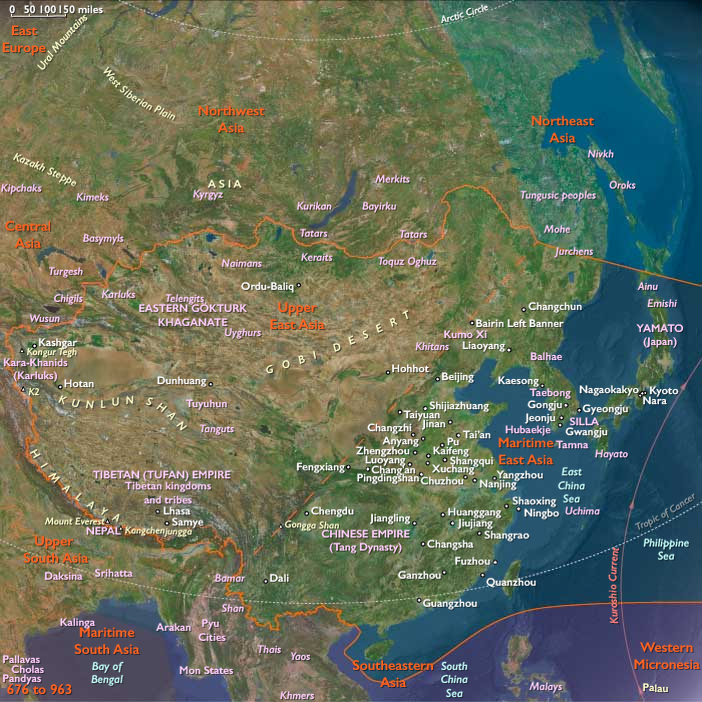
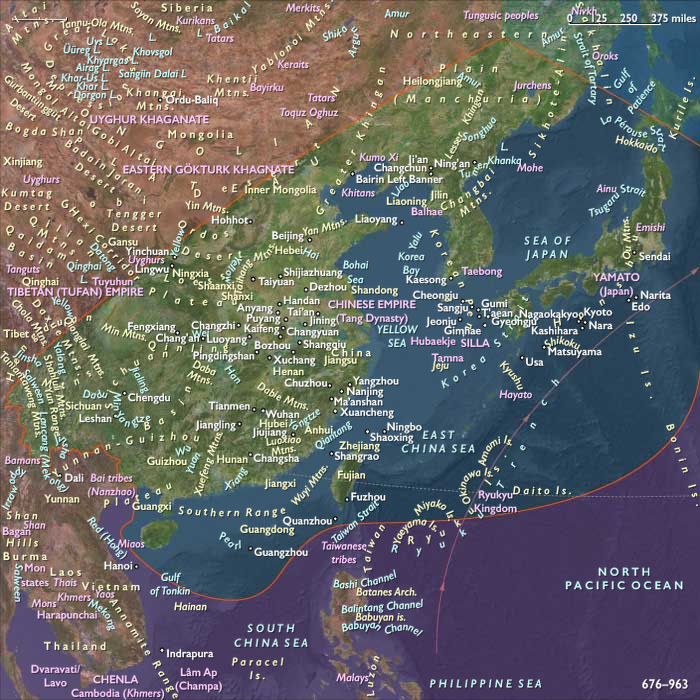
The Japanese empire promulgates the Taiho Laws, comprising new civil and penal codes, in 702.
The Taiho Code or Code of Taiho, is an administrative reorganization compiled at the direction of Prince Osakabe, Fujiwara no Fuhito and Awata no Mahito.
The work had been begun at the request of Emperor Mommu and, like many other developments in the country at the time, it is largely an adaptation of the governmental system of China's Tang Dynasty.
The establishment of the Taiho Code is one of the first events to include Confucianism as a significant element in the Japanese code of ethics and government.
The Taiho Code contains only two major departures from the Tang model.
First, government positions and class status are based on birth, as has always been the Japanese tradition, not talent, as is the Chinese way.
Second, the Japanese reject the Chinese concept of the "Mandate of Heaven," asserting that the Emperor's power comes from his imperial descent, not from his righteousness or fairness as a ruler.
Locations
Groups
Topics
Subjects
Regions
Subregions
Related Events
Showing 10 events out of 55845 total
Years: 702 - 702
Locations
Groups
Topics
Subjects
Regions
Subregions