
The Japanese clans’ construction of massive mounded …
Years: 250 - 250
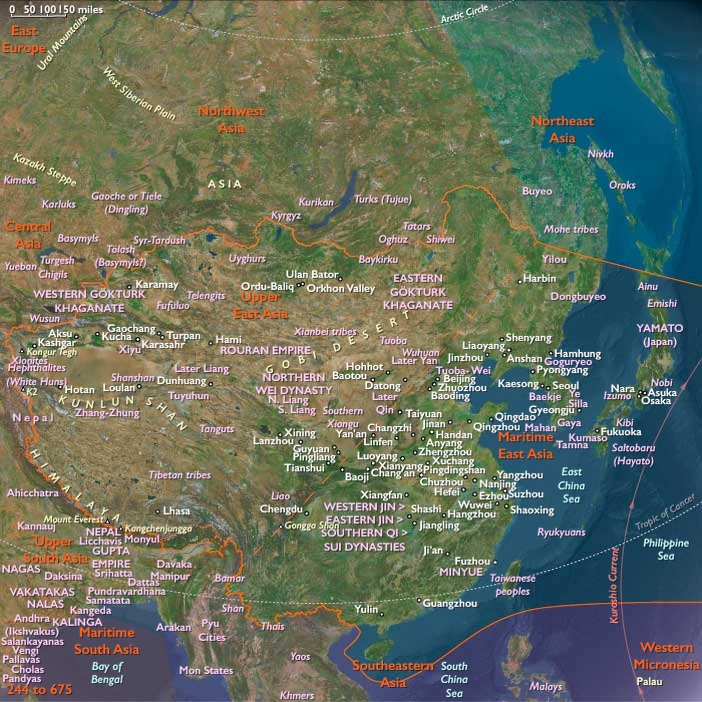
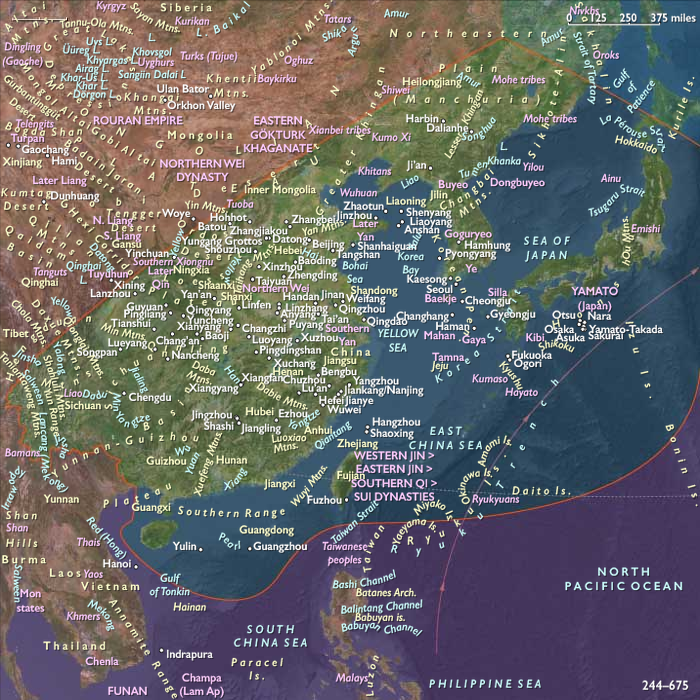
The Japanese clans’ construction of massive mounded tombs on the Yamato Plain inaugurates Japan’s so-called Kofun period, an era in the history of Japan from around 250 to 538.
The word kofun is Japanese for the type of burial mounds dating from this era.
Following the Yayoi period, the Kofun and the subsequent Asuka periods are sometimes referred to collectively as the Yamato period.
While conventionally assigned to the period from 250 CE, the actual start of Yamato rule is disputed.
The Kofun period is illustrated by an animistic culture which existed prior to the introduction of Buddhism.
Politically, the establishment of the Yamato court, and its expansion as allied states from Kyushu to the Kanto are key factors in defining the period.
Also, the Kofun period is the oldest era of recorded history in Japan.
However, as the chronology of the historical sources are very much distorted, studies of this age require deliberate criticism and the aid of archaeology.
The archaeological record, and ancient Chinese sources, indicate that the various tribes and chiefdoms of Japan did not begin to coalesce into states until 300, when large tombs began to appear while there were no contacts between western Japan and China.
Some describe the "mysterious century" as a time of internecine warfare as various chiefdoms competed for hegemony on Kyūshū and Honshuū.
The oldest Japanese kofun is said to be Hokenoyama Kofun located in Sakurai, Nara, which dates to the late third century.
Locations
Groups
Topics
Subjects
Regions
Subregions
Years: 250 - 250
Locations
Groups
Topics
Subjects
Regions
Subregions