
The Italian ports had reopened in spring …
Years: 474 - 474
July
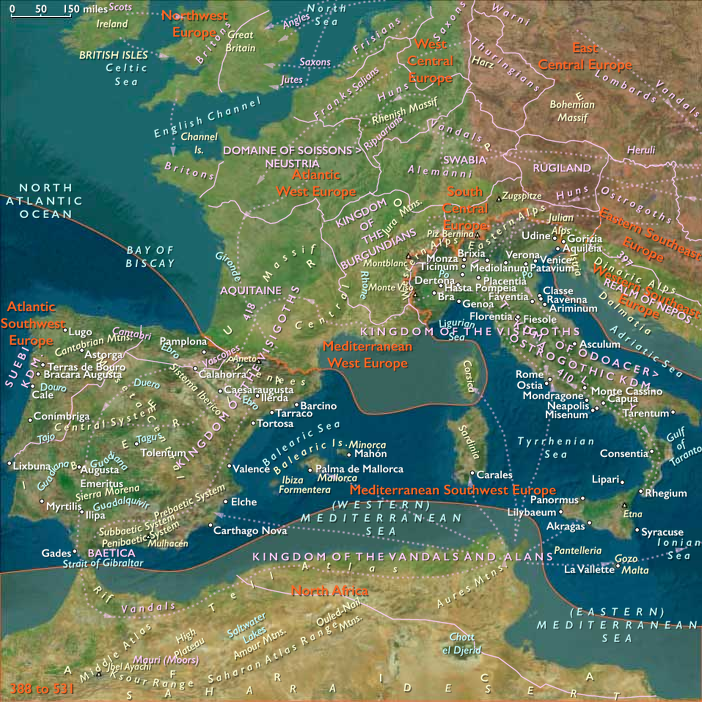
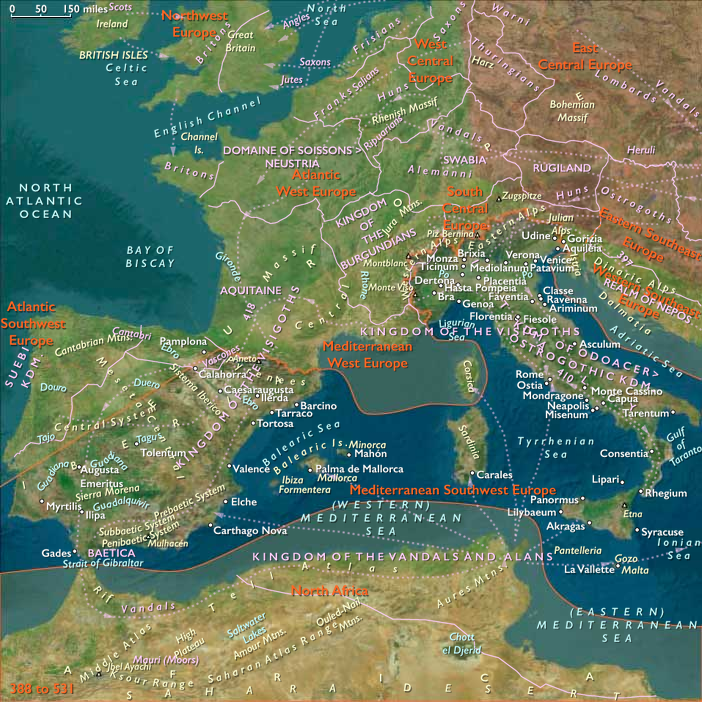
The Italian ports had reopened in spring 474 and Julius Nepos had crossed the Adriatic Sea to depose Glycerius, who probably left Ravenna for Rome to resist the invader; he has a silver coin minted in Rome, claiming himself as Emperor together with Leo II and Zeno, and not recognizing Julius Nepos.
Nepos, however, disembarks at Portus in July 474 and deposes Glycerius, who offers no resistance; neither do the Senate nor the Gallo-Roman aristocracy, and Nepos accepts the imperial purple.
Glycerius is sent to Dalmatia as Bishop of Salona.
Glycerius' deposition is thus without any bloodshed, and historians have investigated the possible reasons why the Western Emperor, who had Gundobad and his army at his command, did not try to resist.
One possible reason is that Glycerius' elevation, not recognized by Eastern court, received the support of neither the Roman Senate nor the Gallic-Roman aristocracy; resisting Nepos without the support of the Senate would have been a bad choice for Gundobad.
It is possible that Gundobad, who was absent from Italy when Glycerius was deposed, had gone to Gaul to gather some more troops or to receive the legacy of his late father Gundioc as King of the Burgundians, thus effectively leaving Glycerius alone.
Locations
People
Groups
- Gallo-Roman culture
- Dalmatia (Roman province)
- Goths (East Germanic tribe)
- East, or Oriens, Praetorian prefecture of
- Italy, Praetorian prefecture of
- Illyricum, Praetorian prefecture of
- Ostrogoths, Realms of the
- Gaul, Praetorian prefecture of
- Italy, Diocese of
- Roman Empire, Western (Ravenna)
- Visigothic Kingdom of Toulouse
- Burgundians, (second) Kingdom of the
Topics
- Late Antiquity
- Migration Period
- Fall of the Western Roman Empire
- Visigothic Raids on the Roman Empire, Later
- Migration Period Pessimum
Commodoties
Subjects
Regions
Subregions
Related Events
Showing 10 events out of 58527 total
Years: 474 - 474
July
Locations
People
Groups
- Gallo-Roman culture
- Dalmatia (Roman province)
- Goths (East Germanic tribe)
- East, or Oriens, Praetorian prefecture of
- Italy, Praetorian prefecture of
- Illyricum, Praetorian prefecture of
- Ostrogoths, Realms of the
- Gaul, Praetorian prefecture of
- Italy, Diocese of
- Roman Empire, Western (Ravenna)
- Visigothic Kingdom of Toulouse
- Burgundians, (second) Kingdom of the
Topics
- Late Antiquity
- Migration Period
- Fall of the Western Roman Empire
- Visigothic Raids on the Roman Empire, Later
- Migration Period Pessimum
Commodoties
Subjects
Regions
Subregions