
The island of Rügen, located in the …
Years: 1146 - 1146
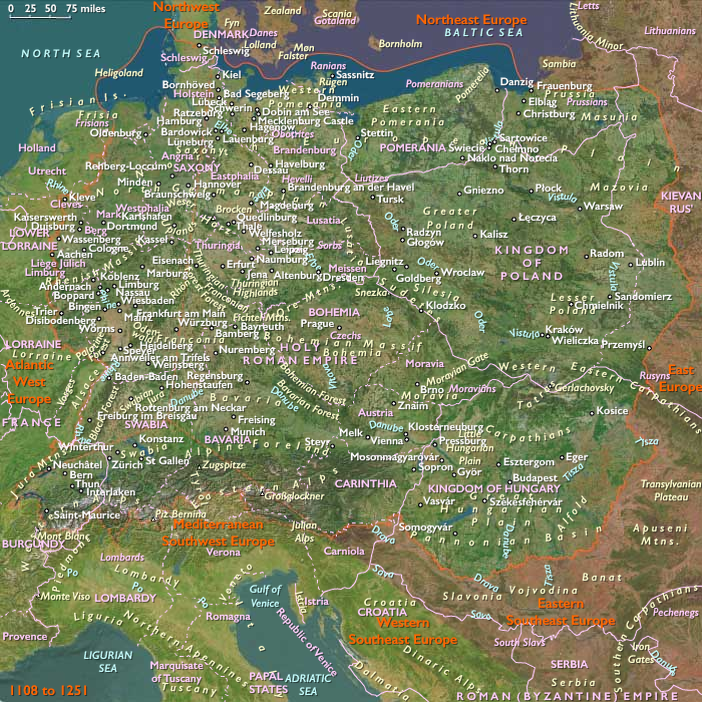
The island of Rügen, located in the Baltic Sea off the German coast, had been first populated about 4000 BCE.
The migrants were probably members of the Funnelbeaker culture, which exploited Rügen's flint deposits.
In the beginning of the first millennium, the island and the surrounding continental areas were settled by the Germanic Rugians, who might have come from Scandinavia or evolved from autochtone tribes and gave their name to the island.
In the seventh century, West Slavic R(uj)ani settled Rügen, assimilating the Germanic population which had not migrated southward in the Migration period, thereby adopting their name (Rugians --> Rujanes).
Many traces of their life can be found today.
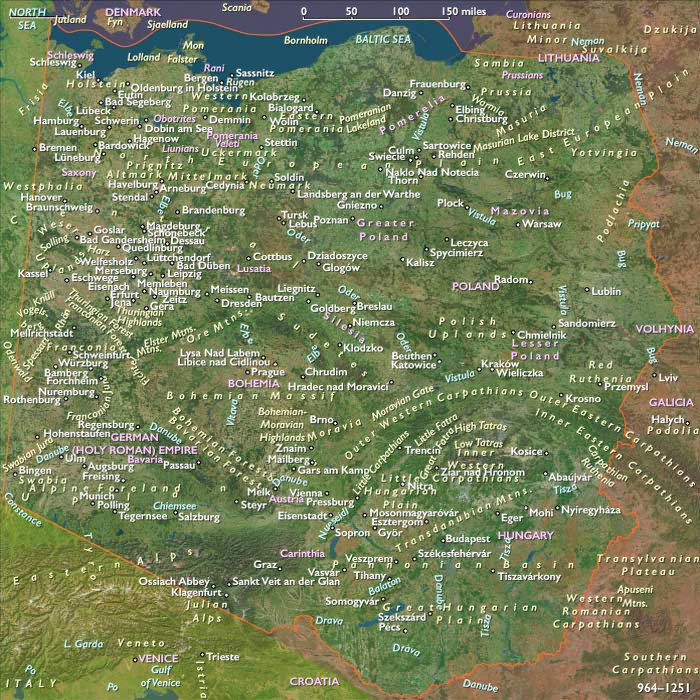
Rügen has become a Slavic principality, stretching from the Recknitz to the Ryck River, with the political center in the ancient town of Charenza, and a religious center in the fortified temple of Svantevit at Cape Arkona, the northernmost point of Rügen.
The Rani of Rügen continually harass Danish and German coastal areas with piratical acts while the Danes are preoccupied with their civil war.
Locations
Groups
- Polytheism (“paganism”)
- Polabian Slavs (West Slavs)
- Slavs, West
- Wends, or Sorbs (West Slavs)
- German, or Ottonian (Roman) Empire
- Christians, Roman Catholic
- Denmark-Norway, Kingdom of
Topics
Commodoties
Subjects
Regions
Subregions
Related Events
Showing 10 events out of 48826 total
Years: 1146 - 1146
Locations
Groups
- Polytheism (“paganism”)
- Polabian Slavs (West Slavs)
- Slavs, West
- Wends, or Sorbs (West Slavs)
- German, or Ottonian (Roman) Empire
- Christians, Roman Catholic
- Denmark-Norway, Kingdom of
Topics
Commodoties
Subjects
Regions
Subregions