
Medieval Economic Growth and Technological Innovations …
Years: 1108 - 1251
Medieval Economic Growth and Technological Innovations
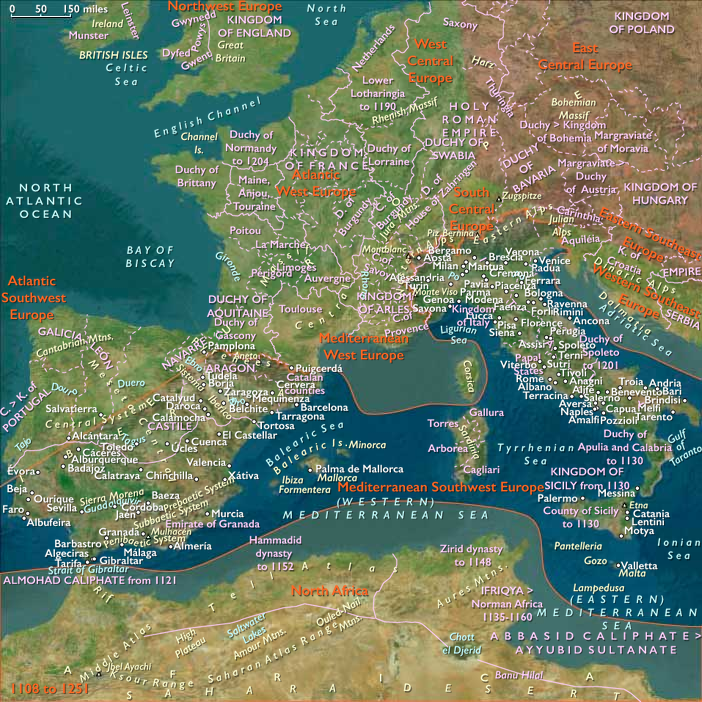
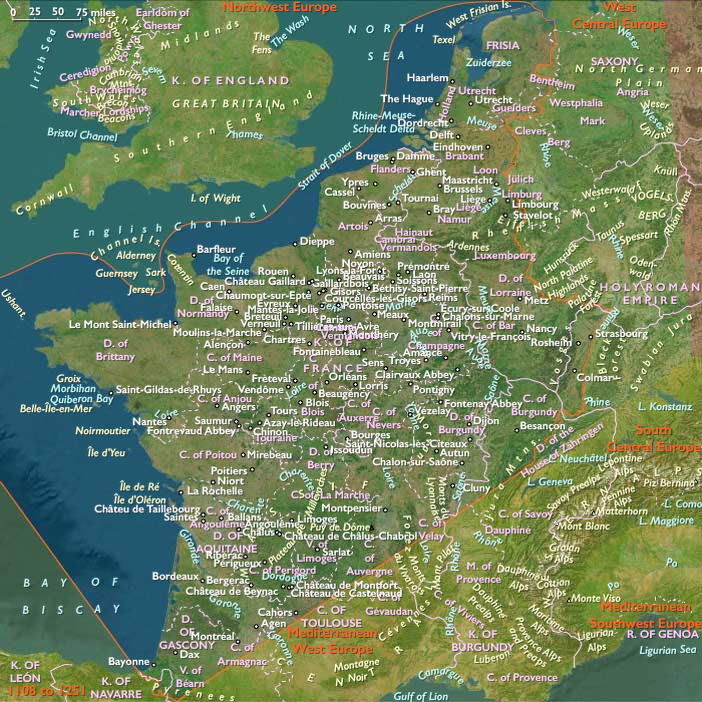
The High and Late Middle Ages witnessed a surge in economic expansion, driven by technological advancements that transformed agriculture, trade, and knowledge dissemination. These innovations not only increased productivity but also facilitated the rise of urban centers, merchant classes, and long-distance trade networks, reshaping the medieval economy.
Key Technological Innovations and Their Impact
-
The Windmill – First appearing in Europe by the late 12th century, windmills provided an efficient means of mechanized milling for grain and other agricultural products, reducing reliance on manual labor and allowing for greater food production in wind-rich regions such as northern France, the Low Countries, and England.
-
Paper Manufacturing – Introduced from China via the Islamic world, paper production expanded in Atlantic West Europe during the 12th and 13th centuries. It gradually replaced expensive parchment, making writing materials more accessible and supporting record-keeping, education, and the expansion of literacy, particularly in the growing urban centers.
-
The Spinning Wheel – Revolutionizing textile production, the spinning wheel significantly increased efficiency in turning raw fibers into yarn. This advancement fueled the growth of cloth industries, particularly in Flanders and northern France, where high-quality wool production became a cornerstone of the medieval economy.
-
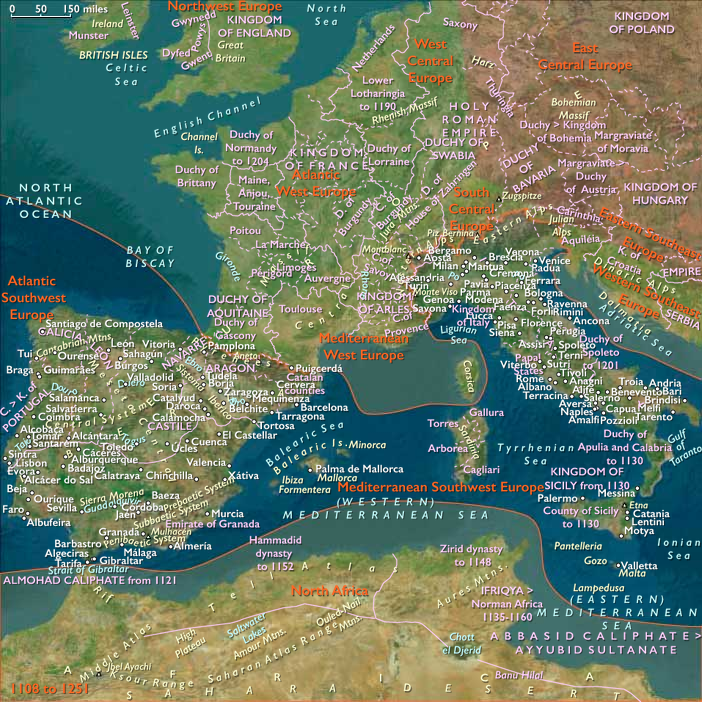
The Magnetic Compass – First used in Europe by the late 12th century, the magnetic compass transformed navigation, allowing for longer and safer sea voyages. This advancement greatly benefited maritime trade networks, particularly along the Atlantic coast, strengthening connections between ports in England, France, the Low Countries, and the Iberian Peninsula.
-
Eyeglasses – Invented in Italy around the late 13th century, eyeglasses improved vision for scholars, scribes, and craftsmen, enabling them to extend their productivity and enhance intellectual and artistic output. This innovation played a key role in the expansion of medieval learning and craftsmanship.
-
The Astrolabe – A sophisticated instrument inherited from Islamic and Greek traditions, the astrolabe allowed for astronomical measurements and navigation, assisting in maritime exploration and furthering scientific advancements in Europe’s growing centers of learning.
-
Hindu-Arabic Numerals – Introduced through Islamic scholars in Spain and southern France, this numerical system gradually replaced Roman numerals, revolutionizing mathematics, accounting, and commerce. The new system allowed for more efficient calculations in trade, banking, and taxation, further accelerating economic complexity.
Economic and Social Transformations
These technological advances fueled economic expansion, leading to:
- The revival of urban centers, with trade hubs such as Bruges, Ghent, and Bordeaux emerging as key commercial strongholds.
- The rise of a merchant class, who increasingly influenced local governance and economic policies.
- Long-distance trade networks, strengthened by improved navigation and financial record-keeping, which facilitated exchanges between Atlantic West Europe, the Mediterranean, and beyond.
Together, these innovations set the stage for the broader economic and intellectual transformations of the Late Middle Ages, paving the way for the Commercial Revolution and, ultimately, the transition toward the Renaissance.
Groups
Topics
Commodoties
Subjects
Regions
- Southeast Asia
- East Asia
- Central Asia
- South Asia
- The Near and Middle East
- Southeast Europe
- Central Europe
- North Africa
- Southwest Europe
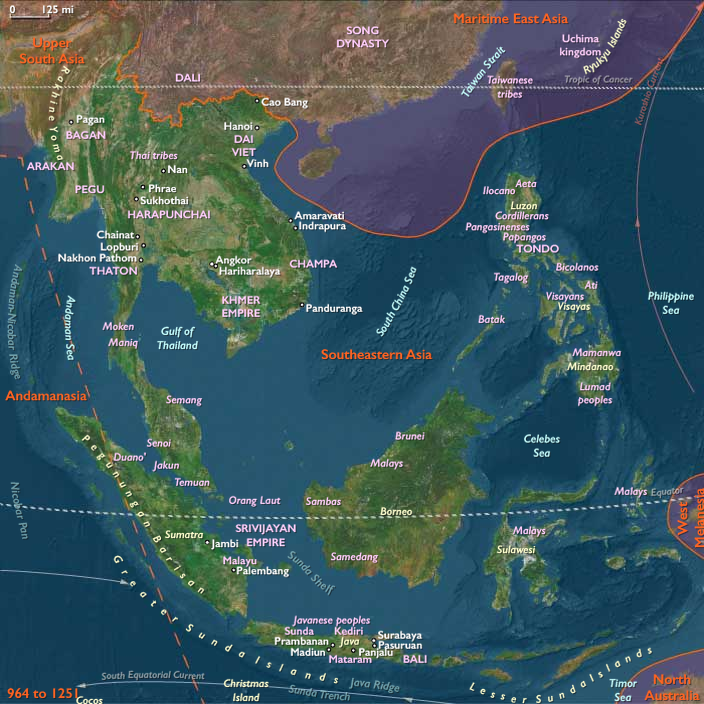
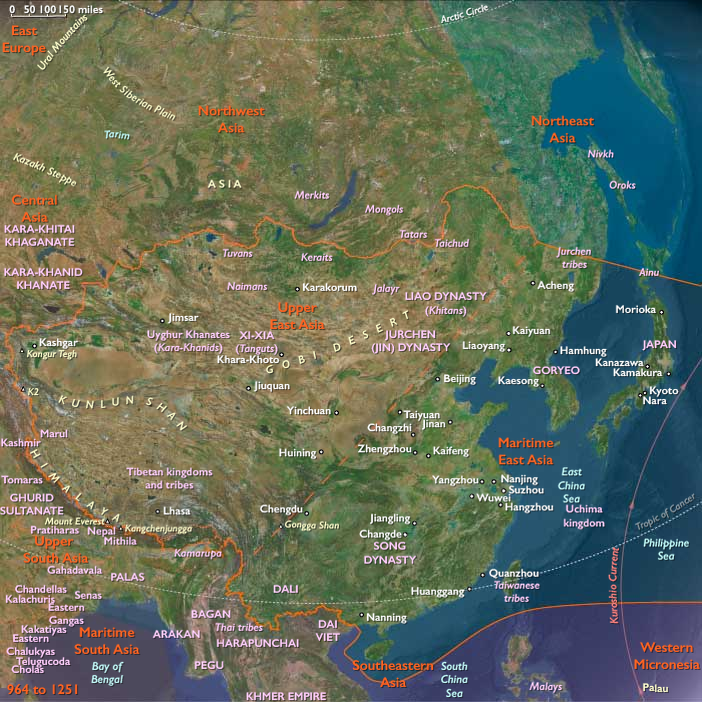
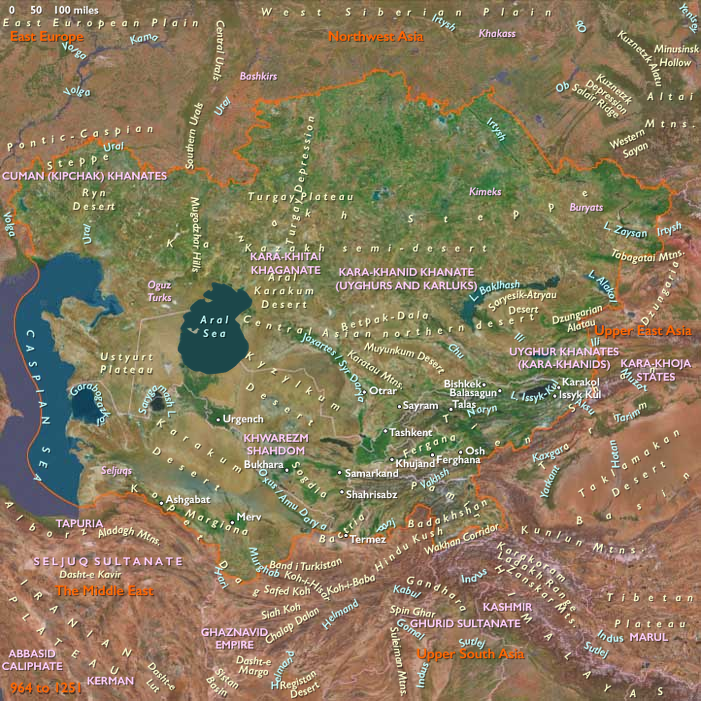
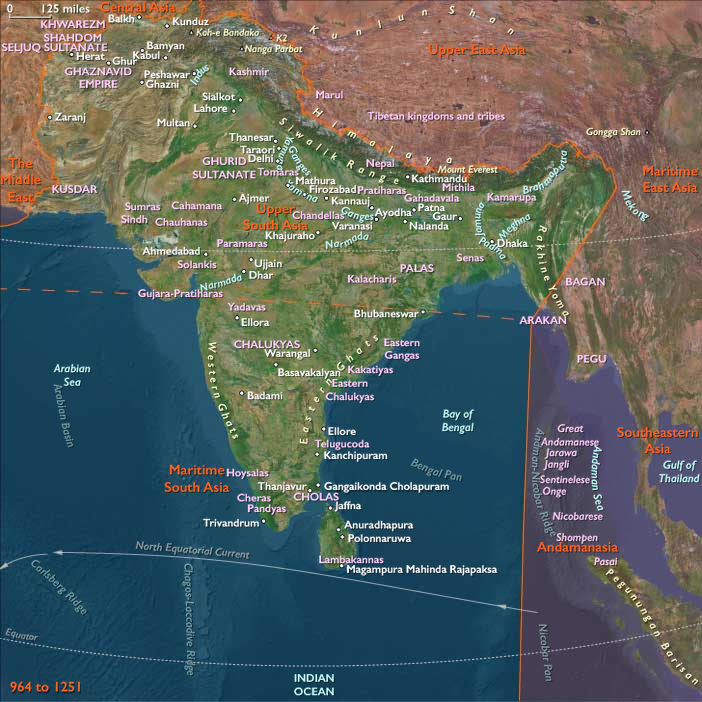
Subregions
- Southeastern Asia
- Maritime East Asia
- Upper East Asia
- Northeast Europe
- East Central Europe
- Eastern Southeast Europe
- Middle East
- Upper South Asia
- Maritime East Africa
- Near East
- Western Southeast Europe
- South Central Europe
- Mediterranean Southwest Europe
- North Africa
- Atlantic Southwest Europe
- Atlantic West Europe
- West Central Europe
- Northwest Europe
Related Events
Showing 10 events out of 49873 total
Years: 1108 - 1251
Groups
Topics
Commodoties
Subjects
Regions
- Southeast Asia
- East Asia
- Central Asia
- South Asia
- The Near and Middle East
- Southeast Europe
- Central Europe
- North Africa
- Southwest Europe
Subregions
- Southeastern Asia
- Maritime East Asia
- Upper East Asia
- Northeast Europe
- East Central Europe
- Eastern Southeast Europe
- Middle East
- Upper South Asia
- Maritime East Africa
- Near East
- Western Southeast Europe
- South Central Europe
- Mediterranean Southwest Europe
- North Africa
- Atlantic Southwest Europe
- Atlantic West Europe
- West Central Europe
- Northwest Europe