
The Iroquois have attacked the Susquehannocks without …
Years: 1652 - 1652
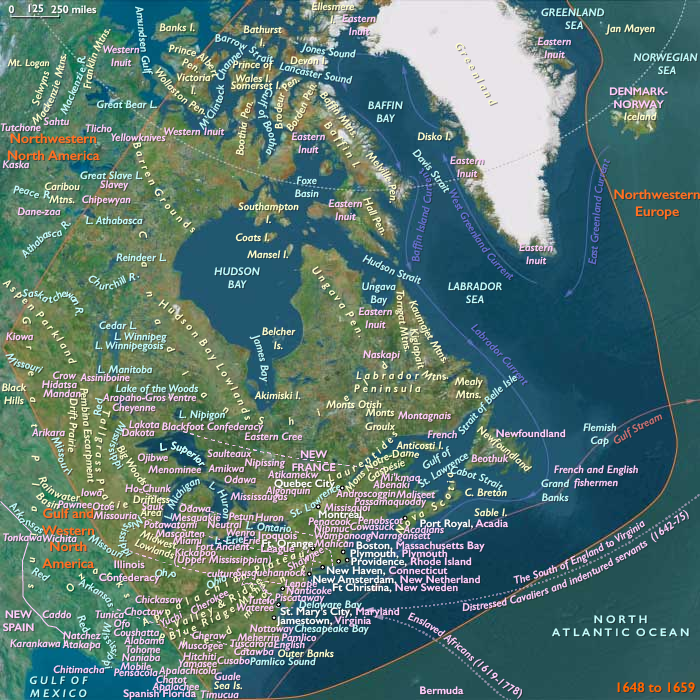
The Iroquois have attacked the Susquehannocks without success from 1651 to 1652.
The Susquehannocks have been in an inactive state of war with Maryland; as a result, they trade almost exclusively with New Sweden.
They conclude a peace treaty in 1652 with Maryland.
In return for arms and safety on their southern flank, they cede to Maryland large territories on both shores of the Chesapeake Bay.
Locations
Groups
- Iroquois (Haudenosaunee, also known as the League of Peace and Power, Five Nations, or Six Nations)
- Susquehannock (Amerind tribe)
- Sweden, (second) Kingdom of
- Jesuits, or Order of the Society of Jesus
- France, (Bourbon) Kingdom of
- Maryland, Province of (English Colony)
- New Sweden (Swedish Colony)
- England, Commonwealth of
Topics
Commodoties
Subjects
Regions

Subregions
Related Events
Showing 10 events out of 31682 total
Years: 1652 - 1652
Locations
Groups
- Iroquois (Haudenosaunee, also known as the League of Peace and Power, Five Nations, or Six Nations)
- Susquehannock (Amerind tribe)
- Sweden, (second) Kingdom of
- Jesuits, or Order of the Society of Jesus
- France, (Bourbon) Kingdom of
- Maryland, Province of (English Colony)
- New Sweden (Swedish Colony)
- England, Commonwealth of
Topics
Commodoties
Subjects
Regions
Subregions