
The Investiture Controversy, also known as the …
Years: 1110 - 1110
The Investiture Controversy, also known as the lay investiture controversy, the most significant conflict between secular and religious powers in medieval Europe, had begun as a dispute in the eleventh century between Holy Roman Emperor Henry IV and Pope Gregory VII concerning who would control appointments of church officials (investiture).
The controversy, undercutting the Imperial power established by the Salian emperors, would eventually lead to nearly fifty years of civil war in Germany, the triumph of the great dukes and abbots, and the disintegration of the Holy Roman Empire, a condition from which it would not recover until German unification in the nineteenth century.
At the time of Henry IV's death in 1106, Henry I of England and the Gregorian Papacy had also been embroiled in a controversy over investiture, and its solution would provide a model for the eventual solution of the issue in the Empire.
The reign of Henry V, who is also unwilling to give up investiture, coincides with the final phase of the great controversy.
The papal party who had supported Henry in his resistance to his father hoped he would assent to the papal decrees, which had been renewed by Paschal II at the synod of Guastalla in 1106.
The king, however, continued to invest the bishops, but wished the pope to hold a council in Germany to settle the question.
After some hesitation, Paschal preferred France to Germany, and, after holding a council at Troyes, renewed his prohibition of lay investiture.
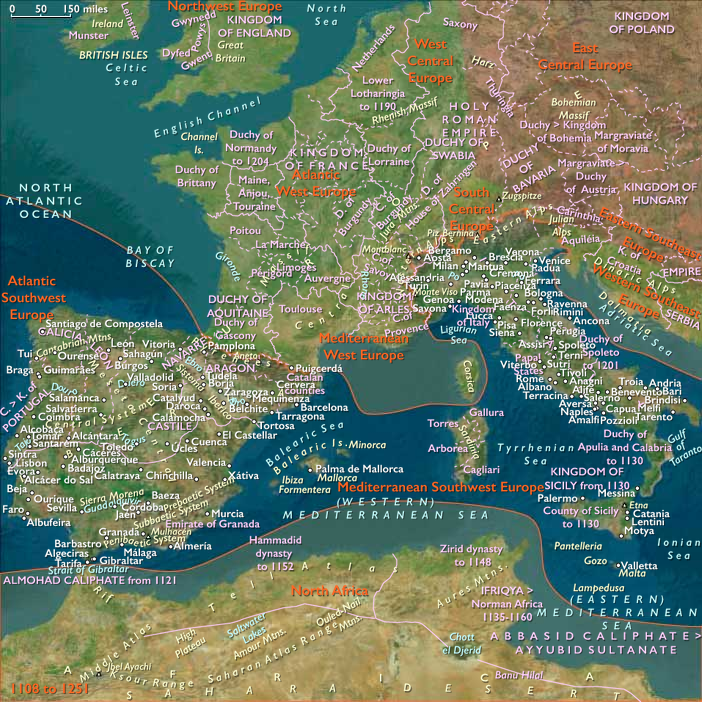
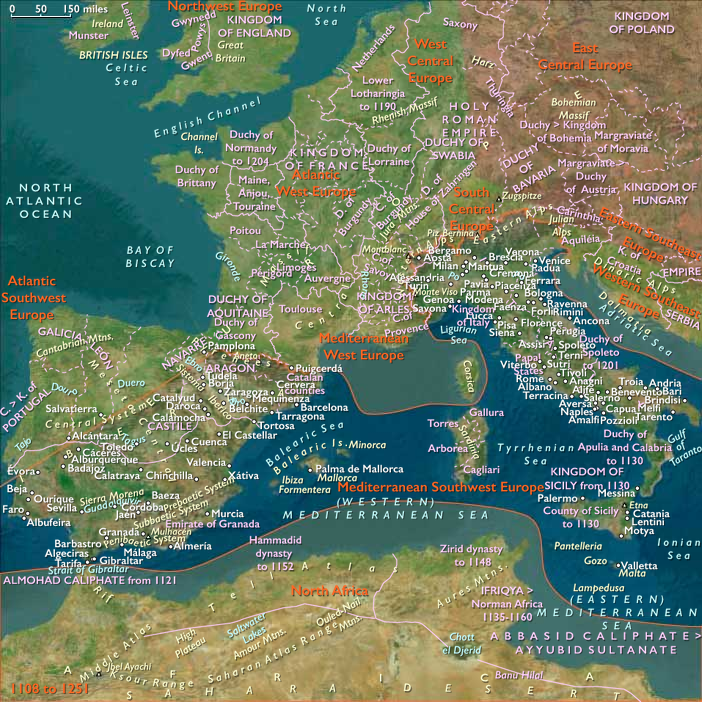
The matter has rested until 1110, when, negotiations between king and pope having failed, Paschal renews his decrees and Henry invades Italy with a large army.
The strength of his forces helps him to secure general recognition in Lombardy.
Locations
People
Groups
- Lombards (West Germanic tribe)
- Papal States (Republic of St. Peter)
- German, or Ottonian (Roman) Empire
- Italy, Kingdom of (Holy Roman Empire)
- Christians, Roman Catholic
- England, (Norman) Kingdom of
Topics
Commodoties
Subjects
Regions
Subregions
Related Events
Showing 10 events out of 49530 total
Years: 1110 - 1110
Locations
People
Groups
- Lombards (West Germanic tribe)
- Papal States (Republic of St. Peter)
- German, or Ottonian (Roman) Empire
- Italy, Kingdom of (Holy Roman Empire)
- Christians, Roman Catholic
- England, (Norman) Kingdom of
Topics
Commodoties
Subjects
Regions
Subregions