
Atlantic West Europe (1360–1371): Fragile Peace, Regional …
Years: 1360 - 1371
Atlantic West Europe (1360–1371): Fragile Peace, Regional Power Shifts, and Social Unrest
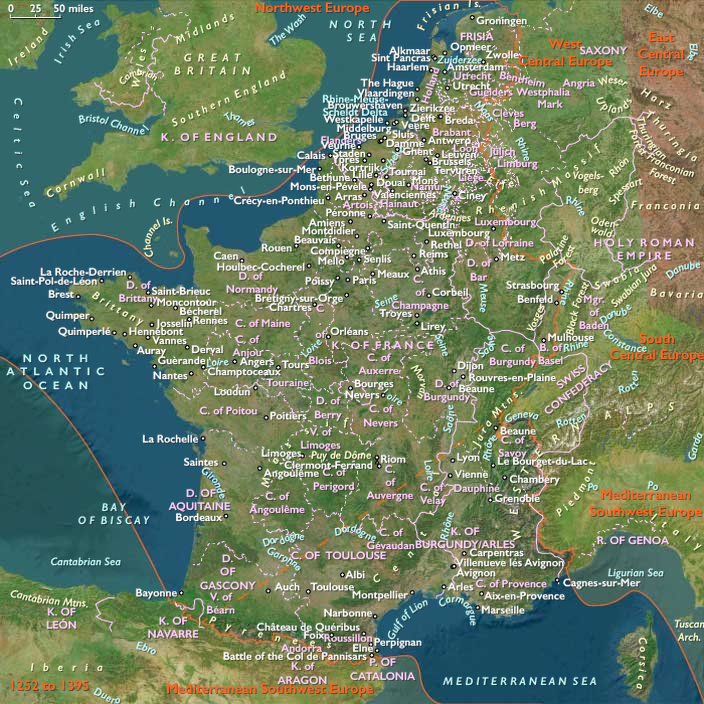
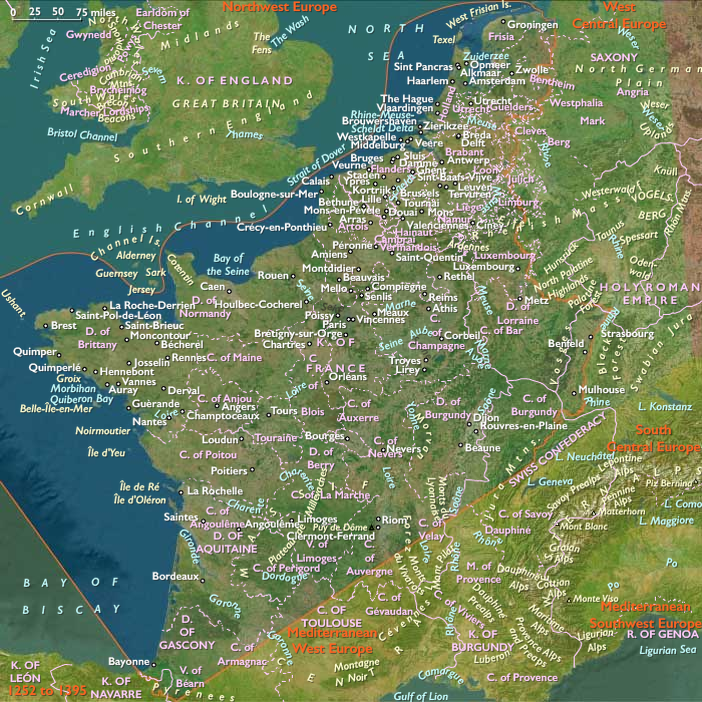
Between 1360 and 1371, Atlantic West Europe—encompassing the Low Countries, Brittany, Normandy, Burgundy, Aquitaine, central France, Alsace, and Franche-Comté—experienced a temporary lull in the Hundred Years' War, significant regional power shifts, economic strain, and widespread social tensions. The Treaty of Brétigny (1360)briefly halted hostilities between France and England, creating space for internal reconstruction, but underlying instabilities persisted, fueling regional ambitions and social discontent.
Political and Military Developments
-
France: Treaty of Brétigny and Internal Struggles
- The Treaty of Brétigny (1360) marked a pause in the Hundred Years' War, temporarily ceding extensive French territories—including Aquitaine—to English control and significantly reducing French royal prestige and resources.
- King Charles V (the Wise, r. 1364–1380) assumed the throne after Jean II's death (1364), beginning systematic efforts to recover lost territories and centralize royal authority through military reforms, strategic diplomacy, and administrative strengthening.
-
Aquitaine and Gascony: Heightened English Control
- The Black Prince (Edward of Woodstock) ruled Aquitaine from Bordeaux, maintaining considerable autonomy and enforcing strict administration, resulting in significant regional prosperity but also provoking growing resentment and discontent among local nobility and towns.
-
Low Countries: Urban Autonomy and Noble Rivalries
- The Low Countries witnessed significant urban unrest, particularly in Flanders and Brabant, where powerful cities like Ghent, Bruges, and Brussels sought greater economic and political independence from local nobles.
- Growing tensions between urban elites and rural aristocracy periodically erupted into conflicts, shaping regional governance and alliances.
-
Burgundy, Alsace, and Franche-Comté: Emerging Power
- Philip the Bold, younger son of Jean II, received the Duchy of Burgundy in 1363, marking the beginning of the powerful Valois-Burgundy dynasty. Philip quickly consolidated power, establishing Burgundy as an influential, semi-independent political entity.
- Alsace and Franche-Comté maintained relative independence, serving as contested territories balancing French, imperial, and Burgundian ambitions.
-
Brittany and Normandy: Succession and Local Governance
- Brittany remained entrenched in the Breton War of Succession (ending in 1364), concluding with the victory of the Montfort faction under John IV (Jean de Montfort). Brittany maintained an autonomous stance between France and England.
- Normandy experienced recovery and tighter integration into royal administration under Charles V, rebuilding economically from previous devastations.
Economic and Social Developments
-
Economic Strain and Resilience
- The aftermath of the Black Death continued to strain labor markets, leading to recurring rural and urban unrest, particularly in France, Aquitaine, and the Low Countries.
- Flemish cities such as Ghent and Bruges slowly rebounded, maintaining their positions as major centers of the wool and textile trades, despite intermittent social unrest.
-
Urban-Rural Tensions
- Increasing taxes and feudal demands caused rural populations to rebel periodically against noble authority, most notably reflected in localized uprisings and communal revolts across northern France, Normandy, and Brittany.
- In urban areas, conflicts intensified between merchant guilds and urban laborers, reflecting deepening socio-economic disparities.
Cultural and Intellectual Developments
-
Literary Flourishing and Court Culture
- Charles V's court promoted intellectual and artistic renewal, notably through translations of classical texts into French, signaling growing royal patronage of vernacular literature and scholarly culture.
- Works by prominent writers, such as Jean Froissart, chronicled contemporary events and court life, marking an advancement in vernacular historiography.
-
Gothic Artistic Patronage
- Gothic architecture and artistic patronage continued to thrive, particularly evident in the completion and decoration of cathedrals, such as those in Strasbourg and Rouen, highlighting cultural recovery from previous devastations.
Religious Developments
- Clerical Challenges and Popular Piety
- The aftermath of plague-era clerical shortages and perceived corruption spurred popular religious movements, confraternities, and increasing lay devotion, emphasizing spiritual renewal outside traditional ecclesiastical structures.
- Mendicant orders, particularly Dominicans and Franciscans, continued their influential roles within urban centers, fostering a more personalized religious experience.
Legacy and Significance
Between 1360 and 1371, Atlantic West Europe experienced a fragile and temporary peace that permitted internal recovery and significant regional restructuring. The Treaty of Brétigny reshaped Anglo-French territorial dynamics, planting seeds of renewed future conflict. The emergence of Burgundy as a major power, ongoing struggles for urban autonomy, and widespread social unrest defined the era, marking a critical transitional period leading to the resumption of hostilities and profound socio-political transformations in the coming decades.
People
- Charles V of France
- Edward, the Black Prince
- Jean Froissart
- John II of France
- John IV, Duke of Brittany
- Philip the Bold
Groups
- Flanders, County of
- Gascony, Duchy of
- Aquitaine, (Angevin) Duchy of
- Burgundy, Duchy of
- Franche-Comté
- Brabant, Duchy of
- Franciscans, or Order of St. Francis
- Dominicans, or Order of St. Dominic
- France, (Valois) Kingdom of
- Luxemburg, Duchy of
- Luxembourg, independent Duchy of
Topics
Subjects
Regions
Subregions
Years: 1360 - 1371
People
- Charles V of France
- Edward, the Black Prince
- Jean Froissart
- John II of France
- John IV, Duke of Brittany
- Philip the Bold
Groups
- Flanders, County of
- Gascony, Duchy of
- Aquitaine, (Angevin) Duchy of
- Burgundy, Duchy of
- Franche-Comté
- Brabant, Duchy of
- Franciscans, or Order of St. Francis
- Dominicans, or Order of St. Dominic
- France, (Valois) Kingdom of
- Luxemburg, Duchy of
- Luxembourg, independent Duchy of
Topics
Subjects
Regions
Subregions