
The invading Arabs threaten the Empire by …
Years: 715 - 715
The invading Arabs threaten the Empire by land and sea (they had penetrated as far as Galatia in 714), and Anastasios has attempted to restore peace by diplomatic means.
His emissaries having failed in Damascus, he undertakes the restoration of Constantinople's walls and the construction of a new fleet.
However, the death of the Caliph al-Walid I in February 715 has given Anastasius an opportunity to turn the tables on the enemy.
He has his fleet concentrate on Rhodes with orders not only to resist the approach of the enemy but to destroy their naval stores, and he dispatches an army under Leo the Isaurian, afterwards emperor, to invade Syria.
The troops of the Opsikian theme, resenting the Emperor's strict measures, mutiny, slay the admiral John, and proclaim as emperor Theodosios, a financial officer and tax collector of lowborn extraction in the southern portion of the theme of Opsikion.
According to one theory, he was the son of the former Emperor Tiberius III.
He did not readily accept this choice and, according to the chronicler Theophanes the Confessor, had even attempted to hide in the forests near Adramyttium.
Eventually he was found and was acclaimed emperor in May 716.
Theodosius and his troops immediately lay siege to Constantinople.
The eunuch churchman Germanus, made bishop of Cyzicus in about 705, had been pressured by Philippikos to sign a decree in 712 rehabilitating Monothelite teachings.
Anastasios upholds the decisions of the Sixth Ecumenical Council and deposes the Monothelete Patriarch John VI of Constantinople, replacing him with Germanus in August 715.
Germanus pronounces the orthodox creed and once again repudiates Monothelitism at a local council this same year.
This also puts an end to the short-lived local schism with the Church in Rome.
The rebels, after besieging the city for six months, gain entry in November.
Theodosius shows himself remarkably moderate in his treatment of his predecessor and his supporters.
Through the intercession of Patriarch Germanus I of Constantinople, Anastasios II is persuaded to abdicate and become a monk in Thessalonica.
Locations
People
Groups
- Arab people
- Christianity, Chalcedonian
- Greeks, Medieval (Byzantines)
- Islam
- Umayyad Caliphate (Damascus)
- Bulgarian Empire (First)
- Roman Empire, Eastern: Non-dynastic
Topics
Commodoties
Subjects
- Commerce
- Writing
- Watercraft
- Engineering
- Performing Arts
- Environment
- Labor and Service
- Conflict
- Mayhem
- Faith
- Government
- Custom and Law
- Technology
- Theology
- Christology
Regions
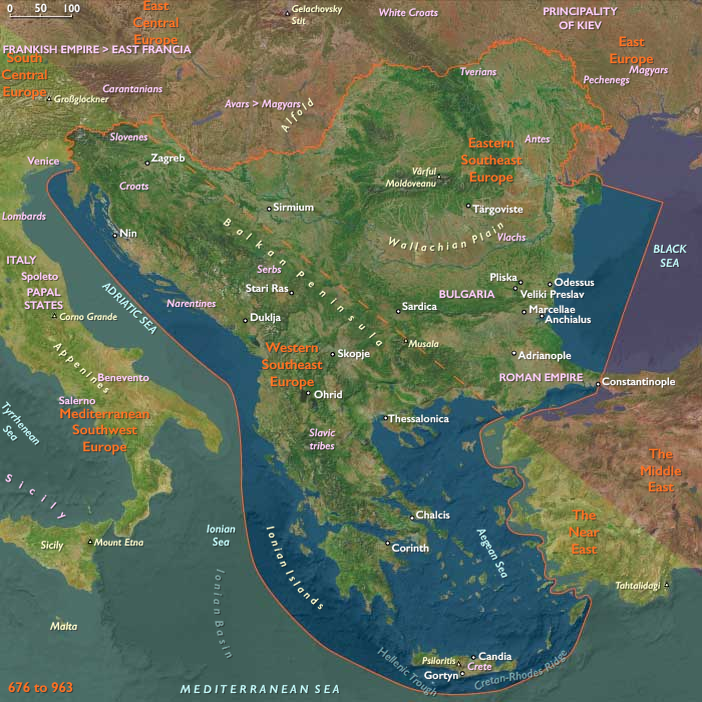
Subregions
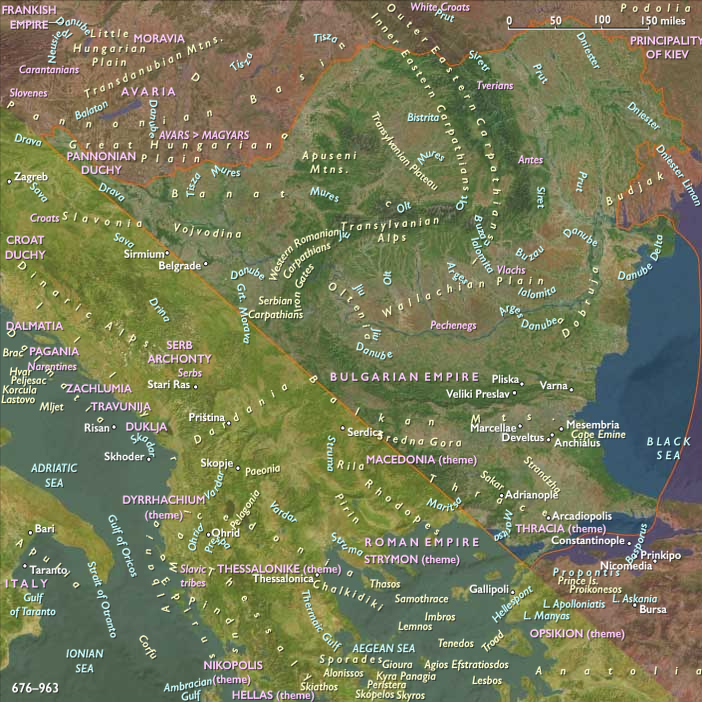
Years: 715 - 715
Locations
People
Groups
- Arab people
- Christianity, Chalcedonian
- Greeks, Medieval (Byzantines)
- Islam
- Umayyad Caliphate (Damascus)
- Bulgarian Empire (First)
- Roman Empire, Eastern: Non-dynastic
Topics
Commodoties
Subjects
- Commerce
- Writing
- Watercraft
- Engineering
- Performing Arts
- Environment
- Labor and Service
- Conflict
- Mayhem
- Faith
- Government
- Custom and Law
- Technology
- Theology
- Christology
Regions
Subregions