Filters:
The Introduction of the Compass and Rudder …
Years: 1300 - 1311
The Introduction of the Compass and Rudder in Europe: Transforming Ocean Navigation
The adoption of the magnetic compass and the stern-mounted rudder in medieval Europe revolutionized oceanic transportation, significantly enhancing navigation, ship maneuverability, and long-distance maritime trade.
The Magnetic Compass: A Breakthrough in Navigation
- The magnetic compass was introduced to Europe from China, likely via the Arab world or through direct contact during the Crusades.
- By the late 12th and early 13th centuries, European sailors had adapted the compass for maritime use, allowing for accurate open-sea navigation even when the sun and stars were obscured.
- The compass allowed for:
- More reliable route planning across the Atlantic and Mediterranean.
- Longer voyages beyond coastal waters.
- The expansion of trade networks, enabling direct maritime routes between Europe, Africa, and Asia.
The Stern-Post Rudder: Enhancing Ship Maneuverability
- The stern-mounted rudder replaced earlier side-mounted steering oars, which had limited control in rough seas.
- Likely introduced from China via the Islamic world, the stern rudder appeared in European ship designs by the 12th century and became widespread by the 13th–14th centuries.
- It enabled:
- Better steering in deep waters, making ships more stable in open seas.
- Larger vessels, such as carracks and caravels, which became the backbone of European exploration and trade.
- Greater efficiency in navigation, allowing ships to handle strong ocean currents and winds more effectively.
Impact on European Maritime Expansion
The combination of the compass and stern rudder laid the technological foundation for:
- The rise of European naval powers, particularly Portugal and Spain, in the Age of Exploration.
- More precise cartography and improved sea routes, increasing trade with Africa, the Middle East, and Asia.
- The ability to undertake longer transoceanic voyages, eventually leading to the discovery of new lands and the establishment of global trade networks.
Thus, these innovations transformed medieval European seafaring, making oceanic travel more efficient, safer, and strategically viable, setting the stage for the maritime dominance of Europe in the centuries to come.
Related Events
Showing 10 events out of 23 total
Years: 1300 - 1311
Subjects
Regions
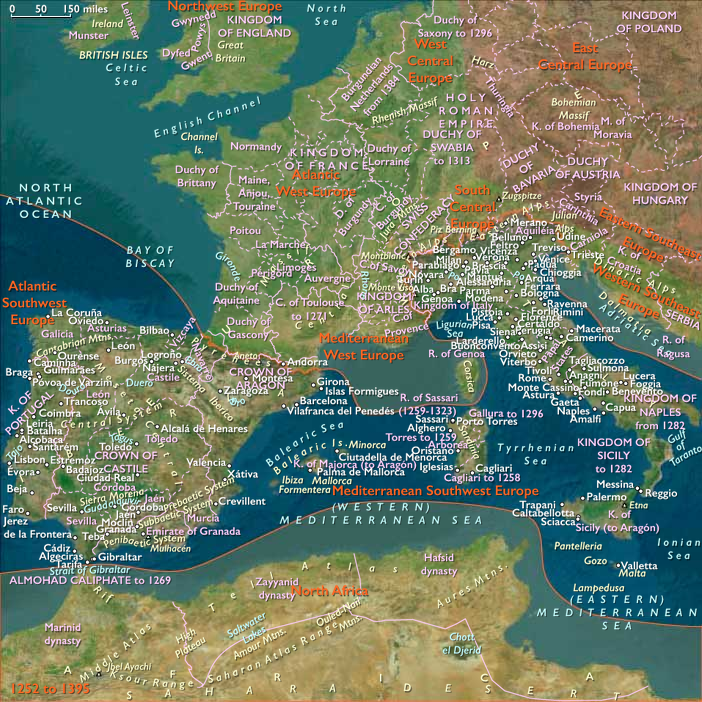
Subregions
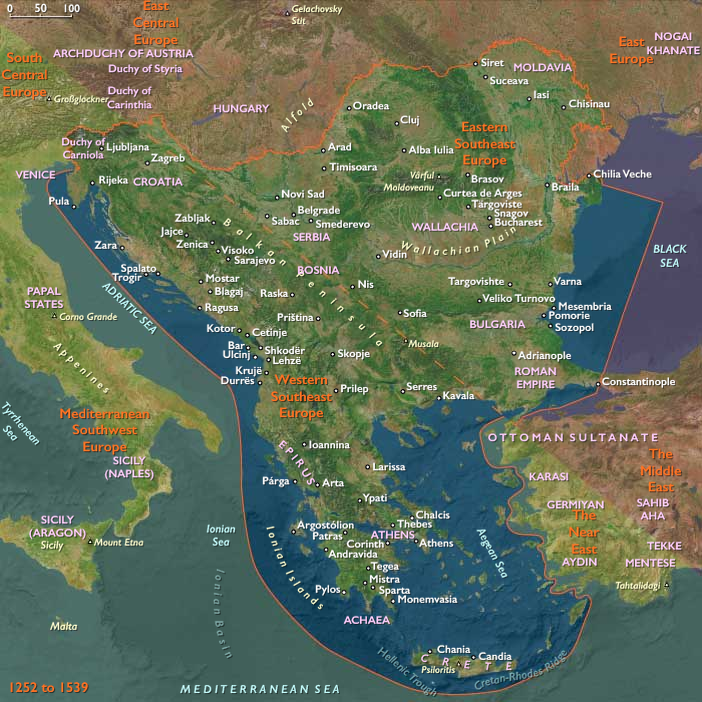
- East Europe
- Northeast Europe
- East Central Europe
- Eastern Southeast Europe
- South Central Europe
- Mediterranean West Europe
- Mediterranean Southwest Europe
- Atlantic Southwest Europe
- Atlantic West Europe
- West Central Europe
- Northwest Europe