
Atlantic West Europe (1372–1383): Renewed Conflict, Rising …
Years: 1372 - 1383
Atlantic West Europe (1372–1383): Renewed Conflict, Rising Burgundy, and Social Upheaval
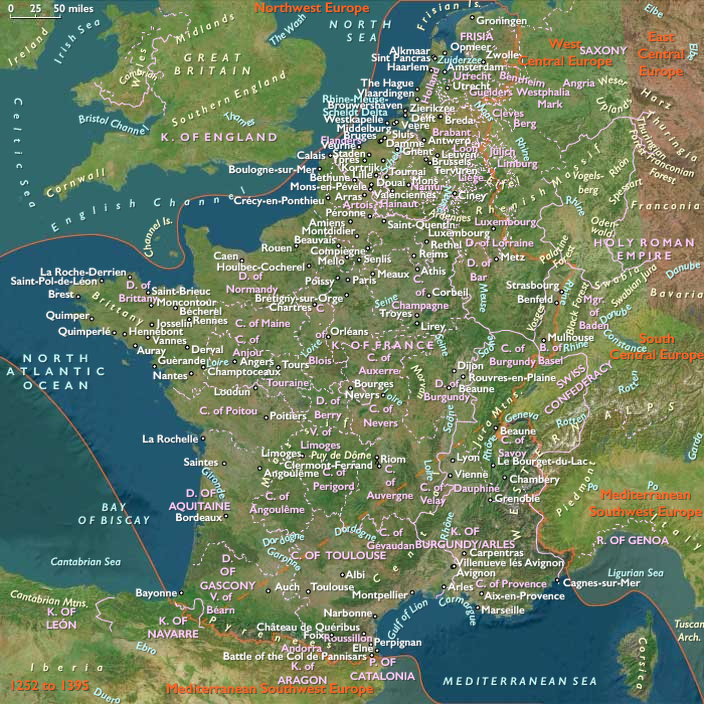
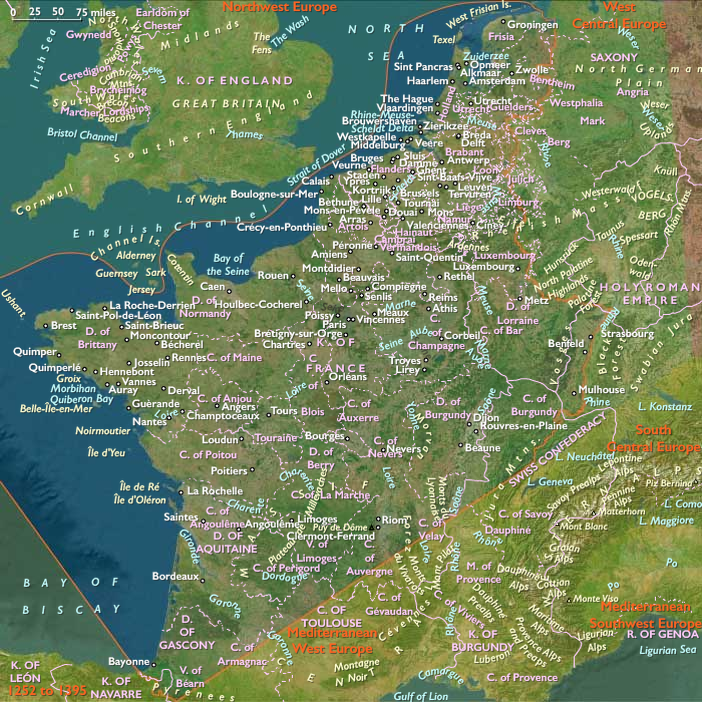
Between 1372 and 1383, Atlantic West Europe—including the Low Countries, Brittany, Normandy, Burgundy, Aquitaine, central France, Alsace, and Franche-Comté—experienced renewed warfare, the rise of powerful regional states, social unrest, and evolving economic dynamics. The resumption of the Hundred Years’ War, the further consolidation of Burgundy under Philip the Bold, and intensifying urban and rural tensions significantly shaped this turbulent era.
Political and Military Developments
-
France and England: The War Resumes
- Hostilities in the Hundred Years' War resumed fully in 1372, reversing the temporary peace established by the Treaty of Brétigny. French naval victories, notably the Battle of La Rochelle (1372), marked a turning point, weakening English control in Aquitaine.
- Under Charles V (r. 1364–1380) and his talented constable, Bertrand du Guesclin, France gradually recaptured large territories previously ceded to England.
-
Aquitaine and Gascony: English Retreat and Regional Turmoil
- Aquitaine suffered increasing turmoil as the English lost significant ground. Revolts among regional nobility and towns undermined English rule, weakening the position of the Black Prince (Edward of Woodstock), who died in 1376, further destabilizing English governance.
-
Burgundy, Alsace, and Franche-Comté: Burgundian Consolidation
- Philip the Bold, Duke of Burgundy (r. 1363–1404), significantly expanded his territories and influence. Through marriage alliances and strategic diplomacy, Philip integrated the County of Burgundy (Franche-Comté) and reinforced his control over key regions, positioning Burgundy as a major European power.
- Alsace remained an influential buffer zone, managing local autonomy despite pressure from French, Imperial, and Burgundian interests.
-
Low Countries: Urban Revolts and Economic Rivalries
- Flanders faced severe social upheaval, notably the Revolt of Ghent (1379–1385), where urban populations rebelled against the Count of Flanders, Louis de Male, over oppressive taxation and governance issues. The conflict profoundly destabilized the region's economic and political landscape.
-
Brittany and Normandy: Continued Autonomy and Stability
- Brittany maintained relative autonomy under Duke John IV (Jean de Montfort, r. 1364–1399), carefully balancing neutrality with alliances to both France and England.
- Normandy continued its economic and administrative recovery under closer integration into French royal structures, despite occasional local tensions.
Economic and Social Developments
-
Economic Struggles and Social Unrest
- Heavy taxation due to renewed warfare led to widespread unrest across rural and urban areas, notably triggering peasant rebellions like the Harelle revolt in Rouen (1382), reflecting escalating social tensions.
- Trade disruptions severely impacted Flemish cities, exacerbating social grievances among urban populations, and fueling revolts against noble authority.
-
Urban-Rural Divide
- Increasing economic disparities between urban elites and rural populations intensified, manifesting in widespread discontent and periodic revolts across France, Burgundy, and the Low Countries.
Cultural and Intellectual Developments
-
Royal Patronage and Cultural Renewal
- Under Charles V, Paris emerged as a vibrant cultural and intellectual hub, attracting scholars, poets, and artists. This era saw an expansion of vernacular literature and historiography, exemplified by the chronicler Jean Froissart, whose writings documented the era’s significant events and courtly culture.
-
Artistic Flourishing
- The patronage of Burgundy’s Philip the Bold significantly advanced Gothic artistic developments, particularly evident in the Charterhouse of Champmol in Dijon, marking Burgundy’s emergence as a key European cultural center.
Religious Developments
- Popular Piety and Ecclesiastical Criticism
- Disillusionment with the Church’s wealth and corruption intensified, fueling growing movements advocating religious reform and personal spirituality, notably through the continued spread of mendicant orders (Dominicans, Franciscans) and lay confraternities.
- Clerical reform movements arose, questioning papal authority, particularly in response to the onset of the Western Schism (1378), dividing European loyalties between rival popes in Avignon and Rome.
Legacy and Significance
Between 1372 and 1383, Atlantic West Europe witnessed renewed warfare and significant shifts in regional power dynamics. France’s strategic gains against England, the rise of Burgundy under Philip the Bold, urban revolts in the Low Countries, and widespread social unrest defined the period. These developments deepened political divisions, reshaped regional alliances, and set the stage for future conflicts, laying critical groundwork for subsequent transformations in European political and cultural history.
People
- Bertrand du Guesclin
- Charles V of France
- Edward, the Black Prince
- Jean Froissart
- John IV, Duke of Brittany
- Louis II of Flanders
- Philip the Bold
Groups
- Flanders, County of
- Gascony, Duchy of
- Brittanny, Duchy of
- Aquitaine, (Angevin) Duchy of
- Burgundy, Duchy of
- Christians, Roman Catholic
- Franche-Comté
- Brabant, Duchy of
- Franciscans, or Order of St. Francis
- Dominicans, or Order of St. Dominic
- France, (Valois) Kingdom of
- Luxembourg, independent Duchy of
- Aquitaine, or Guyenne, (contested) Duchy of
Topics
- Hundred Years' War: Caroline phase
- Western Schism or Papal Schism (also known as the Great Schism of Western Christianity)
- Harelle
Subjects
Regions
Subregions
Years: 1372 - 1383
People
- Bertrand du Guesclin
- Charles V of France
- Edward, the Black Prince
- Jean Froissart
- John IV, Duke of Brittany
- Louis II of Flanders
- Philip the Bold
Groups
- Flanders, County of
- Gascony, Duchy of
- Brittanny, Duchy of
- Aquitaine, (Angevin) Duchy of
- Burgundy, Duchy of
- Christians, Roman Catholic
- Franche-Comté
- Brabant, Duchy of
- Franciscans, or Order of St. Francis
- Dominicans, or Order of St. Dominic
- France, (Valois) Kingdom of
- Luxembourg, independent Duchy of
- Aquitaine, or Guyenne, (contested) Duchy of
Topics
- Hundred Years' War: Caroline phase
- Western Schism or Papal Schism (also known as the Great Schism of Western Christianity)
- Harelle
Subjects
Regions
Subregions