
The intense competition between the kingdoms of …
Years: 1050 - 1050
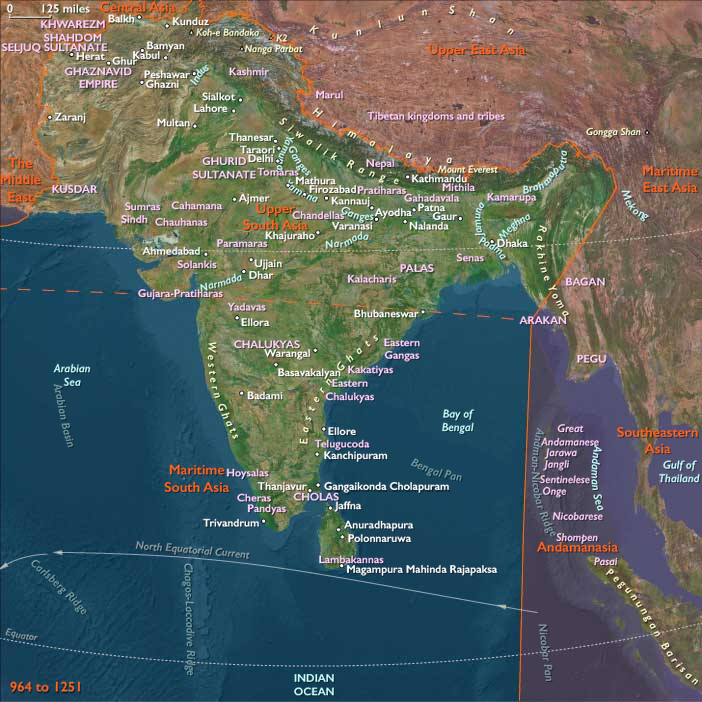
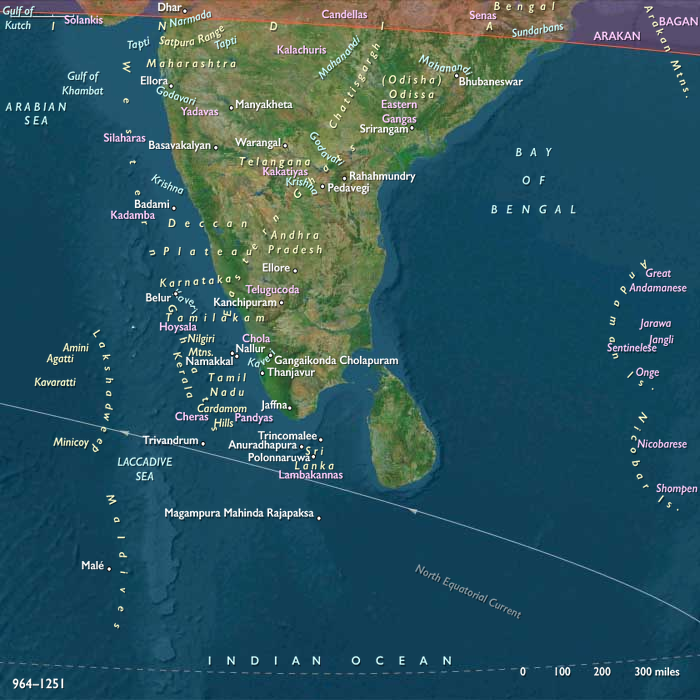
The intense competition between the kingdoms of the western Deccan and those of the Tamil kingdoms come to the fore in the eleventh century over the acutely contested fertile river valleys in the doab region of the Krishna and Godavari River called Vengi (modern coastal Andhra Pradesh).
The Western Chalukyas and the Chola Dynasty fight many bitter wars over control of this strategic resource.
The imperial Cholas had gained power during the time of the famous king Rajaraja Chola I and the crown prince Rajendra Chola I.
The Eastern Chalukyas of Vengi are cousins of the Western Chalukyas but have become increasingly influenced by the Cholas through their marital ties with the Tamil kingdom.
As this is against the interests of the Western Chalukyas, they had wasted no time in involving themselves politically and militarily in Vengi.
When King Satyasraya succeeded Tailapa II to the throne in 997, he had been able to protect his kingdom from Chola aggression as well as his northern territories in Konkan and Gujarat although his control over Vengi was shaky.
His successor, Jayasimha II, had fought many battles with the Cholas in the south while both powerful kingdoms struggled to choose the Vengi king.
Simultaneously, Jayasimha II had subdued the Paramara of central India.
It is known from records that Jayasimha's son, Somesvara I, moved the Chalukya capital to Kalyani, today's Basavakalyan, in about 1042 as hostilities with the Cholas continued and while both sides win and lose battles, neither has lost significant territory during the ongoing politics of installing a puppet on the Vengi throne.
Rajadhiraja Chola I, on becoming the Chola king in 1042, had immediately sought to restore Chola power in Vengi.
He had personally led a force to the Vengi kingdom and defeated the occupying Western Chalukya forces there at the battle of Dannada on the Krishna River and made Somesvara's son Vikramaditya (the later Vikramaditya VI ) and Vijayaditya retreat.
Rajadhiraja had then entered the Western Chalukya territories and sacked the fort at Kollipakkai (in present day Andhra Pradesh).
Rajadhiraja thad hus enabled the Eastern Chalukya Rajaraja Narendra to get some respite.
Rajadhiraja had continued his campaign on the western front and in several battles defeated the Chalukya army, demolished the Chalukya palace in the city of Kampili, in present day Bellary district.
The victorious Chola army had planted a victory pillar at Yedagiri.
After more fighting, the Chalukya capital Kalyani itself had been occupied in 1045.
Rajadhiraja had celebrated a coronation in the Chalukya capital and assumed the title of Virarajendra.
The Chola occupation is, however, short lived.
Somesvara manages to defeat and drive the Chola forces out of the Chalukya territories by 1050.
He also manages to revive his influence in Vengi and forces Rajaraja Narendra to acknowledge this suzerainty.
Locations
People
Groups
- Tamil people
- Chalukyas, Eastern, Rajput Kingdom of
- Malwa, Kingdom of
- Chola Empire
- Western Chalukya Empire
Topics
Commodoties
Subjects
Regions
Subregions
Years: 1050 - 1050
Locations
People
Groups
- Tamil people
- Chalukyas, Eastern, Rajput Kingdom of
- Malwa, Kingdom of
- Chola Empire
- Western Chalukya Empire
Topics
Commodoties
Subjects
Regions
Subregions