
The initial decades of Japan’s Ashikaga Shogunate, …
Years: 1398 - 1398
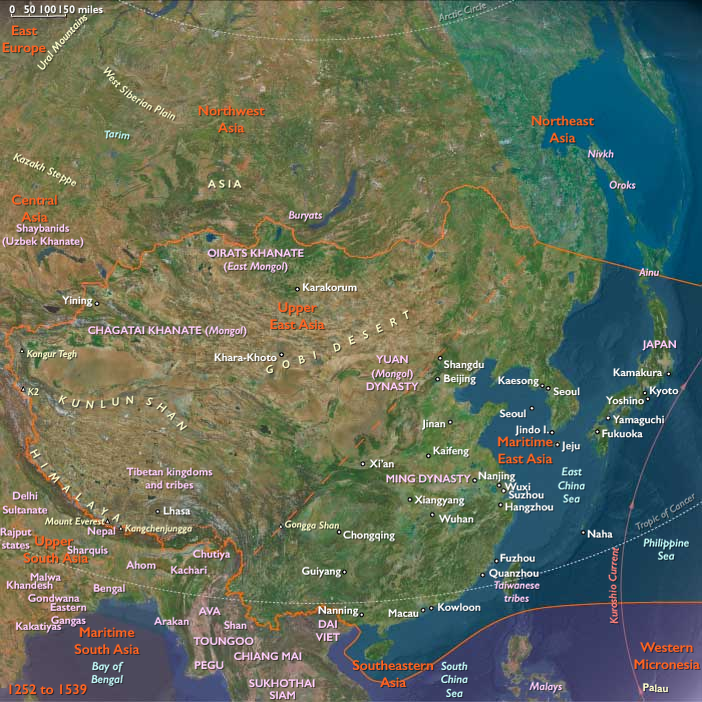
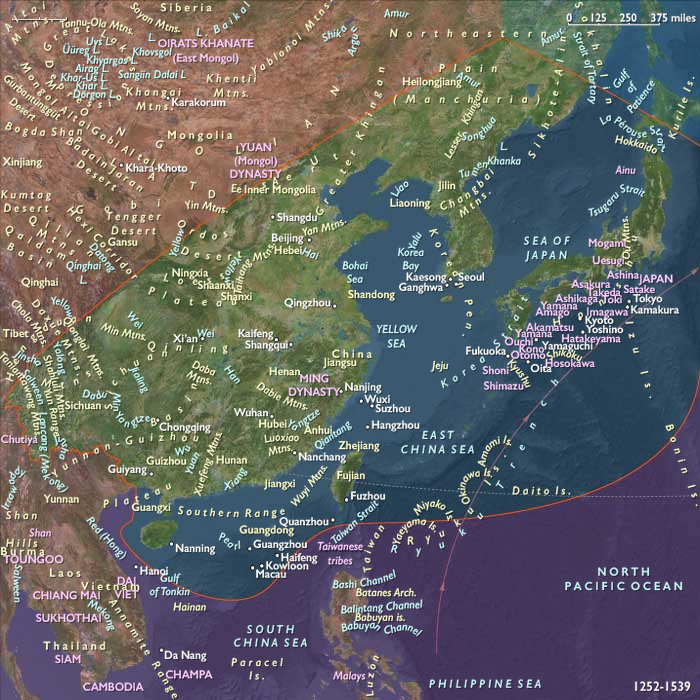
The initial decades of Japan’s Ashikaga Shogunate, which had begun in 1336 with the installation of the shogun Ashikaga Takauji, is also known as the Nanboku-chō or Northern and Southern Court period, during which there existed a North Imperial Court, established by Ashikaga Takauji in Kyoto, and a South Imperial Court, established by Emperor Go-Daigo in Yoshino.
The two courts had fought for fifty years, with the South giving up to the North in 1392.
What distinguishes the Ashikaga shogunate from that of Kamakura is that, whereas Kamakura had existed in equilibrium with the Kyōto court, Ashikaga Takauji had taken over the remnants of the imperial government by siding with the Emperor against the previous Kamakura shogunate.
Although the Ashikagas have shared more of the governmental authority with the Imperial government than had the Kamakuras, the Ashikaga shogun has never been as strong as the Kamakura had been, being greatly preoccupied with civil war.
The centralized master-vassal system used in the Kamakura system has been replaced with the highly decentralized daimyo (local lord) system, and the military power of the Ashikaga shogunate depends heavily on the loyalty of the daimyo.
Not until the rule of Ashikaga Yoshimitsu (as third shogun, from 1368 to 1394, and chancellor, from 1394) does a semblance of order emerge.
The period of Ashikaga rule is called Muromachi for the district of Kyoto in which its headquarters are located after Yoshimitsu established his residence here in 1378.
Locations
People
Groups
Commodoties
Subjects
Regions
Subregions
Related Events
Showing 10 events out of 42836 total
Years: 1398 - 1398
Locations
People
Groups
Commodoties
Subjects
Regions
Subregions