
The influences that had led to the …
Years: 1582 - 1582
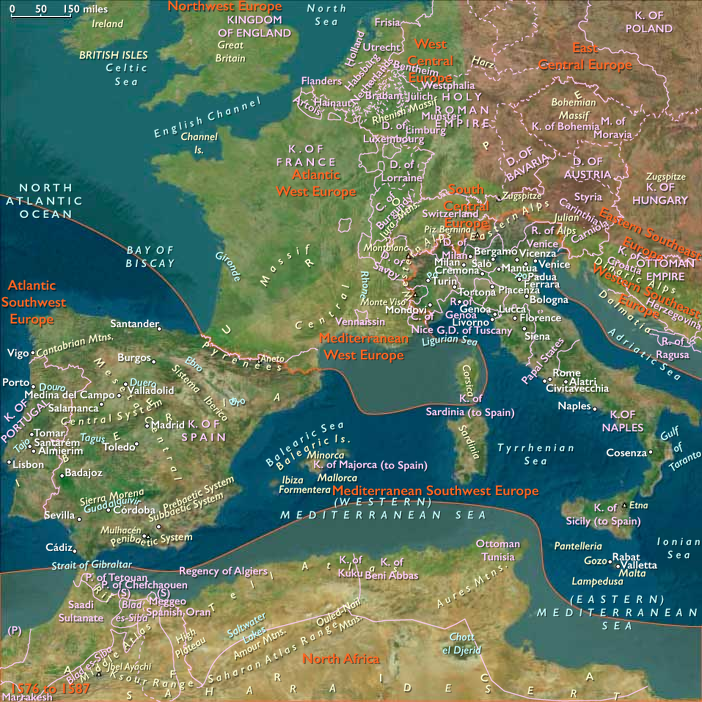
The influences that had led to the European Renaissance were already at work in Italy, and as a result the first great collections had begun to form.
A reawakening of interest in Italy's classical heritage and the rise of new merchant and banking families at this northern Mediterranean gateway to the Continent have produced impressive collections of antiquities, as well as considerable patronage of the arts.
Outstanding among the collections was that formed by Cosimo de' Medici in Florence in the fifteenth century and developed by his descendants.
In order to display some of the Medici paintings, the upper floor of the Uffizi Palace (designed to hold offices, or uffizi) is converted and opened to the public in 1582.
Indeed, many of the palaces holding such collections are open to visitors and are listed in the tourist guides of the period.
Academies and societies, representing a multitude of interests, have proliferated in Italy.
Indeed, academies of the fine arts have their origins here; for example, the Academy of Fine Arts of Florence had been founded as the Academy of Arts of Design in 1563, and the academy of Perugia dates to 1573.
Rome's Academy of San Luca is a guild of painters, founded in 1577.
Five members of the Florentine Academy establish Crusca Academy, or Accademia della Crusca (“Academy of the Chaff”) in Florence in 1582 for the purpose of purifying Tuscan, the literary language of the Italian Renaissance, by sifting the impure language (crusca, literally, “bran” or “chaff”) from the pure.
Cruscans, setting themselves up immediately as the arbiter of contemporary literature, write many commentaries on Petrarch and Boccaccio, their models for linguistic usage; compile dictionaries and lists of acceptable phrases and images from these authors; and translate many works into what they judge to be pure Tuscan.
Florentine poet, playwright, and storyteller Anton Francesco Grazzini, apparently educated in vernacular literature, had in 1540 taken part in the founding of the Accademia degli Umidi (“Academy of the Humid”), the first literary society of the time.
A, contentious individual, he has become known as Il Lasca (“The Roach,” a fish well known to anglers for putting up a good fight).
He retains the name at seventy-nine, even after the establishment of the Crusca Academy, which he is instrumental in founding.
In his burlesque verses, written in the manner of Francesco Berni, whose works he has edited, Grazzini strongly opposes humanism and Petrarchism, but he defends pure Tuscan diction in the reform of Italian literary style.
His own language is lively, at times approaching dialect, in his seven comedies written between 1540 and 1550 and in Le cene (“The Suppers”), a collection of twenty-two stories in the manner of Giovanni Boccaccio, purporting to be told by a group of young people at a carnival.
The plays, like the stories and poems, reflect his disenchanted, self-seeking age and exhibit the lustiness and vicious sting of his writings and the love he reveals for the ruthlessly cruel, whether in deeds of horror or pitiless jests.
Grazzini had also collected, in 1559, the Canti carnascialeschi (“Carnival Songs”) popular in Florence during the time of Lorenzo the Magnificent.
Locations
Groups
Topics
Regions
Subregions
Related Events
Showing 10 events out of 34867 total
Years: 1582 - 1582
Locations
Groups
Topics
Regions
Subregions