
The grateful new queen—the princesse des Ursins …
Years: 1718 - 1718
July
The grateful new queen—the princesse des Ursins having been chased out—had actively exerted her influence of on Alberoni's behalf, and within not much more than a year Alberoni had been made a duke and grandee of Spain, a member of the king's council, appointed bishop of Málaga, and in 1715 prime minister, and had been made cardinal by Pope Clement XI, under pressure from the court of Spain, in July 1717.
His vigorous internal policy mixed the economic reforms of Colbert for Louis XIV with some conservative Spanish aspects: a regular mail service to the Americas is instituted, yet the school of navigation he founds is reserved for the sons of the nobility.
Alberoni has by a series of decrees in 1717 reduced the powers of the grandees in royal councils.
His main purpose is to produce an economic revival in Spain by abolishing internal custom houses, throwing open the trade of the Indies and reorganizing the finances along lines that had been established by the French economist Jean Orry.
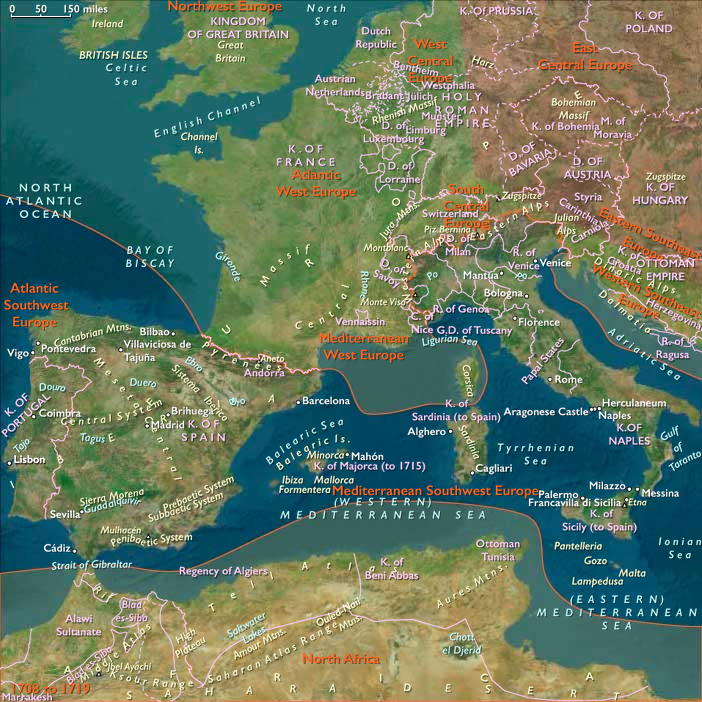
With the resources thus gained, Alberoni undertakes to enable Philip V to carry out an ambitious foreign policy to undo the Treaty of Utrecht, with the aim of countering the Habsburgs and recovering Spanish possessions in Italy, where he is responsible for unwarranted invasions of Sardinia (November 1717, strongly supported by Sardinian politician Vicente Bacallar) and Sicily (July 1718), in spite of promises made to the Pope, while pressing Spanish causes in France with the Cellamare Conspiracy.
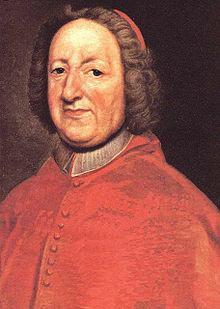
Cardinal Alberoni
Locations
People
Groups
- Papal States (Republic of St. Peter)
- Naples, Kingdom of
- Habsburg Monarchy, or Empire
- Spain, Bourbon Kingdom of
- Britain, Kingdom of Great
- Quadruple Alliance (1718)
Topics
Commodoties
Subjects
Regions
Subregions
Years: 1718 - 1718
July
Cardinal Alberoni
Locations
People
Groups
- Papal States (Republic of St. Peter)
- Naples, Kingdom of
- Habsburg Monarchy, or Empire
- Spain, Bourbon Kingdom of
- Britain, Kingdom of Great
- Quadruple Alliance (1718)
Topics
Commodoties
Subjects
Regions
Subregions