
The imperial troops set up a fortified …
Years: 1030 - 1030
The imperial troops set up a fortified camp near Azaz, and the Emperor dispatches the Excubitors, under their commander, the patrikios Leo Choirosphaktes, to reconnoiter the area.
Choirosphaktes is ambushed, however, and taken captive, while his men disperse.
This success encourages the Arabs, who begin to harass the imperial camp and prohibit the imperial troops from foraging.
As a result, the invading army begins to suffer from hunger and especially from thirst.
The patrikios Constantine Dalassenos now leads an attack against the Arabs, but is defeated, and flees back to the camp.
The invaders become demoralized, and an imperial council resolves to abandon the campaign and return to imperial territory.
Thus, in the next morning, August 10, 1030, the army departs its camp and makes for Antioch.
The besieging Arabs attack the retreating imperial army.
As most of the troops are too worn out from thirst and dysentery to fight, the imperial army breaks and flees.
Only the imperial bodyguard, the Hetaireia, holds firm, and their brave stand allows Romanos, who is nearly captured himself, to escape.
According to the report of Yahya of Antioch, however, the imperial army suffered remarkably little casualties.
The Arabs take great booty, including the entire imperial army's baggage train, which the army had abandoned in their hasty flight.
Among the spoils is the sumptuous imperial tent with its treasures, which allegedly had to be carried off on seventy camels.
Only the holy icon of the Theotokos, which the emperors habitually carry along on campaigns, has been saved.
Locations
People
Groups
- Arab people
- Christianity, Chalcedonian
- Greeks, Medieval (Byzantines)
- Islam
- Roman Empire, Eastern: Macedonian dynasty
- Fatimid Caliphate
- Mirdasid dynasty
- Aleppo, Mirdasid Emirate of
Topics
Commodoties
Subjects
Regions
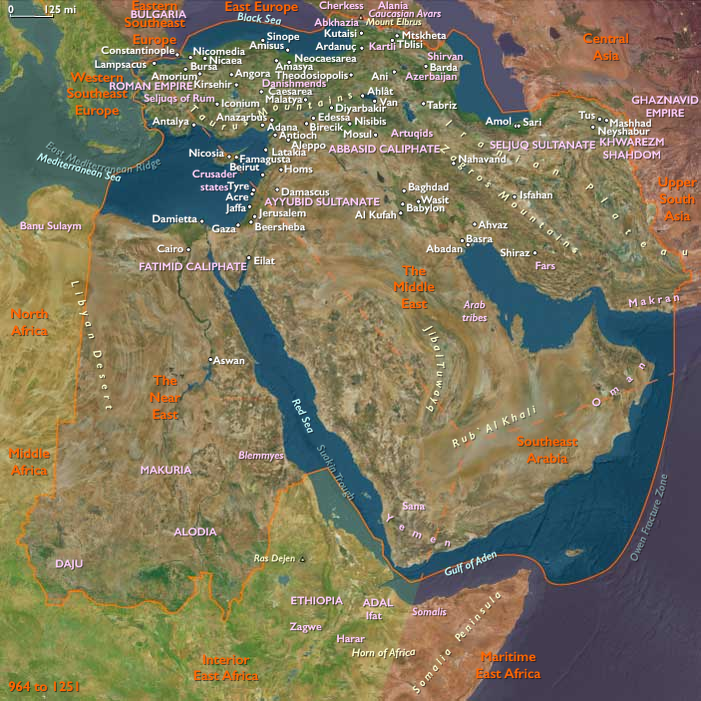
Subregions
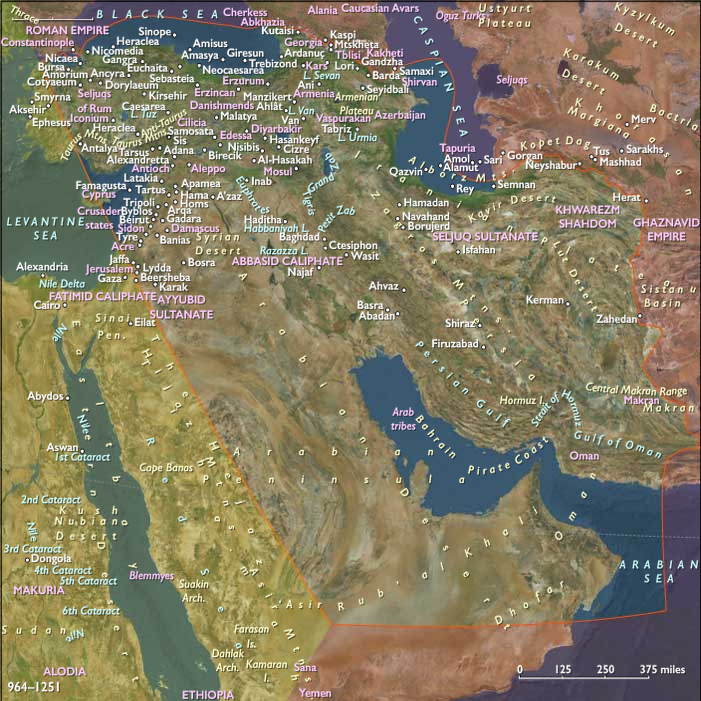
Related Events
Showing 2 events out of 2 total
Years: 1030 - 1030
Locations
People
Groups
- Arab people
- Christianity, Chalcedonian
- Greeks, Medieval (Byzantines)
- Islam
- Roman Empire, Eastern: Macedonian dynasty
- Fatimid Caliphate
- Mirdasid dynasty
- Aleppo, Mirdasid Emirate of
Topics
Commodoties
Subjects
Regions
Subregions