
The Ikhshidid dynasty of Egypt had been …
Years: 969 - 969
The Ikhshidid dynasty of Egypt had been founded in 935 by Muhammad bin Tughj, a Sogdian commander who began as governor and was later given the title Ikhshid (Persian for "prince") by the 'Abbasid Caliph in Baghdad.
While Ibn Tughj's sons Unujur and 'Ali remain the nominal Ikhshidid rulers, real governmental power had since 946 rested in the hands of Kafur, originally an enslaved black man from either Ethiopia or the Sudan, who had successfully restrained Fatimid and Hamdanid intrusions into his territories; he had also patronized learning and the arts, briefly boasting the presence of the eminent poet al-Mutanabbi in his court.
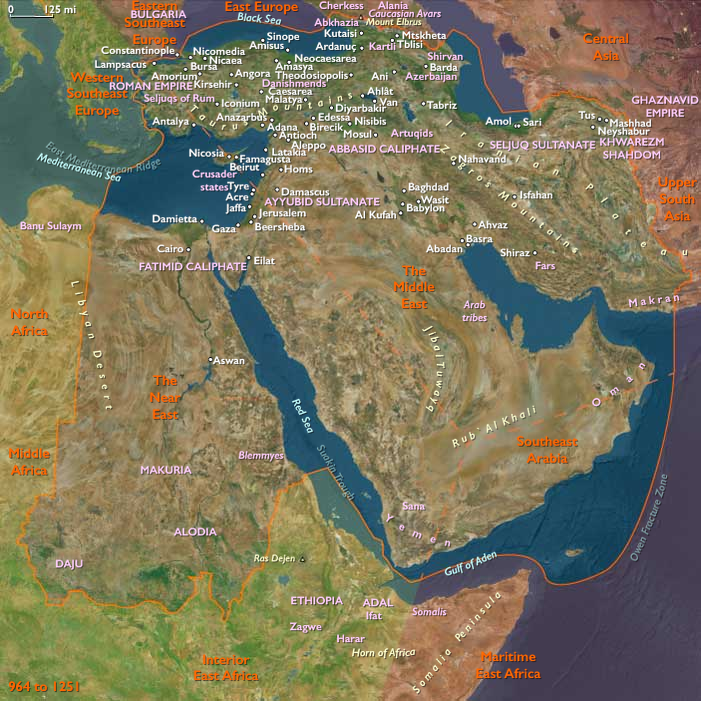
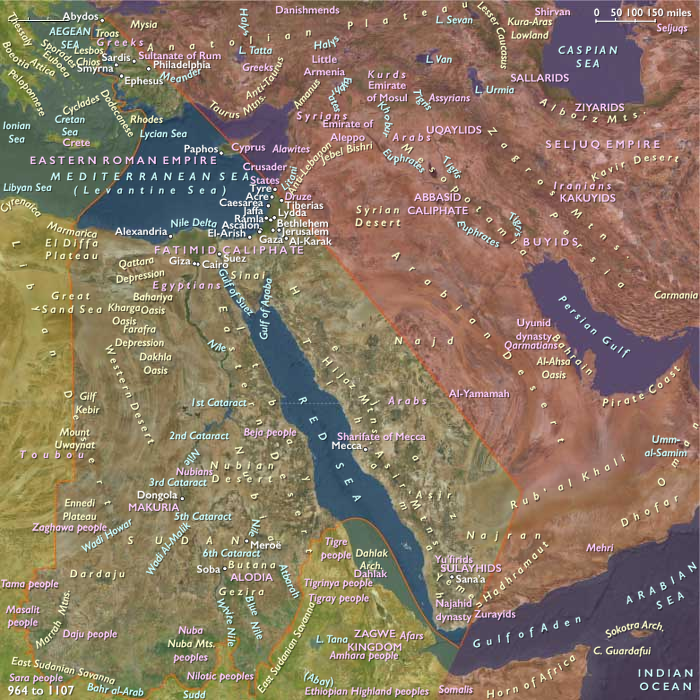
At Kafur's death in 968, the Fatimids, having spent a half-century consolidating power in North Africa, had moved eastward to seize from the Ikhshidids not only Egypt but also Palestine and Syria and to threaten Baghdad itself.
Fatimid troops under Jawhar conquer the Nile Valley in 969 after a siege at Giza and overthrow the last of the Ikhshidid rulers, a boy named Abu al-Fawaris Ahmad, grandson of the founder.
The conquest had been prepared by a treaty with the Vizir of the Ikhshidids, by which Sunnis would be guaranteed freedom of religion, so the Fatimids have encountered little resistance.
Jawhar’s troops now advance across Sinai into ...
Locations
People
Groups
- Filastin (Caliphal Palestine)
- Egypt in the Middle Ages
- Muslims, Sunni
- Muslims, Shi'a
- Ismailism
- Abbasid Caliphate (Baghdad)
- Hamdanid Dynasty
- Ikhshidid dynasty
- Fatimid Caliphate
Topics
Commodoties
Subjects
Regions
Subregions
Years: 969 - 969
Locations
People
Groups
- Filastin (Caliphal Palestine)
- Egypt in the Middle Ages
- Muslims, Sunni
- Muslims, Shi'a
- Ismailism
- Abbasid Caliphate (Baghdad)
- Hamdanid Dynasty
- Ikhshidid dynasty
- Fatimid Caliphate
Topics
Commodoties
Subjects
Regions
Subregions