
The Hungarians complain that they are being …
Years: 1576 - 1576
November
The Hungarians complain that they are being ruled and exploited as a subject people by foreigners, while Vienna looks on them as truculent rebels.
Matters grow worse after the mentally unbalanced Rudolf II, whose advisers hate Hungary and its traditions, succeeds his father in late 1576 and a religious conflict supervenes on the constitutional dispute, for in the preceding half-century the Reformation has swept over Hungary.
Locations
People
Groups
- Austria, Archduchy of
- Hungary, Royal
- Habsburg Monarchy, or Empire
- Transylvania (Ottoman vassal), Principality of
Topics
Subjects
Regions
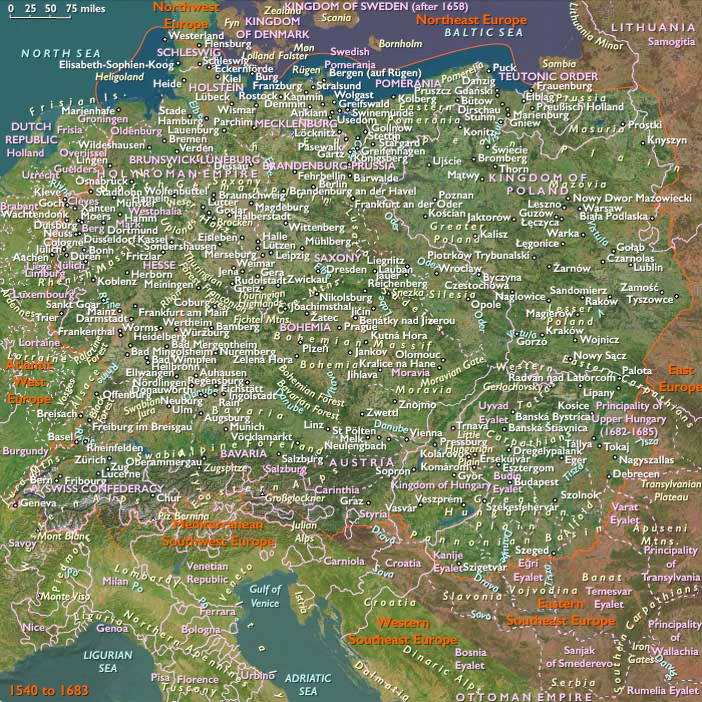
Subregions
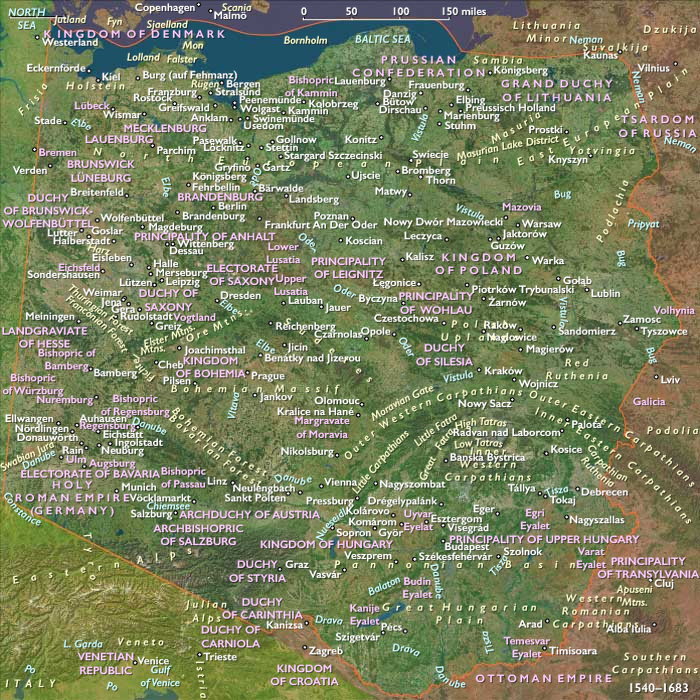
Related Events
Filter results
Showing 10 events out of 35161 total
Continental South America (1576–1587 CE): Expanding Colonial Frontiers, Resource Extraction, and Indigenous Resistance
Between 1576 and 1587 CE, Continental South America—including Peru, Bolivia, Paraguay, Uruguay, Brazil, northern Argentina, northern and central Chile, central and eastern Colombia, Ecuador, Venezuela, Suriname, Guyana, and French Guiana—underwent significant colonial expansion and resource exploitation. This era saw intensified economic activities, continued conflict and resistance by indigenous groups, and increasing cultural and social integration under Spanish and Portuguese rule.
Political Developments
Expanded Spanish Colonial Authority
Spanish governance deepened administrative structures within the Viceroyalty of Peru, extending effective political control over previously resistant territories, especially frontier regions in Colombia, Ecuador, Bolivia, and Chile. This period saw the strengthening of centralized colonial governance from Lima.
Portuguese Territorial Consolidation
Portuguese colonial administration solidified coastal dominance in Brazil, particularly around key settlements like Salvador and Rio de Janeiro, expanding into interior regions and consolidating control over resource-rich territories through increased settlement and fortification.
Persistent Indigenous Resistance
Indigenous communities, notably the Mapuche in Chile, the Guaraní in Paraguay and Brazil, and Andean groups in Peru and Bolivia, sustained active resistance against colonial domination. Fierce conflicts and rebellions continued, forcing Europeans to reconsider or adapt their territorial and administrative strategies.
Economic Developments
Mining Economy Flourishes
Silver extraction, especially from the massive mines at Potosí, Bolivia, continued to surge, reinforcing colonial wealth and the Spanish global trade network. Forced indigenous labor (the mita system) remained central to the mining economy’s profitability and expansion.
Plantation and Slave Economy Expansion
Brazilian coastal plantation economies thrived, driven by sugar cultivation reliant on enslaved African labor. Increased importation of enslaved Africans solidified the transatlantic slave trade, reshaping social and economic patterns throughout Brazil.
Rural Economies and Livestock Expansion
Extensive livestock ranching grew rapidly, particularly in northern Argentina, Uruguay, and Paraguay, shaping rural economies and settlement patterns. Ranching became integral to regional economic identities and land management systems.
Cultural and Technological Developments
Urban and Architectural Expansion
Cities such as Lima, Quito, Cusco, Bogotá, Salvador, and Rio de Janeiro continued growing as colonial centers. Urban developments featured elaborate churches, governmental buildings, plazas, and fortifications, blending European architectural traditions with local conditions.
Increasing Cultural Syncretism
Cultural fusion among indigenous, African, and European traditions intensified, shaping new forms of religious expression, linguistic development, music, art, and daily practices. Catholic rituals incorporated indigenous symbolism, reflecting the complexity of colonial society.
Social and Religious Developments
Expanded Missionary Activity and Conversion
Catholic missionary work spread deeper into remote regions, solidifying Catholicism as the dominant religious and cultural force. Missions functioned as centers for religious indoctrination, education, and cultural transformation of indigenous populations.
Deepening Social Stratification
Rigid social hierarchies solidified, clearly distinguishing between Spanish and Portuguese elites, mestizos, indigenous peoples, Africans, and enslaved populations. Colonial society became increasingly stratified, regulated by racial, ethnic, and economic distinctions.
Long-Term Consequences and Historical Significance
The era from 1576 to 1587 CE further solidified colonial structures across Continental South America. Intensified resource extraction, persistent indigenous resistance, and deeper cultural integration established enduring patterns of colonial governance, social hierarchy, and economic exploitation. This period profoundly influenced the continent’s subsequent historical trajectory, shaping lasting cultural, social, and economic legacies.
European traders visit the Malay peninsula and related islands, as the Portuguese and Spanish vie for commercial control of the region.
Hideyoshi, after destroying the forces responsible for Nobunaga's death, is rewarded with a joint guardianship of Nobunaga's heir, who is a minor.
By 1584 Hideyoshi has eliminated the three other guardians, taken complete control of Kyoto, and become the undisputed successor of his late overlord.
A commoner by birth and without a surname, Hideyoshi is adopted by the Fujiwara family, given the surname Toyotomi, and granted the tide kanpaku, representing civil and military control of all Japan.
By the following year, he has secured alliances with three of the nine major daimyo coalitions and continued the war of reunification in Shikoku and northern Kyushu.
In 1590, with an army of two hundred thousand troops, Hideyoshi defeats his last formidable rival, who controls the Kanto region of eastern Honshu.
The remaining contending daimyo capitulates, and the military reunification of Japan is complete.
Muscovy's eastward expansion encounters relatively little resistance.
In 1581 the Stroganov merchant family, interested in fur trade, hires a Cossack leader, Yermak, to lead an expedition into western Siberia.
Yermak defeats the Siberian Khanate and claims the territories west of the Ob' and Irtysh rivers for Muscovy.
East Europe (1576–1587 CE): Post-Oprichnina Stabilization and Territorial Reinforcement
Political and Military Developments
Recovery and Stabilization Post-Oprichnina
Between 1576 and 1587 CE, Muscovy began recovering from the destabilizing effects of Ivan IV’s Oprichnina policies. Efforts were directed toward restoring administrative efficiency, central governance, and political stability.
Territorial Management and Ethnic Integration
Muscovy continued to manage the integration of ethnic territories, especially those of the Bashkirs and other Ural-Volga groups. Diplomatic negotiations and military presence helped maintain regional stability and incorporate diverse populations into Muscovite governance.
Economic and Technological Developments
Economic Recovery and Trade Reinforcement
Economic conditions improved gradually, benefiting from renewed trade activities along the Volga River and within major urban centers. This recovery was critical in stabilizing Muscovy’s financial situation and promoting commercial confidence.
Ongoing Military Infrastructure Enhancement
Military technologies and infrastructures, particularly fortifications, siege tactics, and cavalry units, continued to be enhanced. These improvements ensured Muscovy’s defensive preparedness and territorial security.
Cultural and Artistic Developments
Resurgence in Cultural Activities
Cultural and artistic activities experienced renewed vigor, supported by revived patronage from the elite. Architecture, religious art, and secular cultural expressions regained prominence, contributing to Muscovy’s distinct cultural identity.
Intellectual and Literary Productivity
Scholars and chroniclers continued to document and analyze political, social, and cultural developments. These intellectual activities played a vital role in maintaining historical continuity and cultural awareness.
Settlement Patterns and Urban Development
Urban Recovery and Development
Urban areas, particularly Moscow, experienced renewed growth and development, benefiting from restored political stability and improved administrative management. Strategic urban planning facilitated infrastructure improvements and population growth.
Strengthened Urban Fortifications
Continued improvements in urban fortifications provided security and stability, supporting economic and demographic recovery in urban centers.
Social and Religious Developments
Restoring Social Stability
Social cohesion gradually improved following the disruptions of the Oprichnina. Efforts to integrate diverse ethnic groups into societal and administrative structures continued, reinforcing social harmony and administrative effectiveness.
Continued Influence of the Orthodox Church
The Orthodox Church sustained its critical role in stabilizing society through education, moral guidance, and community cohesion. Its influence remained integral to Muscovy’s social and cultural fabric.
Long-Term Consequences and Historical Significance
The period from 1576 to 1587 CE marked a phase of recovery and consolidation for Muscovy, following significant internal challenges. These developments laid essential groundwork for renewed political stability, territorial integrity, and cultural richness, shaping Muscovy’s future trajectory.
The development of the tsar's autocratic powers reaches a peak during the reign of Ivan IV, and he becomes known as the Terrible (his Russian epithet, groznyy, means threatening or dreaded).
Ivan strengthens the position of the tsar to an unprecedented degree, demonstrating the risks of unbridled power in the hands of a mentally unstable individual.
Although apparently intelligent and energetic, Ivan suffers from bouts of paranoia and depression, and his rule is punctuated by acts of extreme violence.
Northeast Europe (1576–1587 CE): Climactic Phases of the Livonian War and Geopolitical Realignments
Between 1576 and 1587 CE, Northeast Europe experienced the climactic phases of the Livonian War, marked by complex geopolitical rivalries, continued territorial reconfigurations, and strategic diplomatic realignments. This era significantly impacted the region’s political structures, economic vitality, and cultural transformations, laying foundations for future stability.
Climax of the Livonian War
The Livonian War (1558–1583) reached its decisive stages during this period, with continuing military engagements among Muscovy, Sweden, Denmark–Norway, and the Polish–Lithuanian Commonwealth. Persistent warfare devastated Livonian territories, causing profound demographic and economic disruptions. The prolonged conflict ultimately exhausted regional resources, prompting major powers to seek strategic resolutions.
Polish–Lithuanian Commonwealth’s Ascendance
Under King Stefan Batory (r. 1576–1586), the Polish–Lithuanian Commonwealth strengthened its position in Livonia through decisive military victories against Muscovy, including the successful siege of Polotsk (1579) and the strategic campaigns of 1580–1581. These successes significantly enhanced Polish–Lithuanian dominance in Livonia, consolidating southern territories and establishing stronger administrative control, thus shaping regional geopolitics.
Swedish Consolidation and Expansion
Sweden, under King John III, consolidated territorial control over northern Livonia and Estonia, reinforcing strategic fortifications in critical cities like Reval (Tallinn) and Narva. Swedish administrative reforms and fortified defenses safeguarded economic interests and provided stability, allowing continued colonization and settlement efforts, notably involving Forest Finns, thus strengthening Sweden's geopolitical influence along the eastern Baltic.
Danish–Norwegian Influence and Maritime Interests
Under Frederick II, Denmark–Norway remained deeply engaged in Baltic geopolitics, securing strategic maritime routes and contesting Swedish and Polish–Lithuanian ambitions. Danish influence in Courland and Baltic islands strengthened through active diplomacy and naval deployments, further intensifying regional rivalries.
Muscovite Setbacks and Territorial Adjustments
Muscovy, under Ivan IV (the Terrible), faced significant setbacks during this era. Repeated military defeats and internal administrative challenges weakened Muscovite positions in Livonia. Muscovy’s territorial ambitions suffered crucial limitations, prompting diplomatic negotiations and shifts in strategy to mitigate losses.
Stability and Economic Growth in the Duchy of Prussia
The secularized Duchy of Prussia, under Duke Albert Frederick, continued maintaining cautious neutrality, promoting internal stability and economic growth, particularly in urban centers like Königsberg. Its strategic location enabled sustained economic prosperity despite broader regional instability, positioning Prussia favorably within the shifting geopolitical landscape.
Economic Resilience in Major Urban Centers
Key cities such as Reval (Tallinn), Riga, Königsberg, and Visby on Gotland maintained economic resilience through sustained maritime commerce and robust merchant networks. These urban economies provided crucial regional stability, mitigating adverse impacts from ongoing military conflicts and geopolitical uncertainty.
Religious and Cultural Developments
Protestantism, especially Lutheranism, solidified further across Northeast Europe, significantly reshaping educational practices, cultural identities, and social institutions. Meanwhile, Catholic–Protestant tensions remained prevalent, influencing political alliances, internal governance, and regional diplomacy.
Scientific and Intellectual Advancements
Advancements continued through intellectual figures such as Danish astronomer Tycho Brahe, whose astronomical research during this period furthered understanding of celestial mechanics, solidifying Northeast Europe’s role as an emerging center of scientific and intellectual development.
Diplomatic Realignments and Peace Negotiations
Diplomatic negotiations intensified significantly as regional powers sought to end protracted conflicts. Complex diplomatic maneuvers culminated in preliminary peace negotiations, setting the stage for eventual resolutions and redefined territorial boundaries. These efforts marked significant strategic shifts among regional powers, reflecting emerging geopolitical realignments.
Legacy of the Era
The era from 1576 to 1587 CE profoundly shaped Northeast Europe's historical trajectory, characterized by decisive military outcomes, strategic territorial adjustments, and sustained economic and intellectual developments. These dynamics laid crucial foundations for future political stability, territorial configurations, and cultural identities, influencing the region significantly into the seventeenth century.
East Central Europe (1576–1587 CE): Rudolf II's Ascension, Polish-Lithuanian Elective Monarchy, Religious and Political Tensions, and Habsburg-Ottoman Rivalries
Between 1576 and 1587 CE, East Central Europe—comprising modern-day Poland, Czechia, Slovakia, Hungary, and eastern parts of Germany and Austria—entered a phase marked by deepening religious conflicts, dynastic challenges, and intensified Habsburg-Ottoman rivalries. Emperor Rudolf II's ascension to power brought Prague into prominence as an imperial and cultural center, while the newly elective Polish-Lithuanian Commonwealth faced significant political transformations. Religious tensions within the Holy Roman Empire escalated, setting the stage for future conflicts, and Transylvania continued balancing between Ottoman suzerainty and Habsburg interests.
Political and Military Developments
Rudolf II's Rule and Imperial Capital in Prague
-
In 1576, Rudolf II succeeded Maximilian II as Holy Roman Emperor and established Prague as his imperial residence. His reign brought cultural flourishing but was characterized by political indecisiveness, contributing to instability within the Empire.
-
Rudolf’s patronage transformed Prague into a major European cultural and scientific center, attracting scholars, artists, and intellectuals, but his withdrawn and eccentric personality weakened imperial governance, exacerbating regional tensions.
Polish-Lithuanian Elective Monarchy: Stephen Báthory
-
After the brief and contested reign of Henry of Valois (1573–1574), the Transylvanian prince Stephen Báthory (r. 1576–1586) became King of Poland and Grand Duke of Lithuania, reinforcing the Commonwealth’s military and political strength.
-
Báthory successfully stabilized Polish-Lithuanian governance, implementing judicial reforms, strengthening the monarchy, and conducting successful military campaigns against Muscovy, notably the Livonian War (1577–1582).
Habsburg-Ottoman Rivalry and Frontier Conflicts
-
Habsburg-Ottoman tensions persisted, notably through ongoing border skirmishes, raids, and periodic negotiations. Rudolf II’s limited active leadership resulted in fluctuating effectiveness of frontier defenses, although the Empire maintained a defensive stance along its Hungarian frontier.
Transylvania’s Strategic Position under Ottoman Influence
-
Under Ottoman suzerainty, Transylvania preserved its semi-autonomous status, strategically navigating between Habsburg and Ottoman pressures. Stephen Báthory’s move to Poland shifted regional power balances, while his successor, Sigismund Báthory, struggled to maintain political independence and internal stability.
Economic and Technological Developments
Continued Economic Prosperity and Regional Trade
-
Major trading cities within the Holy Roman Empire—particularly Prague, Vienna, Augsburg, and Nuremberg—remained economically vibrant, benefiting from stable trade routes connecting Baltic, central European, and Ottoman markets.
-
Agricultural advancements and artisanal production further supported regional economic stability, even amid intermittent military tensions.
Enhanced Frontier Fortifications
-
Continuous Habsburg-Ottoman rivalry fostered further advances in fortification technologies, particularly along the strategic borderlands of Hungary, Austria, and Transylvania, exemplified by significant fortress improvements in cities such as Győr, Eger, and Komárom.
Cultural and Artistic Developments
Rudolf II’s Patronage of Arts and Sciences
-
Rudolf II’s court at Prague became one of Europe’s most significant cultural hubs, exemplifying Mannerist art, alchemical studies, astronomical research (including the work of Tycho Brahe and Johannes Kepler), and Renaissance intellectual inquiry.
Polish-Lithuanian Cultural Flourishing
-
Under Stephen Báthory, Poland-Lithuania experienced sustained cultural development, marked by flourishing Renaissance architecture, increased literary and scholarly activity, and notable patronage of educational institutions like the University of Vilnius (1579).
Settlement and Urban Development
Expansion and Cultural Prestige of Prague
-
Prague’s establishment as Rudolf II’s imperial capital spurred rapid urban expansion, architectural innovation, and infrastructural improvements, solidifying its cultural, political, and economic prominence in Central Europe.
Growth and Strengthening of Major Cities
-
Other key urban centers—Kraków, Vienna, Wrocław, and Bratislava—continued to grow in importance, with improved fortifications, public buildings, and trade infrastructure enhancing their regional influence and stability.
Social and Religious Developments
Deepening Religious Divisions and Conflicts
-
The relative religious moderation under Maximilian II gave way to intensified religious tensions during Rudolf II’s reign. Protestant-Catholic divisions deepened, particularly in Bohemia, Moravia, and Silesia, laying the groundwork for future conflicts like the Thirty Years' War.
-
In Transylvania, religious pluralism persisted under Ottoman oversight, maintaining the principality’s unique position as a haven of relative tolerance in an increasingly polarized Europe.
Strengthened Aristocratic Governance in Poland-Lithuania
-
Polish-Lithuanian nobility (szlachta) consolidated their influence through elective monarchy structures, increasingly constraining royal power while reinforcing aristocratic dominance and local governance autonomy.
Long-Term Consequences and Historical Significance
The period 1576–1587 CE significantly shaped East Central Europe’s historical trajectory through intensified religious tensions, shifting dynastic alliances, and continued Habsburg-Ottoman rivalries. Rudolf II’s rule strengthened Prague’s cultural and intellectual prestige but undermined political stability. Stephen Báthory stabilized and strengthened Poland-Lithuania, but his death reopened political uncertainty. Religious and political dynamics intensified, establishing the conditions for the destructive religious wars of the early 17th century. Collectively, these developments profoundly influenced East Central Europe’s political, cultural, and social landscape, laying critical foundations for future regional transformations.
Eastern Southeast Europe (1576–1587 CE): Consolidation, Conflict, and Cultural Shifts
Settlement and Migration Patterns
Stabilization of Ottoman Control
From 1576 to 1587, Eastern Southeast Europe continued to see Ottoman administrative stabilization. The Ottomans further entrenched their governance by reinforcing settlements with populations from Anatolia and other Muslim territories. Cities such as Constantinople, Adrianople, and Philippopolis expanded, serving as key administrative, economic, and cultural centers, thus solidifying the empire's demographic presence.
Economic and Technological Developments
Expansion of Trade and Commerce
Trade within Eastern Southeast Europe remained robust, sustained by Ottoman infrastructure investments such as enhanced caravan routes, bridges, and regional markets. Economic integration deepened, with Constantinople remaining a vital nexus for trade linking Europe, Asia, and Africa. Markets in Adrianople and other provincial cities flourished, benefiting from stable governance and expanded trade routes.
Cultural and Artistic Developments
Cultural Flourishing Under Ottoman Patronage
Ottoman patronage supported substantial cultural activity, including architectural projects, manuscript production, and the arts. Construction of mosques, educational institutions (medreses), libraries, and public baths continued, blending Islamic artistic styles with local Byzantine and Balkan traditions. This period witnessed a rich synthesis of cultural and artistic influences across the region.
Social and Religious Developments
Continued Religious Pluralism
The Ottoman millet system facilitated religious coexistence by granting substantial autonomy to Christian (Orthodox, Catholic, Protestant) and Jewish communities. Communities managed their own religious affairs and courts, thus maintaining social cohesion while allowing diverse religious practices. Protestant communities, especially in areas such as Transylvania, continued to grow, although Orthodox Christianity remained dominant among Romanians and Bulgarians.
Political Dynamics and Regional Rivalries
Administrative Efficiency and Internal Control
Ottoman provincial governance was consolidated, emphasizing centralization and bureaucratic efficiency. Local governors (pashas) were closely supervised by the imperial center in Constantinople, strengthening administrative control and regional stability.
Conflict and Diplomacy with European Powers
Eastern Southeast Europe continued to witness tensions and periodic conflict between Ottoman and European powers, notably the Habsburgs and Poland. The Ottomans undertook diplomatic efforts to stabilize frontiers while maintaining a formidable military presence along contested borders. Smaller-scale conflicts and local uprisings were quickly suppressed to maintain Ottoman control.
Key Historical Events and Developments
-
1576: Ascension of Sultan Murad III brings internal consolidation but renewed tensions with European neighbors.
-
1583: A truce with the Habsburg Empire temporarily stabilizes the northern Ottoman frontier, enabling a focus on internal governance and cultural patronage.
Long-Term Consequences and Historical Significance
The era from 1576 to 1587 CE solidified Ottoman dominance in Eastern Southeast Europe through effective governance, economic expansion, and cultural patronage. This consolidation established enduring patterns of Ottoman administration and cultural synthesis, significantly influencing the region's subsequent historical trajectory.
Years: 1576 - 1576
November
Locations
People
Groups
- Austria, Archduchy of
- Hungary, Royal
- Habsburg Monarchy, or Empire
- Transylvania (Ottoman vassal), Principality of
Topics
Subjects
Regions
Subregions