
The Hungarian army is divided into three …
Years: 1526 - 1526
August
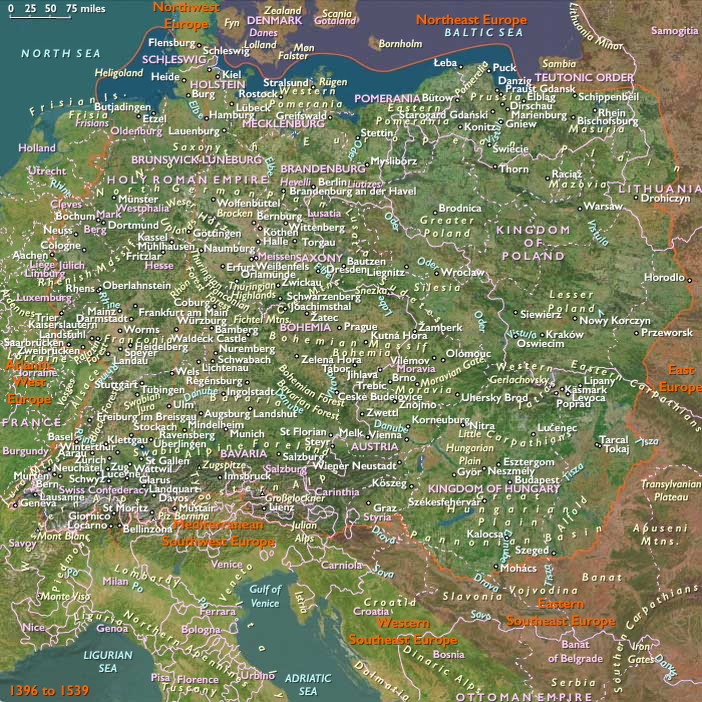
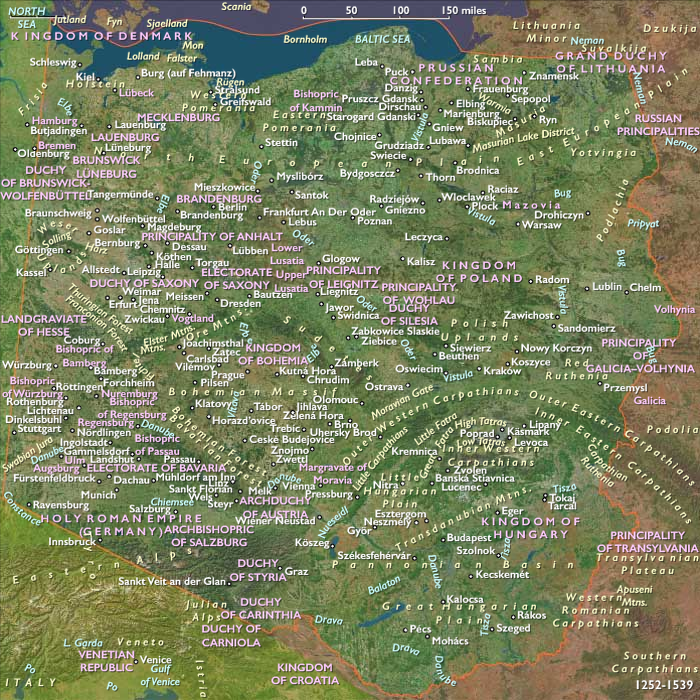
The Hungarian army is divided into three main units: the Transylvanian army under John Zápolya, charged with guarding the passes in the Transylvanian Alps, with between eight thousand and thirteen thousand men; the main army, led by Louis himself (beside numerous Spanish, German, Czech and Serbian mercenaries); and another smaller force, commanded by the Croatian count Christoph Frankopan, numbering around five thousand men.
Due to geography, the Ottoman army's ultimate goal could not be determined until it was crossing the Balkan Mountains.
Unfortunately for the Hungarians, by the time the Ottoman army had crossed, the Transylvanian and Croatian army was further from Buda than the Ottomans were.
Contemporary historical records, though sparse, indicate that Louis preferred a plan of retreat, in effect ceding the country to Ottoman advances, rather than directly engaging the Ottoman army in open battle.
The Hungarian forces choose the battlefield, an open but uneven plain with some swampy marshes near Mohács leading down to the Danube.
The Ottomans had been allowed to advance almost unopposed.
While Louis waited in Buda, they had besieged several towns and crossed the Sava and Drava Rivers.
Louis has assembled around twenty-five thousand to thirty thousand soldiers (with Croatian and Polish contingents and about eight hundred to one thousand soldiers of the Papal States) while the Ottoman army was long thought to have numbered around fifty thousand.
However, military history books from the twenty-first century will calculate the number of the Ottoman Army around one hundred thousand men.
In addition, the Ottoman forces have up to one hundred and sixty cannon.
Most of the Ottoman Balkan forces registered before this battle are labeled as Bosnians or Croats, as a designation of the territory in which they had been they were recruited.
The Hungarian army is arrayed to take advantage of the terrain and hopes to engage the Ottoman army piecemeal.
The only advantage the Magyars have is that their troops are well-rested, while the Turks have just completed a strenuous march in scorching summer heat.
Rather than attacking their fatigued enemy, however, the Hungarians merely watch as they struggle through the marshy terrain.
It would be "unchivalrous" to attack the enemy when they are not yet ready for battle.
Locations
People
- Anne of Bohemia and Hungary
- Charles V, Holy Roman Emperor
- Ferdinand I
- Francis I of France
- John I Zápolya
- Louis X
- Mary of Hungary
- Pál Tomori
- Suleiman I “the Magnificent”
Groups
- Croatia, Kingdom of
- Austria, Archduchy of
- Hungary, Kingdom of
- France, (Valois) Kingdom of
- Holy Roman Empire
- Transylvania (Hungarian governate)
- Ottoman Empire
- Habsburg Monarchy, or Empire
Topics
Commodoties
Subjects
Regions
Subregions
Years: 1526 - 1526
August
Locations
People
- Anne of Bohemia and Hungary
- Charles V, Holy Roman Emperor
- Ferdinand I
- Francis I of France
- John I Zápolya
- Louis X
- Mary of Hungary
- Pál Tomori
- Suleiman I “the Magnificent”
Groups
- Croatia, Kingdom of
- Austria, Archduchy of
- Hungary, Kingdom of
- France, (Valois) Kingdom of
- Holy Roman Empire
- Transylvania (Hungarian governate)
- Ottoman Empire
- Habsburg Monarchy, or Empire
Topics
Commodoties
Subjects
Regions
Subregions