
The Holy Grail and Chrétien de Troyes' …
Years: 1190 - 1190
The Holy Grail and Chrétien de Troyes' Perceval, ou le Conte du Graal (1180–1190 CE)
The Holy Grail, originally a symbolic talisman likely rooted in Celtic pagan tradition, evolved in the late 12th century into a Christian relic associated with the cup used at the Last Supper. According to later legend, Joseph of Arimathea used this cup to collect the blood of Christ at the Crucifixion.
The Grail became a central object of medieval quest literature, sought after by King Arthur's knights, most notably in Perceval, ou le Conte du Graal by Chrétien de Troyes, the first known literary work to feature the Holy Grail.
Chrétien de Troyes and Perceval (1180–1190)
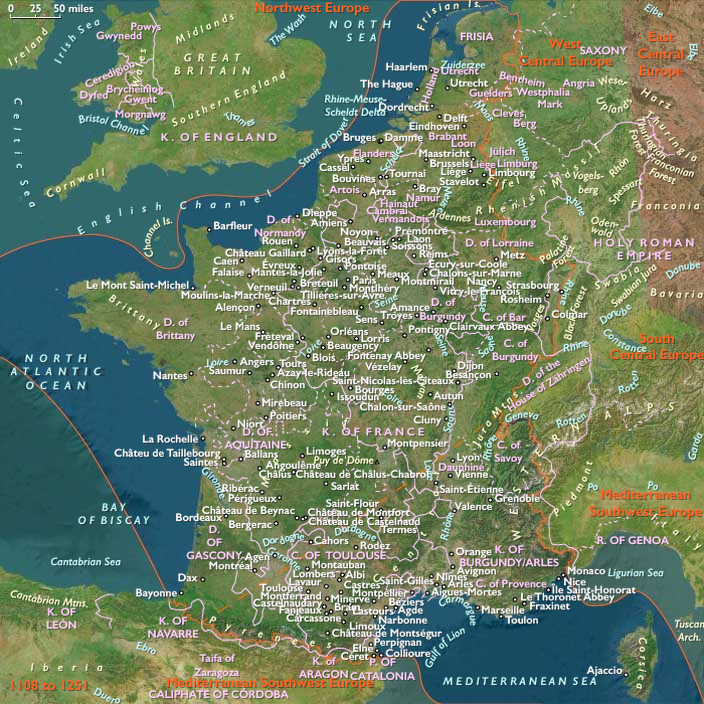
- French poet Chrétien de Troyes wrote Perceval, ou le Conte du Graal (Perceval, or the Story of the Grail) around 1180.
- The romance tells the story of Perceval, a young knight who witnesses a mysterious procession featuring the Grail at the castle of the Fisher King.
- However, Perceval fails to ask the right questions about the Grail, missing his chance to heal the wounded king and restore the land.
Chrétien died before completing the romance, and other poets later attempted to finish it between 1180 and 1190, adding Christian mystical interpretations to the legend.
The Holy Grail’s Evolution in Medieval Literature
- In Chrétien’s original Arthurian context, the Grail is a mysterious object with unclear religious significance.
- Later versions, such as Robert de Boron’s Joseph d’Arimathie (late 12th century), explicitly link the Grail to Christ and the Last Supper, transforming it into a sacred Christian relic.
- The Grail quest becomes central to Arthurian legend, inspiring later romances, including:
- Wolfram von Eschenbach’s Parzival (early 13th century).
- The Vulgate Cycle (13th century), which introduced Galahad as the purest Grail knight.
- Thomas Malory’s Le Morte d'Arthur (15th century), cementing the Grail as a key element of Arthurian mythology.
Legacy of Perceval and the Grail Legend
- Chrétien’s Perceval marked the first recorded literary appearance of the Holy Grail, setting the foundation for centuries of Grail literature.
- The legend blended Celtic, Christian, and chivalric themes, shaping medieval spiritual and heroic ideals.
- The Grail’s transformation from a mystical object to a Christian relic reflected broader religious and cultural changes in medieval Europe.
Though unfinished at his death in 1180, Chrétien de Troyes' Perceval gave birth to one of the most enduring and influential legends of Western literature.
Locations
People
Groups
Topics
Subjects
Regions
Subregions

Related Events
Showing 10 events out of 47929 total
Years: 1190 - 1190
Locations
People
Groups
Topics
Subjects
Regions
Subregions