
Filters:
The Cave of the Trois-Frères: A Masterpiece …
Years: 14733BCE - 13006BCE
The Cave of the Trois-Frères: A Masterpiece of Magdalenian Art
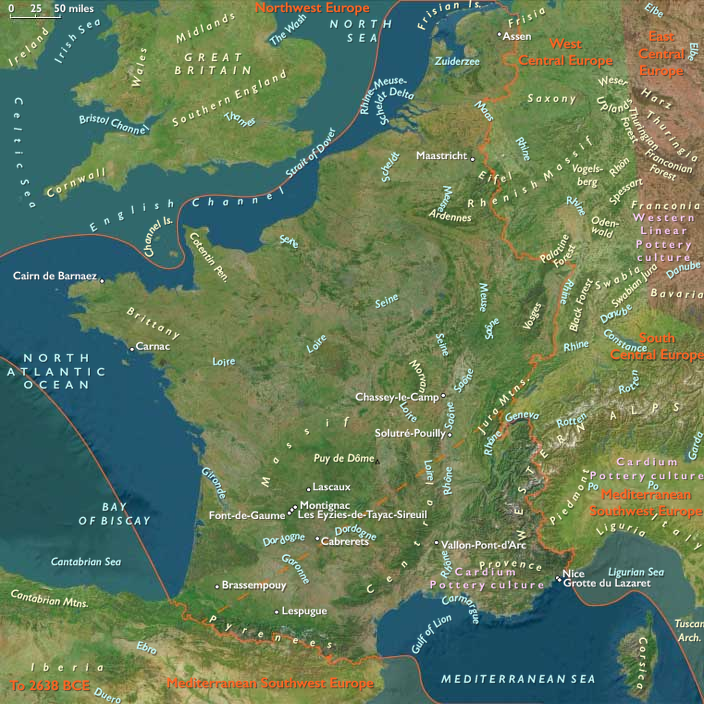
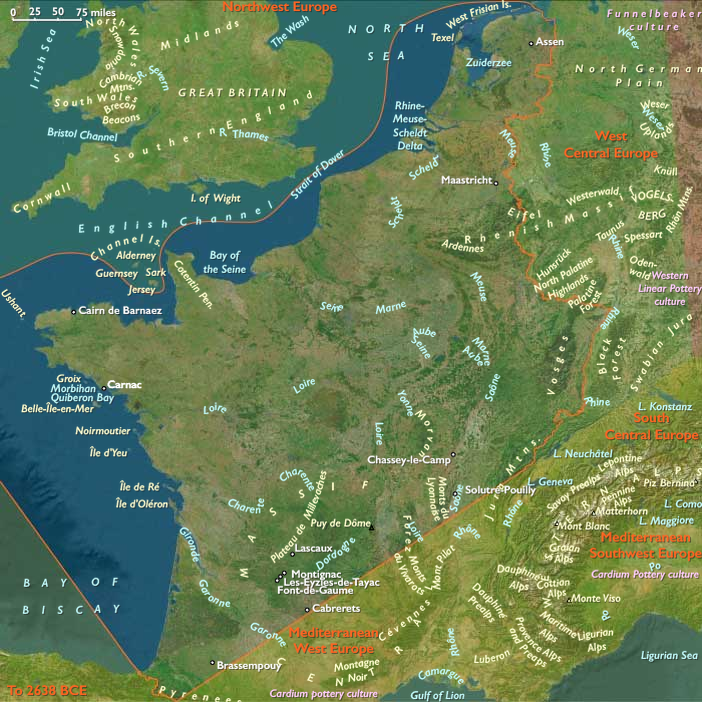
The Cave of the Trois-Frères, renowned for its remarkable cave paintings, is located in Montesquieu-Avantès, in the Ariège département of southwestern France. Part of a larger cave complex formed by the Volp River, it is connected to the Tuc d'Audoubert, another important site of Upper Paleolithic art. The cave’s artwork is estimated to date to around 13,000 BCE, placing it within the Magdalenian period.
Notable Artwork and Sculptures
- "The Sorcerer" – One of the most iconic prehistoric images, this enigmatic figure appears to combine human and animal traits, possibly representing a shamanic or mythological being.
- Clay Bison Sculptures – Deep within the cave, two finely modeled clay images of bison demonstrate exceptional craftsmanship in three-dimensional Paleolithic art.
- Other Cave Paintings – The site contains a variety of animal depictions, reflecting the hunting culture and symbolic traditions of Magdalenian peoples.
Cultural and Archaeological Significance
- The Trois-Frères cave provides crucial insight into prehistoric belief systems, as images like The Sorcerer suggest possible shamanistic or spiritual practices.
- The Magdalenian culture, known for its sophisticated artistic and technological advancements, likely used the cave for ceremonial or ritualistic purposes.
- The connection with the Tuc d'Audoubert highlights the importance of the Volp cave system as a center of Ice Age artistic expression.
Like Lascaux and Altamira, Trois-Frères stands as a testament to the creative and symbolic capabilities of Upper Paleolithic humans, offering a window into their worldviews and artistic achievements.
Topics
Subjects
Regions
Subregions
Years: 14733BCE - 13006BCE
Topics
Subjects
Regions
Subregions