
Filters:
Lithuanians and Poles control vast estates in …
Years: 1768 - 1779
Lithuanians and Poles control vast estates in Ukraine, and are a law unto themselves.
Judicial rulings from Kraków are routinely flouted, while peasants are heavily taxed and practically tied to the land as serfs.
Occasionally the landowners battle each other using armies of Ukrainian peasants.
The Poles and Lithuanians are Roman Catholics and try with some success to convert the Orthodox lesser nobility.
In 1596, they had set up the "Greek-Catholic" or Uniate Church; it dominates western Ukraine to this day.
Religious differentiation leave the Ukrainian Orthodox peasants leaderless, as they are reluctant to follow the Ukrainian nobles.
Cossacks lead an uprising, called Koliivshchyna, starting in the Ukrainian borderlands of the Polish–Lithuanian Commonwealth in 1768.
Ethnicity is one root cause of this revolt, which includea Ukrainian violence that kills tens of thousands of Poles and Jews.
Religious warfare also breaks out among Ukrainian groups.
Increasing conflict between Uniate and Orthodox parishes along the newly reinforced Polish-Russian border on the Dnieper River in the time of Catherine II had set the stage for the uprising.
As Uniate religious practices have become more Latinized, Orthodoxy in this region has drawn even closer into dependence on the Russian Orthodox Church.
Confessional tensions also reflect opposing Polish and Russian political allegiances.
Judicial rulings from Kraków are routinely flouted, while peasants are heavily taxed and practically tied to the land as serfs.
Occasionally the landowners battle each other using armies of Ukrainian peasants.
The Poles and Lithuanians are Roman Catholics and try with some success to convert the Orthodox lesser nobility.
In 1596, they had set up the "Greek-Catholic" or Uniate Church; it dominates western Ukraine to this day.
Religious differentiation leave the Ukrainian Orthodox peasants leaderless, as they are reluctant to follow the Ukrainian nobles.
Cossacks lead an uprising, called Koliivshchyna, starting in the Ukrainian borderlands of the Polish–Lithuanian Commonwealth in 1768.
Ethnicity is one root cause of this revolt, which includea Ukrainian violence that kills tens of thousands of Poles and Jews.
Religious warfare also breaks out among Ukrainian groups.
Increasing conflict between Uniate and Orthodox parishes along the newly reinforced Polish-Russian border on the Dnieper River in the time of Catherine II had set the stage for the uprising.
As Uniate religious practices have become more Latinized, Orthodoxy in this region has drawn even closer into dependence on the Russian Orthodox Church.
Confessional tensions also reflect opposing Polish and Russian political allegiances.
Locations
People
Groups
- Jews
- Poles (West Slavs)
- Christians, Roman Catholic
- Christians, Eastern Orthodox
- Christians, Eastern Catholic (Uniate)
- Ukrainians (East Slavs)
- Russians (East Slavs)
- Cossacks
- Podolian Voivodeship
- Cossacks, Zaporozhian
- Polish-Lithuanian Commonwealth (Commonwealth of the Two Nations)
- Cossack Hetmanate of the Zaporozhian Host
- Russian Empire
Topics
Subjects
Regions
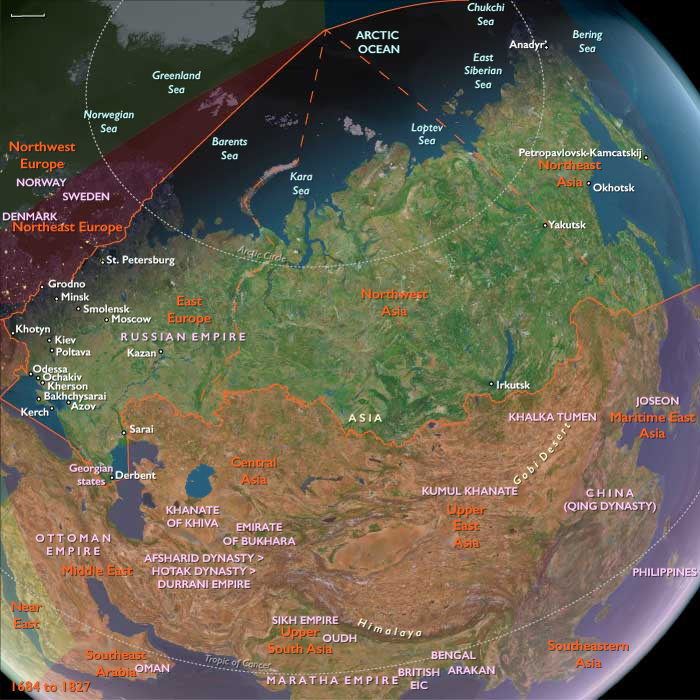
Subregions
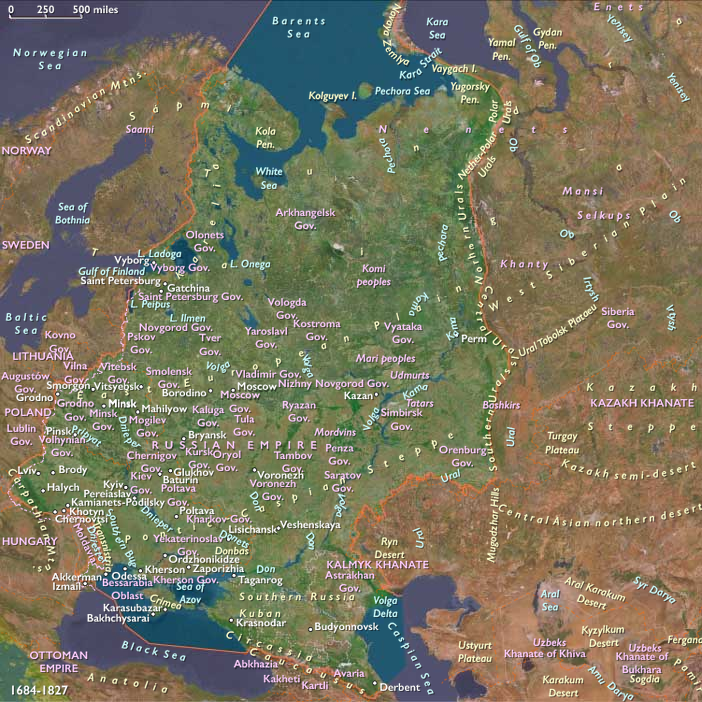
Years: 1768 - 1779
Locations
People
Groups
- Jews
- Poles (West Slavs)
- Christians, Roman Catholic
- Christians, Eastern Orthodox
- Christians, Eastern Catholic (Uniate)
- Ukrainians (East Slavs)
- Russians (East Slavs)
- Cossacks
- Podolian Voivodeship
- Cossacks, Zaporozhian
- Polish-Lithuanian Commonwealth (Commonwealth of the Two Nations)
- Cossack Hetmanate of the Zaporozhian Host
- Russian Empire
Topics
Subjects
Regions
Subregions