
Filters:
The status of Jews varies throughout the …
Years: 1819 - 1819
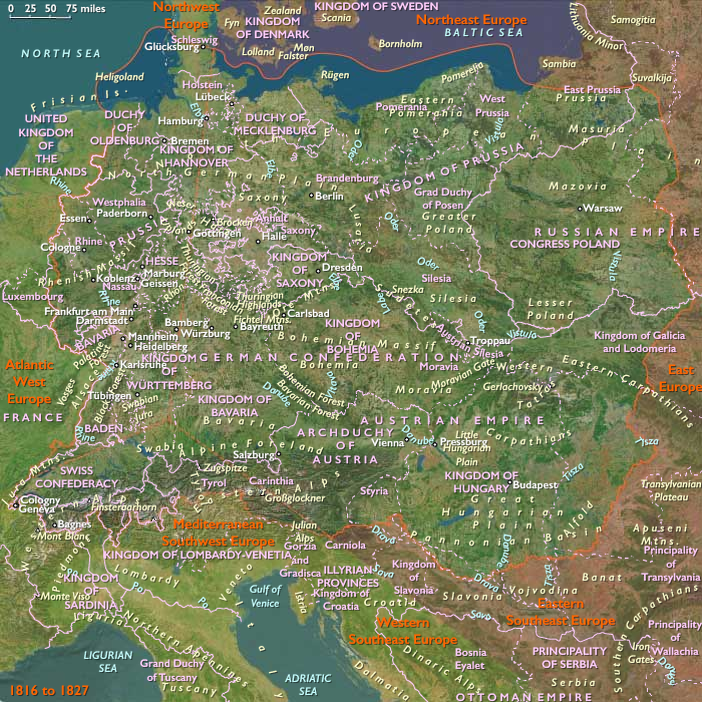
The status of Jews varies throughout the thirty-six independent German states and free cities; some had revoked the recent Napoleonic era emancipation edicts, others maintain them officially but ignore them in practice.
In most German territories, Jews are excluded from posts in public administration and the army and forbidden to hold teaching positions in schools and universities.
Jewish representatives had formally demanded emancipation at the Congress of Vienna (1815), and German academics and politicians alike had responded with vicious opposition.
The Jews had been portrayed to the public as "upstarts" who were attempting to take control of the economy, particularly the financial sector.
Anti-Jewish publications became common in the German press.
Influenced by the Haskalah, as well as the French Revolution with its Declaration of the Rights of Man and of the Citizen and other advancements in civil rights, many Jews and equal rights activists have begun to demand citizenship and equal treatment.
As Jewish Emancipation progresses, German Jews are becoming competitors for Christian guilds in the economy.
In most German territories, Jews are excluded from posts in public administration and the army and forbidden to hold teaching positions in schools and universities.
Jewish representatives had formally demanded emancipation at the Congress of Vienna (1815), and German academics and politicians alike had responded with vicious opposition.
The Jews had been portrayed to the public as "upstarts" who were attempting to take control of the economy, particularly the financial sector.
Anti-Jewish publications became common in the German press.
Influenced by the Haskalah, as well as the French Revolution with its Declaration of the Rights of Man and of the Citizen and other advancements in civil rights, many Jews and equal rights activists have begun to demand citizenship and equal treatment.
As Jewish Emancipation progresses, German Jews are becoming competitors for Christian guilds in the economy.
Locations
Groups
Topics
Subjects
Regions
Subregions
Years: 1819 - 1819
Locations
Groups
Topics
Subjects
Regions
Subregions