
The Helvetii have planned and prepared themselves …
Years: 58BCE - 58BCE
The Helvetii have planned and prepared themselves for three years, and emissaries have been sent out to various Gallic tribes assuring safe passages and alliances.
In 58 BCE, Orgetorix's ambitions are declared a ruse for personal power; this rumor is celebrated among the enemies of the Helvetii, especially those of Roman clientele.
This succeeds in causing confusion and feuds among the tribes, based mainly on the merits of Orgetorix versus his vices.
The conspiracy is denounced; Orgetorix is called to a hearing in chains before the government of the Helvetii.
There is an effort to seize him at council, however he is protected by his retinue and bodyguards.
During the preceding seasons he had called up a sizable force of men-at-arms and vassals said to have numbered ten thousand men, this in addition to his armed entourage.
Orgetorix is able to escape capture by his rivals and the councils labor at length to resolve the confusions and disputes; however, Orgetorix is murdered or slain during a dispute within his own encampment With many conflicts of interest settled, the Helvetii once again return to their long planned migration to safer pastures among the Santones tribe on the Atlantic seaboard.
Caesar dates their departure to the twenty-eighth of March, and mentions that they burned all their towns and their villages so as to discourage thoughts among undecided client tribes or enemies to occupy their vacated realm.
The Helvetii retain and arm their client tribes: the Rauraci, the Tulingi, the Latovici, and the Boii, from whom they have hired a contingent of horsemen.
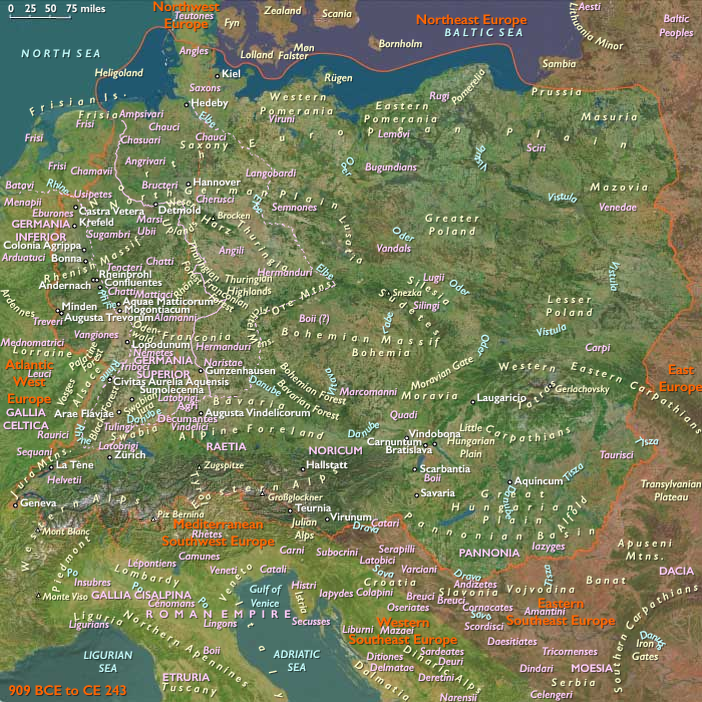
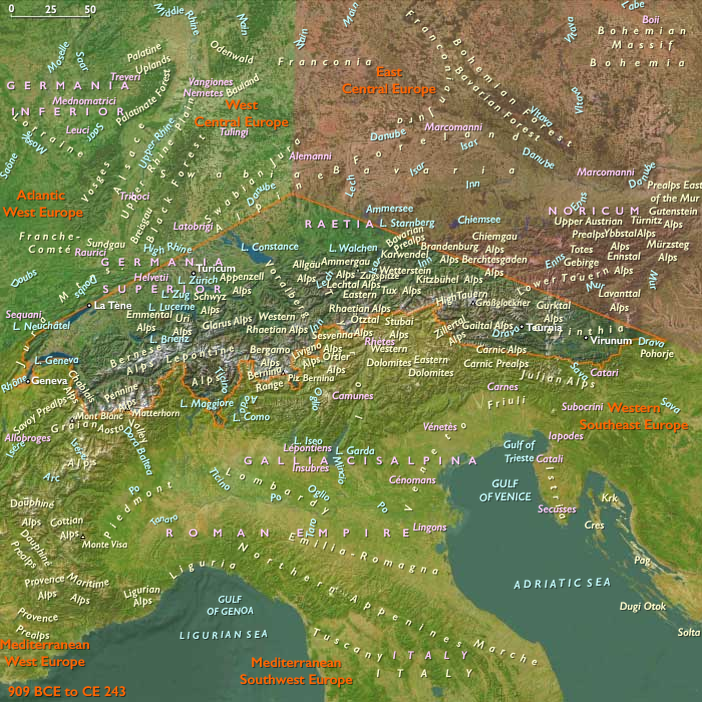
There are two available routes for them: the first one is the difficult and dangerous Pas de l'Ecluse, located between the Jura mountains and the Rhône River.
The second, easier one will lead them to the town of Geneva, where Lake Geneva flows into the Rhone River and where a bridge allows passage over the river.
These lands belong to the Allobroges, a tribe that had been subdued by Rome, and are under the control of the Roman republic.
Meanwhile, Caesar is in Rome, and only a single legion is in Transalpine Gaul, the endangered province.
As he is informed of these developments, he immediately hurries to Cisalpine Gaul, leaving his single legion under the command of his second-in-command Titus Labienus.
Upon arrival, he takes command of the three legions which were in Aquileia and enrolls two new legions, the Legio XI and the Legio XII.
At the head of these five legions, he travels the quickest way through the Alps, crossing territories of several hostile tribes and fighting several skirmishes en route.
Arriving in Geneva, he orders a levy of several auxiliary units and the destruction of the bridge.
The Helvetii send an embassy under the new leadership of Nammeius and Verucloetius, to negotiate a peaceful passage, promising to do no harm.
Caesar stalls the negotiations while his troops fortify their positions behind the river with a sixteen foot high rampart and a parallel trench lined with ballistas; his legionaries are backed by mercenary archers and slingers and Caesar has also hired and/or conscripted a contingent of Gallic horseman from the Remi.
As the embassy returns, Caesar officially refuses their request and warns them that any forceful attempt to cross the river will be opposed.
Several attempts are quickly beaten off.
The Helvetii turn back and enter negotiations with the Sequani to let them pass in a peaceful manner.
Locations
People
Groups
- Dacians, or Getae, or Geto-Dacians
- Boii (Celtic tribe)
- Allobroges
- Gauls
- Roman Republic
- Aedui (Gaulish tribe)
- Sequani (Gaulish tribe)
- Helvetii
- Lingones (Celtic tribe)
- Santones (Gaulish tribe)
- Ambarri
- Dacia, Kingdom of
- Suebi (Germanic tribe)
- Tulingi
Topics
- Classical antiquity
- Roman Republic, Crisis of the
- Gallic Wars
- Bibracte, Battle of
- Arar, Battle of the
Commodoties
Subjects
Regions
Subregions
Related Events
Showing 10 events out of 62579 total
Years: 58BCE - 58BCE
Locations
People
Groups
- Dacians, or Getae, or Geto-Dacians
- Boii (Celtic tribe)
- Allobroges
- Gauls
- Roman Republic
- Aedui (Gaulish tribe)
- Sequani (Gaulish tribe)
- Helvetii
- Lingones (Celtic tribe)
- Santones (Gaulish tribe)
- Ambarri
- Dacia, Kingdom of
- Suebi (Germanic tribe)
- Tulingi
Topics
- Classical antiquity
- Roman Republic, Crisis of the
- Gallic Wars
- Bibracte, Battle of
- Arar, Battle of the
Commodoties
Subjects
Regions
Subregions