
Caesar’s Campaign Against the Helvetii (58 BCE): …
Years: 58BCE - 58BCE
Caesar’s Campaign Against the Helvetii (58 BCE): The Battle of Bibracte and Its Aftermath
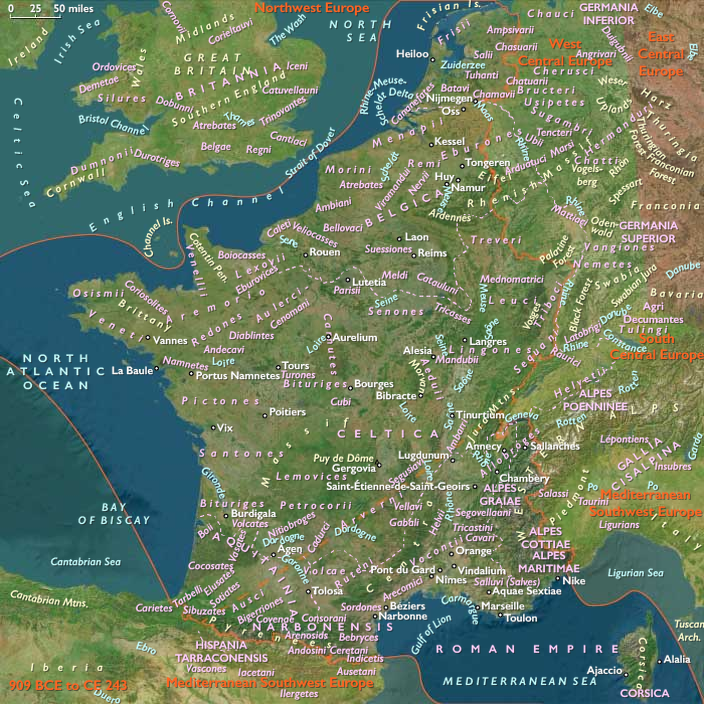
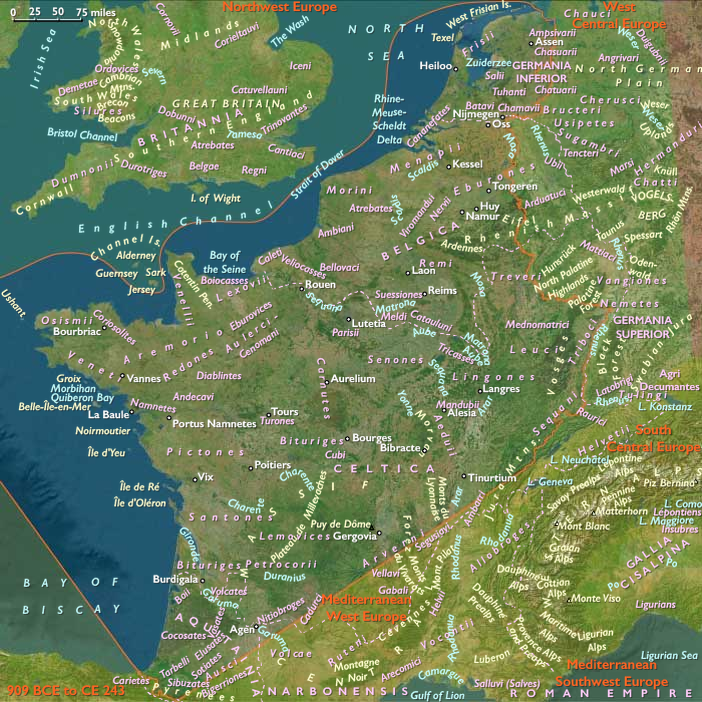
In 58 BCE, the Helvetii had already crossed the territories of the Sequani and were pillaging the lands of the Aedui, Ambarri, and Allobroges. These tribes, unable to oppose the migrating Helvetian coalition, sought assistance from Julius Caesar, their Roman ally.
Caesar’s Initial Engagement at the Battle of the Arar
- The Cimbri's Helvetian descendants, seeking new lands, attempted to migrate en masse through Gaul into Roman-controlled regions.
- Caesar intercepted them as they were crossing the River Arar (modern Saône), surprising a quarter of their forces, the Tigurini clan, who had not yet crossed.
- Three Roman legions swiftly attacked and defeated the Tigurini, forcing the survivors to flee into the nearby forests.
- After the victory, the Romans constructed a bridge over the Saône, continuing their pursuit of the main Helvetian force.
Failed Negotiations and the Roman Pursuit
- The Helvetii sent an embassy, led by Divico, to negotiate with Caesar. However, the talks failed, and the migration continued.
- For two weeks, the Romans shadowed the Helvetian column, attempting to halt their movement.
- Caesar ordered 4,000 cavalry (Roman and Aedui allied riders) to track and harass the Helvetii, but they were unexpectedly defeated by just 500 Helvetian cavalry, exposing weaknesses in Rome’s auxiliary forces.
Dumnorix and the Aedui Betrayal
- Supplies promised to the Romans by their Aedui allies were delayed, likely due to Dumnorix, an influential Aeduan leader with Helvetian sympathies.
- Facing logistical difficulties, Caesar diverted his army to Bibracte, the Aedui capital, to obtain food and regroup.
The Battle of Bibracte (June 20, 58 BCE)
- The Helvetii, learning of Caesar’s movement from deserters, turned back to harass his rear guard.
- Caesar deployed his army in triplex acies (the standard triple battle line) at the base of a hill near Bibracte, securing his baggage train at the top.
- The Seventh, Eighth, Ninth, and Tenth Legions formed the front battle line, while the Eleventh and Twelfth Legions, along with auxiliaries, guarded the summit.
Phases of the Battle
-
Initial Roman Defense and Counterattack
- The Helvetii charged uphill but were repelled by a hail of pila (javelins) thrown from a distance of 10–15 yards.
- The legions counterattacked, forcing the Helvetii to retreat a thousand paces back to their baggage train.
-
Reinforcements Arrive
- The Boii and Tulingi, allies of the Helvetii, entered the battlefield with 15,000 warriors, attacking the Roman flank.
- The Helvetii regrouped and returned to the fight, creating a two-front engagement.
-
Roman Tactical Adaptation
- To counter the flanking maneuver, Caesar redeployed his third line, keeping the primary and secondary battle lines engaged with the retreating Helvetii.
- The Romans fought for many hours into the night before finally capturing the Helvetian baggage train, securing a decisive victory.
The Aftermath of the Battle
- The Helvetii and their allies fled into the night, suffering catastrophic losses.
- According to Caesar’s account:
- 368,000 Helvetii and allies had originally set out.
- 92,000 were able-bodied warriors.
- 110,000 survivors remained to return home.
- 238,000 had been killed or captured.
- Caesar rested his legions for three days, then pursued the fleeing Helvetii, who had reached the territory of the Lingones.
- Caesar issued a warning to the Lingones not to aid the Helvetii, forcing them to surrender unconditionally.
Final Resolution and Roman Strategy
- The Helvetii, Boii, and Tulingi survivors were ordered to return to their homeland to rebuild their settlements.
- Rome provided them with supplies, ensuring they remained a buffer state against future Germanic incursions.
- A faction of 6,000 Helvetii (Verbigeni) attempted to flee but were captured and executed by other Gallic tribes at Caesar’s orders.
- A census written in Greek was discovered in the captured Helvetian camp, confirming the demographic scale of the migration.
Significance of the Battle of Bibracte
- Rome’s victory secured its dominance in Gaul, allowing Caesar to turn his attention to other Gallic tribes.
- The defeat of the Helvetii demonstrated the effectiveness of Roman military tactics, particularly the triplex acies formation and logistical strategy.
- The Helvetian migration served as a prelude to the Gallic Wars, in which Caesar would conquer all of Gaul within the next seven years (58–51 BCE).
The Battle of Bibracte was a key moment in Roman expansion, marking the beginning of Caesar’s conquest of Gaul and setting the stage for his rise to power in Rome.
Locations
People
Groups
- Dacians, or Getae, or Geto-Dacians
- Boii (Celtic tribe)
- Allobroges
- Gauls
- Roman Republic
- Aedui (Gaulish tribe)
- Helvetii
- Lingones (Celtic tribe)
- Santones (Gaulish tribe)
- Ambarri
- Dacia, Kingdom of
- Suebi (Germanic tribe)
- Tulingi
Topics
- Classical antiquity
- Roman Republic, Crisis of the
- Gallic Wars
- Bibracte, Battle of
- Arar, Battle of the
Commodoties
Subjects
Regions
Subregions
Related Events
Showing 10 events out of 62579 total
Years: 58BCE - 58BCE
Locations
People
Groups
- Dacians, or Getae, or Geto-Dacians
- Boii (Celtic tribe)
- Allobroges
- Gauls
- Roman Republic
- Aedui (Gaulish tribe)
- Helvetii
- Lingones (Celtic tribe)
- Santones (Gaulish tribe)
- Ambarri
- Dacia, Kingdom of
- Suebi (Germanic tribe)
- Tulingi
Topics
- Classical antiquity
- Roman Republic, Crisis of the
- Gallic Wars
- Bibracte, Battle of
- Arar, Battle of the
Commodoties
Subjects
Regions
Subregions