
The colonial history of Kenya dates from …
Years: 1888 - 1899
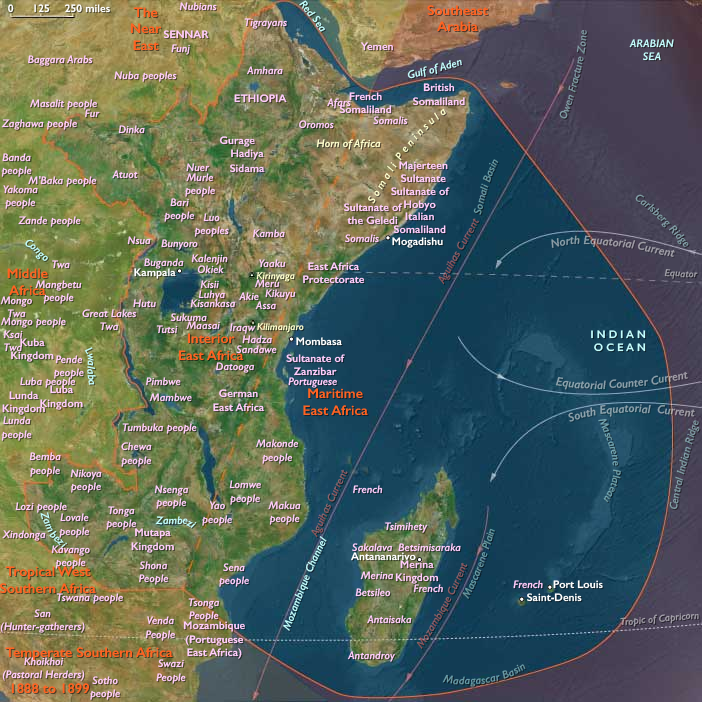
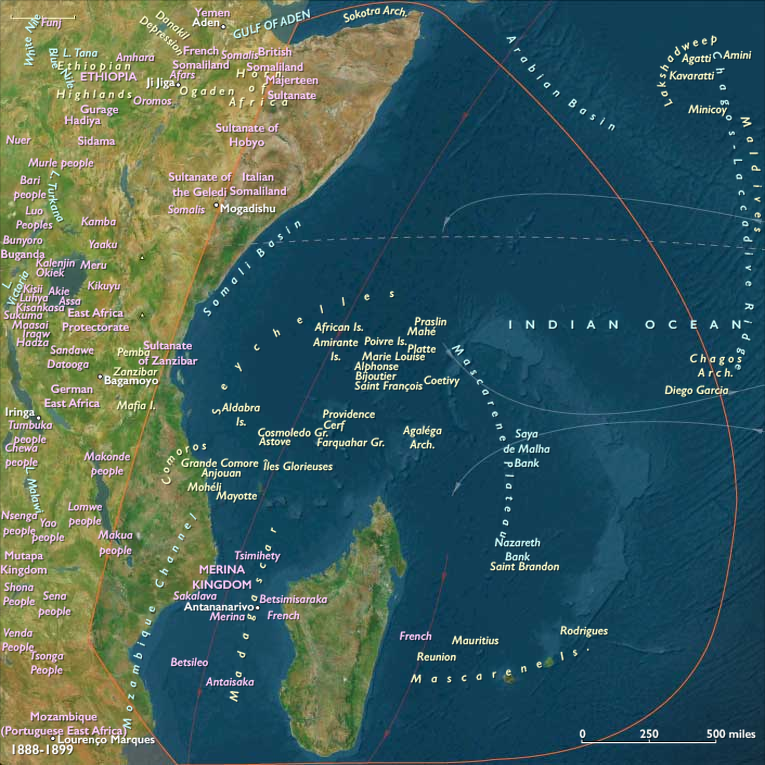
The colonial history of Kenya dates from the establishment of a German protectorate over the Sultan of Zanzibar's coastal possessions in 1885, followed by the arrival of the Imperial British East Africa Company in 1888.
Imperial rivalry is prevented when Germany hands its coastal holdings to Britain in 1890.
This is followed by the building of the Uganda Railway passing through the country.
The building of the railway is resisted by some ethnic groups—notably the Nandi led by Orkoiyot Koitalel Arap Samoei for ten years from 1890 to 1900—however, the British eventually build the railway.
The Nandi are the first ethnic group to be put in a native reserve to stop them from disrupting the building of the railway.
During the railway construction era, there is a significant inflow of Indian people, who provide the bulk of the skilled manpower required for construction.
They and most of their descendants will later remain in Kenya and form the core of several distinct Indian communities such as the Ismaili Muslim and Sikh communities.
While building the railway through Tsavo, a number of the Indian railway workers and local African labourers were attacked by two lions known as the Tsavo maneaters.
Imperial rivalry is prevented when Germany hands its coastal holdings to Britain in 1890.
This is followed by the building of the Uganda Railway passing through the country.
The building of the railway is resisted by some ethnic groups—notably the Nandi led by Orkoiyot Koitalel Arap Samoei for ten years from 1890 to 1900—however, the British eventually build the railway.
The Nandi are the first ethnic group to be put in a native reserve to stop them from disrupting the building of the railway.
During the railway construction era, there is a significant inflow of Indian people, who provide the bulk of the skilled manpower required for construction.
They and most of their descendants will later remain in Kenya and form the core of several distinct Indian communities such as the Ismaili Muslim and Sikh communities.
While building the railway through Tsavo, a number of the Indian railway workers and local African labourers were attacked by two lions known as the Tsavo maneaters.
Locations
Groups
- Nandi people
- Britain (United Kingdom of Great Britain and Ireland)
- Zanzibar, Omani Sultanate of
- German Empire (“Second Reich”)
- East Africa, German
- British Central Africa Protectorate (BCA)
- East Africa Protectorate (Kenya)
Topics
Commodoties
Subjects
Regions
Subregions
Related Events
Showing 10 events out of 10660 total
Years: 1888 - 1899
Locations
Groups
- Nandi people
- Britain (United Kingdom of Great Britain and Ireland)
- Zanzibar, Omani Sultanate of
- German Empire (“Second Reich”)
- East Africa, German
- British Central Africa Protectorate (BCA)
- East Africa Protectorate (Kenya)
Topics
Commodoties
Subjects
Regions
Subregions