
The haidamakas, also haidamaky or haidamaks (singular …
Years: 1734 - 1734
The haidamakas, also haidamaky or haidamaks (singular haidamaka, Ukrainian: Haidamaky, from Turkish haydamak, "to pursue"), are paramilitary bands in eighteenth-century Ukraine.
The haidamak movement is formed mostly of local Cossacks and peasantry (kozaky and holota), against the Polish nobility in right-bank Ukraine, though the movement is not limited to the right bank only.
The equivalent to haidamaka is opryshok in Ukrainian Galicia, and hajduk in the Balkans.
Hajduk is also used in the Polish language.
Unrest against the nobility and the Catholics lead to the haidamaka rebellions (haidamachchyna), the first of which takes place in 1734 during the war for control of the Polish Kingdom after the death of Frederick Augustus II.
Russian troops, brought to remove King Stanisław I (Leszczyński), are initially seen as liberators from Poles and an insurrection develops in Kiev, spreading to Podolia and Volhynia.
After Augustus III gains the throne, the insurrection is defeated by Russian military.
Small raids by haidamakas against Polish nobility will continue in the following years.
Locations
People
Groups
- Austria, Archduchy of
- Saxony, Electorate of
- Polish-Lithuanian Commonwealth (Commonwealth of the Two Nations)
- Habsburg Monarchy, or Empire
- Cossack Hetmanate
- Russian Empire
Topics
Commodoties
Subjects
Regions
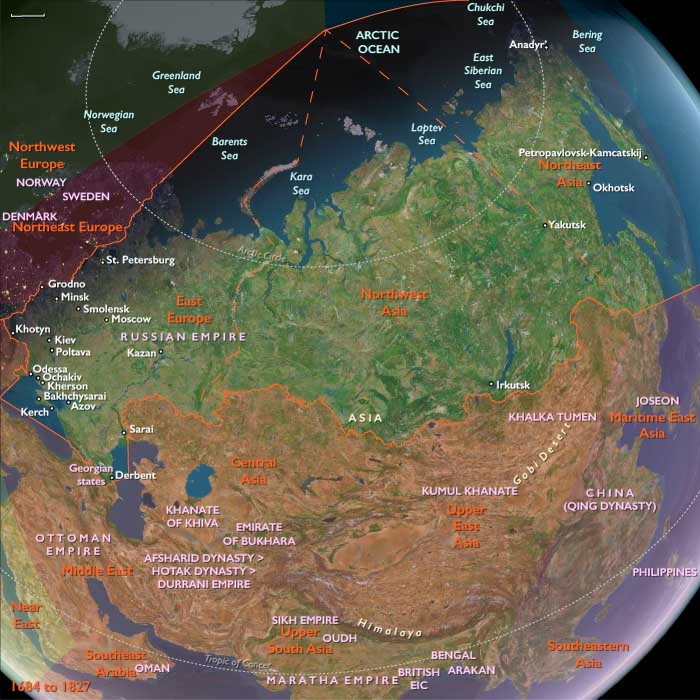
Subregions
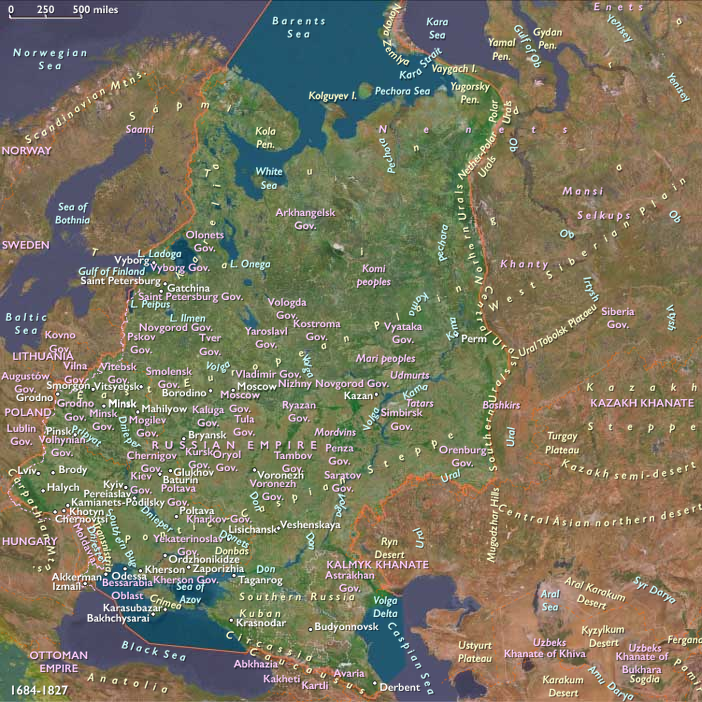
Years: 1734 - 1734
Locations
People
Groups
- Austria, Archduchy of
- Saxony, Electorate of
- Polish-Lithuanian Commonwealth (Commonwealth of the Two Nations)
- Habsburg Monarchy, or Empire
- Cossack Hetmanate
- Russian Empire
Topics
Commodoties
Subjects
Regions
Subregions