
Filters:
The Hafsid kingdom of Tunis, which stretches …
Years: 1550 - 1550
June
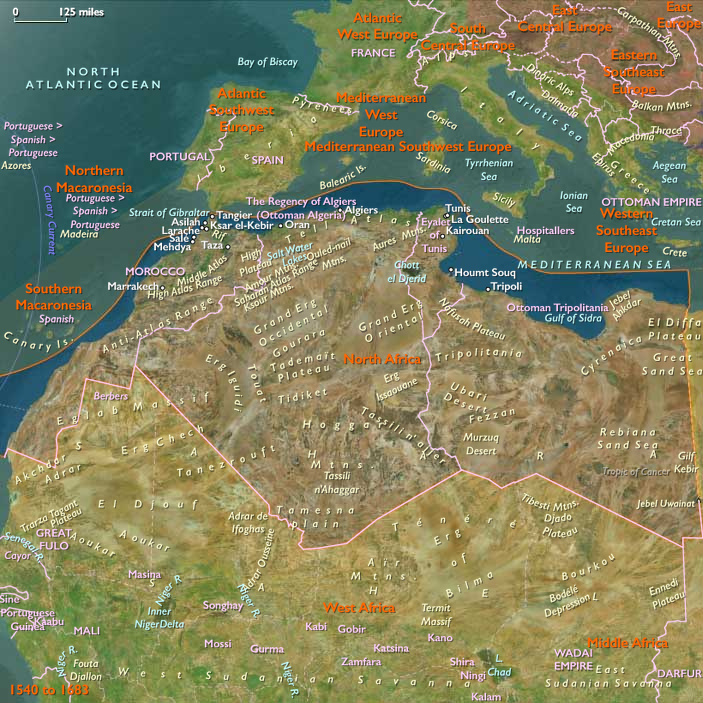
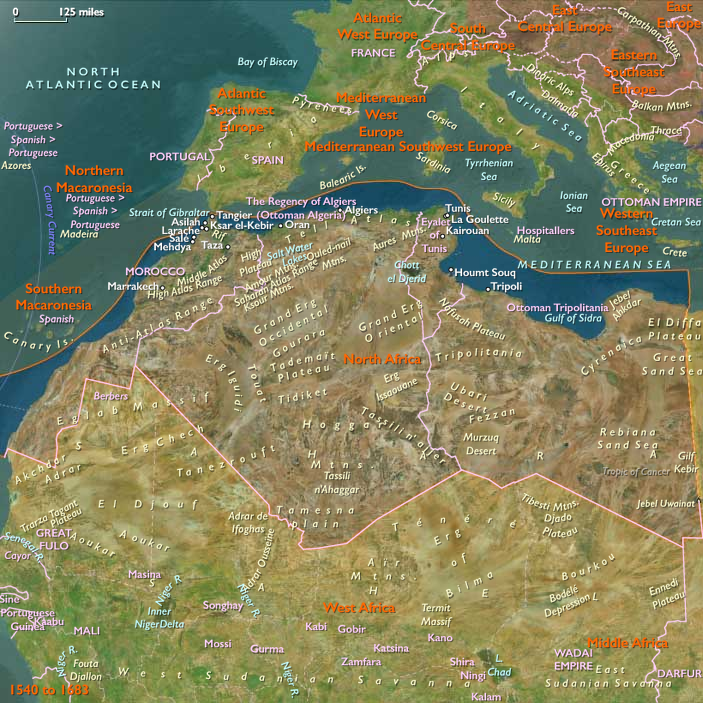
The Hafsid kingdom of Tunis, which stretches from the east of modern Algeria to the west of modern Libya, is in 1550 mired in anarchy, ruled by a council of chieftains that fight other and none of whom recognize the authority of the King of Tunis, Hamid, who had deposed and blinded his father Hasan, a protégé of the Emperor Charles V.
The Ottoman admiral Turgut Reis, with the aid of one of the local leaders, in the spring of 1550 takes control of the coastal town of Mahdia, located atop a rock advanced into the sea and defended by two circles of walls with towers and a citadel encircled by a moat.
Charles V, fearing that the town will become a base for the Barbary corsairs that threaten the Christian shipping in the Western Mediterranean, decides, with the support of the Papacy and the Knights of Malta, to organize an expedition to capture the city.
The command of the enterprise is entrusted to the Genoese admiral Andrea Doria and to Bernardino de Mendoza, Captain General of the galleys of Spain.
They lead a fleet of fifty-two galleys and twenty-eight naos carrying an army led by Captain General Juan de la Vega, Viceroy of Sicily, and siege weapons and supplies provided by de la Vega himself and the Viceroy of Naples.
The Spanish fleet sets sail to Mahdia on 24 June and arrives there four days later.
The city is defended by the nephew of Turgut Reis, Hesar, who had spent two months locking cattle and storing rice and beans enough to feed the city for a year, in anticipation of being under siege.
The landing of the Spanish troops takes place under the protection of the galleys' cannons and out of Mahdia's gun reach.
Within hours, the Ottoman infantry and cavalry are driven from a hill they occupied, and the next day the city is completely surrounded by trenches dug six hundred meters from the walls.
Luis Pérez de Vargas, mayor of the castle of La Goulette, who is in command of the Spanish artillery, orders to install several heavy pieces on the hill occupied the previous day to cover the locations of the eighteen lighter pieces that had detached to beat the walls.
The same day the first assault is launched, but it is repelled because the moat has not been filled. Despite advancing the artillery close to the walls and improving the trenches, the besiegers, harassed continuously by sallies of the Ottoman garrison, do not made significant progresses in the following days.
The Ottoman admiral Turgut Reis, with the aid of one of the local leaders, in the spring of 1550 takes control of the coastal town of Mahdia, located atop a rock advanced into the sea and defended by two circles of walls with towers and a citadel encircled by a moat.
Charles V, fearing that the town will become a base for the Barbary corsairs that threaten the Christian shipping in the Western Mediterranean, decides, with the support of the Papacy and the Knights of Malta, to organize an expedition to capture the city.
The command of the enterprise is entrusted to the Genoese admiral Andrea Doria and to Bernardino de Mendoza, Captain General of the galleys of Spain.
They lead a fleet of fifty-two galleys and twenty-eight naos carrying an army led by Captain General Juan de la Vega, Viceroy of Sicily, and siege weapons and supplies provided by de la Vega himself and the Viceroy of Naples.
The Spanish fleet sets sail to Mahdia on 24 June and arrives there four days later.
The city is defended by the nephew of Turgut Reis, Hesar, who had spent two months locking cattle and storing rice and beans enough to feed the city for a year, in anticipation of being under siege.
The landing of the Spanish troops takes place under the protection of the galleys' cannons and out of Mahdia's gun reach.
Within hours, the Ottoman infantry and cavalry are driven from a hill they occupied, and the next day the city is completely surrounded by trenches dug six hundred meters from the walls.
Luis Pérez de Vargas, mayor of the castle of La Goulette, who is in command of the Spanish artillery, orders to install several heavy pieces on the hill occupied the previous day to cover the locations of the eighteen lighter pieces that had detached to beat the walls.
The same day the first assault is launched, but it is repelled because the moat has not been filled. Despite advancing the artillery close to the walls and improving the trenches, the besiegers, harassed continuously by sallies of the Ottoman garrison, do not made significant progresses in the following days.
Locations
People
Groups
- Berber people (also called Amazigh people or Imazighen, "free men", singular Amazigh)
- Papal States (Republic of St. Peter)
- Genoa, (Most Serene) Republic of
- Tunis, Sultanate of (Hafsid Kingdom)
- Holy Roman Empire
- Ottoman Empire
- Naples, Kingdom of
- Ottoman Algeria
- Habsburg Monarchy, or Empire
- Knights of Malta, Sovereign and Military Order of the
- Spain, Habsburg Kingdom of
Topics
Commodoties
Subjects
Regions
Subregions
Years: 1550 - 1550
June
Locations
People
Groups
- Berber people (also called Amazigh people or Imazighen, "free men", singular Amazigh)
- Papal States (Republic of St. Peter)
- Genoa, (Most Serene) Republic of
- Tunis, Sultanate of (Hafsid Kingdom)
- Holy Roman Empire
- Ottoman Empire
- Naples, Kingdom of
- Ottoman Algeria
- Habsburg Monarchy, or Empire
- Knights of Malta, Sovereign and Military Order of the
- Spain, Habsburg Kingdom of
Topics
Commodoties
Subjects
Regions
Subregions